Reviews

You’re not sweating through July nights waiting for a callback. Your energy bill isn’t climbing every month because your system’s running nonstop just to keep up with New Jersey’s humidity.
When your AC is sized right and installed correctly, it cools your home without working itself to death. That means fewer repairs, lower electric bills, and a system that lasts years longer than one that’s been limping along since installation.
You also avoid the panic of a breakdown during a heat wave—when every HVAC company in Monmouth County is booked solid and emergency rates are through the roof. Regular maintenance catches problems early, before they turn into expensive failures at the worst possible time.
We’re a locally owned company based right here in Monmouth County. We handle both plumbing and HVAC work, which means you’re not juggling multiple contractors when something goes wrong.
Our techs are licensed and insured in New Jersey. We know how humid summers hit Millstone homes differently than drier climates—your system has to remove moisture, not just drop the temperature. That changes how we size units and set up airflow.
We’re available 24/7 for emergencies because AC failures don’t wait for business hours. And we give you the price upfront, before we start the work.

First, we figure out what’s actually wrong. If it’s a repair, we diagnose the problem and tell you what it’ll cost to fix—before touching anything. If it’s an installation, we measure your space, check your ductwork, and calculate the right size unit for your home’s square footage and insulation.
Then we do the work. For installations, that means removing the old system, setting the new one, connecting refrigerant lines, testing airflow, and making sure your thermostat communicates properly. For repairs, we replace the failed part, test the system under load, and verify it’s cooling correctly.
After we’re done, we walk you through what we did and answer any questions. You’ll know how to change your filter, when to schedule maintenance, and what warning signs to watch for. We don’t disappear after the check clears—if something’s not right, you call us back.

Ready to get started?
We handle full system installations—central air, ductless mini-splits, and heat pumps. That includes load calculations to size your unit correctly, because an oversized AC short-cycles and an undersized one never catches up. We also handle ductwork modifications if your current setup isn’t moving air efficiently.
For repairs, we fix compressor failures, refrigerant leaks, frozen coils, electrical issues, and blower motor problems. We stock common parts and can usually complete repairs same-day. If your system uses R-22 refrigerant (the old stuff that’s been phased out), we’ll tell you honestly whether a repair makes sense or if you’re better off replacing the unit.
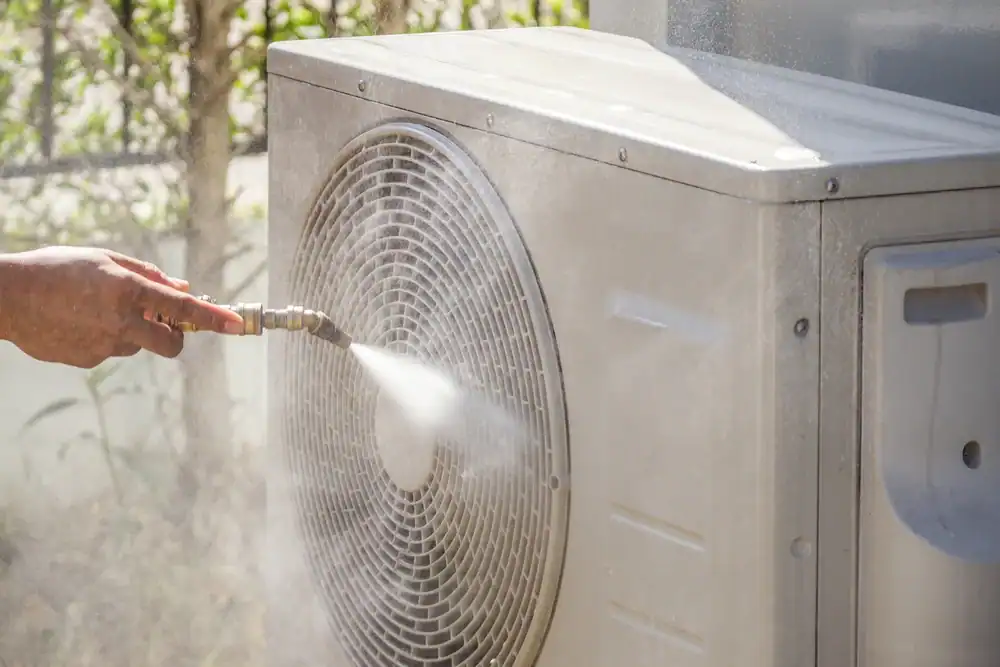
Maintenance includes cleaning coils, checking refrigerant levels, testing capacitors, inspecting electrical connections, and calibrating your thermostat. In Millstone’s humid climate, we also check your condensate drain—clogs cause water damage and shut your system down. Spring tune-ups cost less than emergency repairs in July, and they catch problems while they’re still cheap to fix.

A full central air installation typically runs between $5,000 and $10,000 for most Millstone homes, depending on system size, efficiency rating, and whether your ductwork needs updates. A 2,000-square-foot home usually needs a 3-ton to 4-ton unit.
Higher SEER ratings (the efficiency measurement) cost more upfront but save money on electric bills. In New Jersey, where electricity rates are high and summers are humid, a SEER 16 or higher often pays for itself within a few years compared to a basic SEER 14 unit.
If you’re replacing an old system during spring, you’ll pay 15-20% less than waiting until June when demand spikes. We offer financing options and give you an exact quote after measuring your home—no ballpark estimates that change once we start working.
If your system is under 10 years old and the repair costs less than half the price of a new unit, fixing it usually makes sense. If it’s over 15 years old, uses R-22 refrigerant, or needs a major component like a compressor replaced, replacement is often smarter financially.
Here’s why: older systems are less efficient, so they cost more to run every month. R-22 refrigerant is expensive and hard to find since production stopped years ago. And if your compressor fails, you’re already paying $2,000-$3,000 for the repair—at that point, spending a bit more for a new system gets you a warranty and lower energy bills.
We’ll give you both options with honest pricing. Some repairs buy you another year or two, which might be all you need. But if you’re throwing money at an old system every summer, replacement stops the bleeding.
Once a year, ideally in April or early May before temperatures climb. Annual maintenance catches refrigerant leaks, dirty coils, and failing capacitors before they shut your system down during a heat wave.
In Monmouth County’s humid climate, your AC works harder than it would in drier areas. That extra workload means more wear on components and more strain on your condensate drain. Skipping maintenance doesn’t just risk a breakdown—it voids most manufacturer warranties, which require proof of annual service.
A tune-up costs $150-$250 and takes about an hour. Emergency repairs during summer cost $1,500-$3,000 and leave you without AC for days while parts get ordered. The math isn’t complicated—maintenance is cheaper than emergencies, and it keeps your system running when you actually need it.
Yes, we’re available 24/7 for emergency AC service in Millstone and throughout Monmouth County. Most emergency calls get a same-day response, though peak summer days (when it’s 95°F and everyone’s AC is failing) can push that to next-day.
We stock common parts like capacitors, contactors, and fan motors, so many repairs get completed on the first visit. If we need to order a part, we’ll let you know the timeline upfront and explore temporary solutions if possible.
Emergency rates are higher than scheduled service—that’s standard across the industry because you’re paying for immediate availability. But we tell you the cost before starting work, and we don’t add hidden fees after the fact. If your AC fails at 9 PM on a Saturday, you’ll know exactly what it costs to get it running again.
It depends on your home’s square footage, insulation, window placement, and ductwork—not just the size of your old unit. A proper load calculation accounts for all these factors. Most Millstone homes between 1,500-2,000 square feet need a 2.5-ton to 3.5-ton system.
Bigger isn’t better with AC units. An oversized system cools too quickly, shuts off before removing humidity, and leaves your home feeling clammy. It also cycles on and off constantly, which wears out components faster. An undersized unit runs nonstop and never gets your home comfortable.
We measure your space and calculate the right size before recommending equipment. That’s not something you can figure out from an online calculator—it requires measuring actual rooms, checking insulation levels, and accounting for New Jersey’s specific climate demands. Getting the size right the first time means your system lasts longer and performs better.
As of January 2025, manufacturers stopped producing R-410A refrigerant (the current standard) and switched to newer refrigerants like R-454B. If your system is working fine, this doesn’t affect you immediately—existing units can still be serviced with available R-410A supplies.
But if your AC is older and develops a refrigerant leak, you’re looking at expensive repairs with a refrigerant that’s becoming harder to source. That’s when replacement starts making more financial sense than fixing a system that’s on its way out anyway.
New systems use the updated refrigerants and meet current efficiency standards, which means lower operating costs. If you’re planning to replace your AC in the next few years, doing it sooner rather than later avoids the scramble when your old system finally dies and every HVAC company is backlogged. We’ll walk you through your options based on your system’s age and condition—no pressure, just honest information so you can decide what makes sense for your situation.