Reviews

You stop sweating through the night. Your energy bills drop because your system runs efficiently instead of fighting itself. You’re not calling around every summer wondering if this is the year it finally dies.
When your air conditioner works the way it should, you forget it’s even there. That’s the point. No more hot spots in certain rooms, no more humidity that makes everything feel sticky, no more wondering if you should just replace the whole thing.
You get a system that cools your home evenly, runs quietly, and doesn’t spike your electric bill every month. Whether we’re installing a new unit or repairing your current one, the outcome is the same: reliable comfort without the constant worry.
AME Plumbing Heating and Cooling is based right here in Monmouth County. We’re licensed, insured, and we’ve seen every type of AC problem Jackson homes throw at us – from older systems limping through another summer to new installations in homes that never had central air.
Jackson’s summers are hot and humid. Your AC needs to handle both the temperature and the moisture, or you’re just moving hot air around. We size systems correctly, install them properly, and fix them when something goes wrong.
You’ll work with technicians who actually know what they’re doing, not someone reading a manual in your driveway. We show up when we say we will, we tell you what’s wrong in plain language, and we give you the price before we start the work.

You call or contact us online. We schedule a time that works for you – same day if it’s an emergency. We don’t do those four-hour windows where you’re stuck waiting around.
When we arrive, we assess what’s going on. If it’s a repair, we diagnose the problem and explain what needs to happen. If it’s an installation, we look at your home’s layout, your current system if you have one, and what makes sense for your space and budget.
You get upfront pricing before any work starts. No surprises, no “well, now that we’re here” upsells. If you approve the work, we get it done right the first time.
For installations, we handle everything from removing your old unit to testing the new system and making sure it’s cooling every room properly. For repairs, we fix the issue and check the rest of your system so you’re not calling us back next week for something else.

Ready to get started?
AC installation means we’re sizing your system correctly for your home, not just swapping in whatever’s cheapest. Jackson homes vary – older construction, newer builds, additions that were added later. Your cooling needs depend on square footage, insulation, window placement, and how your home is laid out.
We install central air systems, ductless mini-splits for homes without existing ductwork, and high-efficiency units that qualify for rebates. New Jersey homeowners can get up to $3,200 in federal tax credits through the end of 2025 for energy-efficient systems, and PSE&G offers additional rebates for qualifying equipment.
AC repair covers everything from refrigerant leaks and compressor failures to electrical issues and thermostat problems. If your system is blowing warm air, not turning on, making strange noises, or running constantly without cooling your home, those are all fixable problems.
Maintenance includes tune-ups that catch small issues before they become expensive repairs. We clean coils, check refrigerant levels, test electrical connections, and make sure your system is ready for summer. Most breakdowns happen on the hottest days because that’s when your AC is working hardest – regular maintenance prevents a lot of those emergency calls.

Installation costs depend on the type of system, the size of your home, and whether you already have ductwork. A central air system for an average Jackson home typically runs between $5,000 and $10,000, including the equipment and installation. Ductless mini-split systems start around $3,000 for a single zone and go up from there depending on how many rooms you’re cooling.
The size of the unit matters more than most people realize. An oversized AC will cool your house quickly but won’t run long enough to remove humidity, so you end up with a cold, clammy house. An undersized unit runs constantly and never quite gets the temperature where you want it. We calculate the right size based on your home’s specific needs, not just square footage.
Higher-efficiency systems cost more upfront but save money over time through lower energy bills. They also qualify for rebates and tax credits that can offset some of the initial cost. We’ll walk you through the options and what makes sense for your situation and budget.
Refrigerant leaks are common, especially in older systems. If your AC is blowing warm air or not cooling as well as it used to, low refrigerant is often the culprit. This isn’t something you can fix yourself – it requires a licensed technician to locate the leak, repair it, and recharge the system.
Dirty coils and clogged filters reduce efficiency and can cause your system to freeze up or overheat. Jackson’s humidity means your AC is working harder to remove moisture from the air, and that moisture has to drain properly. If the drain line gets clogged, you’ll end up with water damage or a system that shuts down to prevent flooding.
Electrical issues like failed capacitors, worn contactors, or faulty thermostats cause a lot of service calls. Your AC has multiple electrical components that can fail over time, especially if the system is more than ten years old. Sometimes the fix is simple, sometimes it means replacing parts, and sometimes it’s more cost-effective to replace the whole unit.
Most central air systems last 15 to 20 years with proper maintenance. If your system is approaching that age and needs a major repair, replacement usually makes more sense than sinking money into an old unit that’s going to keep having problems.
New Jersey’s climate is hard on AC systems. Hot, humid summers mean your unit runs a lot, and the humidity puts extra stress on components. Systems that aren’t maintained regularly don’t last as long – skipping annual tune-ups might save you $150 a year, but it can cut years off your system’s lifespan.
Newer systems are significantly more efficient than units from even ten years ago. If your AC is older and your energy bills keep climbing, a new system often pays for itself through lower operating costs. The minimum efficiency standards changed in 2025, so anything you install now will use less energy than what you’re replacing.
Yes, we offer 24/7 emergency service. If your AC goes out in the middle of a heat wave, you don’t have to wait until Monday morning. We understand that AC problems don’t happen on a convenient schedule, and going without cooling in July isn’t just uncomfortable – it can be dangerous for young kids, elderly family members, or anyone with health conditions.
Emergency service means we prioritize your call and get someone to your house as quickly as possible. We carry common parts on our trucks so we can often fix the problem the same day instead of ordering parts and coming back later.
The cost for emergency service is higher than a regular service call, but you’re paying for availability and speed. We’ll still give you upfront pricing before we start any work, even on an emergency call. If the repair is expensive and your system is old, we’ll be honest about whether it makes sense to fix it or replace it.
If your system is less than ten years old and the repair costs less than half the price of a new system, repair usually makes sense. If your AC is older than 15 years and needs a major repair like a compressor or coil replacement, you’re better off replacing it.
There’s a rule of thumb in the HVAC industry: multiply the repair cost by the age of your system. If that number is more than $5,000, replace it. So if your 12-year-old AC needs a $600 repair, that’s $7,200 – replacement is the smarter move. If your 6-year-old system needs the same repair, that’s $3,600 – fix it.
Also consider your energy bills. If your AC is running constantly and your bills keep going up, an old inefficient system is costing you money every month. A new high-efficiency system might cost $7,000 upfront but save you $1,000 a year in energy costs. We’ll give you honest advice about what makes financial sense, not just what makes us more money.
Your AC needs a professional tune-up every spring before cooling season starts. This includes cleaning the outdoor coil, checking refrigerant levels, testing electrical connections, lubricating moving parts, and making sure the condensate drain is clear. These aren’t things you can do yourself – they require specialized tools and knowledge.
Between professional visits, you should change your air filter every one to three months depending on the type of filter and how much your system runs. A clogged filter restricts airflow, makes your AC work harder, and reduces efficiency. It’s the simplest thing you can do to extend your system’s life.
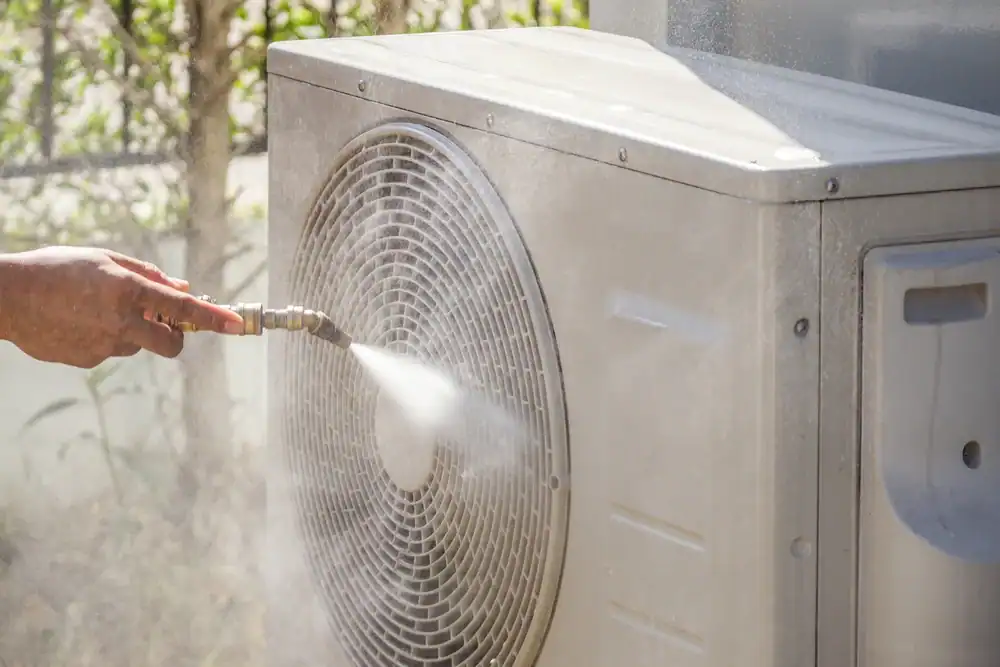
Keep the outdoor unit clear of debris, leaves, and vegetation. The unit needs airflow to work properly, and if it’s surrounded by bushes or covered in grass clippings, it can’t breathe. Trim back anything within two feet of the unit and hose off the exterior if it looks dirty. Regular maintenance prevents most emergency repairs and helps your system last longer.