Reviews

You’re dealing with a system that quit on the hottest day of summer. Or you’re watching your energy bills climb while your house stays uncomfortable. Maybe you’re just tired of wondering if your AC will make it through another season.
Here’s what actually matters: getting your home comfortable again without the runaround. That means showing up when we say we will, diagnosing the real problem, and giving you a straight answer about what it’ll cost to fix it. No phantom issues. No pressure tactics.
Whether you need a full system installation, emergency repair, or regular maintenance to keep things running, you’re working with licensed professionals who’ve worked through every AC problem Hazlet’s coastal humidity can throw at a system. We handle central air conditioning, ductless mini-splits, and everything in between.
We operate right here in Monmouth County. We’re not a franchise with a call center three states away. When you call, you’re talking to someone who knows Hazlet’s neighborhoods and understands what coastal weather does to HVAC systems.
Our technicians are licensed and insured in New Jersey. We carry the credentials, pull the permits, and follow the codes—because that’s what protects you and your investment. We’ve built our reputation on showing up, doing the work right, and charging what we quoted.
You’ll find us working on homes throughout Hazlet, Keyport, Union Beach, and the surrounding areas. We’re available 24/7 for emergencies because AC failures don’t wait for business hours.

First, we schedule a time that works for you—or if it’s an emergency, we get someone to your home as quickly as possible. Most emergency calls in Hazlet get a same-day response.
When our technician arrives, they’ll assess your system and explain what’s wrong in plain terms. You’ll get an upfront price that includes labor, parts, and any permits needed. No surprises when the bill comes.
For repairs, we fix the problem and test the system to make sure it’s running properly before we leave. For installations, we’ll walk you through equipment options that fit your home’s size and your budget, handle the full installation including any necessary ductwork modifications, and make sure you understand how to operate and maintain your new system.
After the work is done, you’ll have our contact information for any follow-up questions. We also offer maintenance plans if you want to keep your system in good shape and catch small issues before they become expensive repairs.

Ready to get started?
Our AC services cover the full spectrum. Installation means properly sized equipment for your square footage, correct refrigerant charging, and ductwork that actually distributes air efficiently. Poor installation is the fastest way to waste money on a new system—it can reduce efficiency by 30% even with top-tier equipment.
Repairs address the actual problem, whether that’s a failed compressor, refrigerant leak, electrical issue, or failing capacitor. We stock common parts and can source specialty components quickly for less common systems.
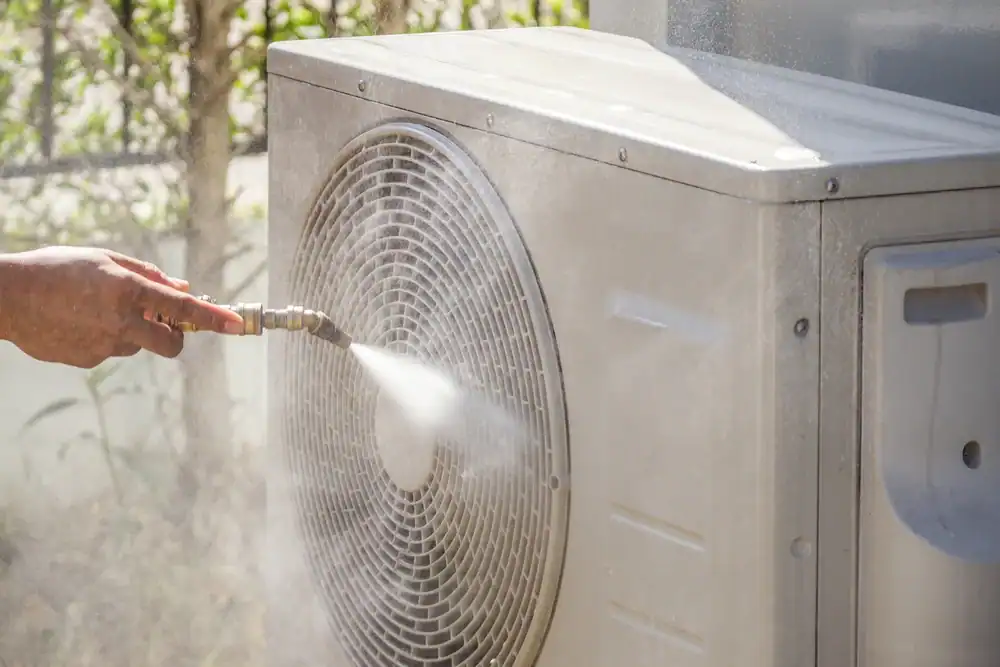
Maintenance includes cleaning coils, checking refrigerant levels, testing electrical connections, and inspecting components that typically fail. In Hazlet’s humid coastal climate, regular maintenance matters more than in drier areas—salt air and moisture accelerate wear on outdoor units.
Emergency service means we’re available when your system fails at 9 PM on a Saturday in July. We don’t charge extra just because it’s inconvenient timing. You pay for the repair, not a penalty fee for needing help outside of standard hours.

Installation costs depend on your home’s size, the equipment you choose, and what your existing ductwork situation looks like. A straightforward central AC replacement in a typical Hazlet home with existing ductwork usually runs between $4,000 and $8,000.
That range covers a quality system properly installed—not the cheapest equipment available, and not the luxury tier unless you specifically want features like variable-speed compressors or smart home integration. If your ductwork needs modification or you’re installing AC in a home that never had it, expect additional costs for that work.
We give you a written estimate before any work starts. That estimate breaks down equipment costs, labor, permits, and timeline so you know exactly what you’re paying for. We also offer financing options if you’d rather spread the cost out instead of paying everything upfront.
Simple repairs like replacing a capacitor or cleaning a clogged drain line take about an hour. More involved repairs—like fixing a refrigerant leak or replacing a compressor—can take three to five hours depending on your system’s configuration.
If we need to order a specialty part, that adds time. We’ll tell you upfront if we have the part on the truck or if we need to source it. Most common components for residential systems are available same-day or next-day in the Monmouth County area.
For emergency calls, our goal is to get your system running again as quickly as possible, even if that means a temporary fix to get you through the night and a more permanent repair scheduled for the next day. You shouldn’t have to sleep in a sweltering house while waiting for a part to arrive.
If your system is under 10 years old and the repair costs less than half the price of a new system, repair usually makes sense. If you’re looking at a major component failure on a 15-year-old unit, replacement is often the smarter financial move.
Here’s the math that matters: AC systems typically last 15-20 years with proper maintenance. If yours is in that age range and needs a $2,000 repair, you’re putting serious money into a system that’s near the end of its lifespan anyway. A new system will run more efficiently, lower your energy bills, and come with a warranty.
We’ll give you an honest assessment of both options with actual numbers. Sometimes the right call is to repair and get another few years out of your current system. Sometimes you’re throwing good money after bad. We’ll tell you which situation you’re in, and you can make the decision that fits your budget and timeline.
Yes. We’re available 24/7 for AC emergencies, and we don’t add surge pricing just because you need help at an inconvenient time. You pay for the repair work, not a penalty fee for calling after hours.
Most emergency calls in Hazlet get a same-day response. When you call, we’ll ask a few questions about what’s happening with your system and give you a realistic timeframe for when a technician can get there. If it’s the middle of a heat wave and we’re running multiple emergency calls, we’ll be straight with you about the wait.
Our trucks stock the most common failure parts—capacitors, contactors, fuses—so there’s a good chance we can fix the problem on the first visit. For less common issues that require specialty parts, we’ll do what we can to get you temporary cooling while we source what’s needed for a permanent fix.
Once a year, ideally in spring before cooling season starts. Annual maintenance catches small problems before they become expensive failures and keeps your system running efficiently.
A maintenance visit includes cleaning your condenser coils, checking refrigerant levels, testing electrical connections, inspecting your condensate drain, and verifying that all components are working properly. In Hazlet’s coastal environment, salt air and humidity are tough on outdoor units—regular cleaning and inspection matter more here than in drier inland areas.
Skipping maintenance doesn’t just risk breakdowns. It costs you money in higher energy bills because dirty coils and low refrigerant make your system work harder to cool your home. Most manufacturers also require proof of annual maintenance to keep warranties valid, so skipping it can void your coverage right when you need it most.
Size depends on your home’s square footage, insulation quality, window placement, and ceiling height. A typical 1,500 square foot home in Hazlet needs a 2.5 to 3-ton unit, but that’s just a starting point—your specific home might need more or less.
Bigger isn’t better when it comes to AC sizing. An oversized unit will cool your house quickly but won’t run long enough to remove humidity, leaving you with a cold, clammy house. An undersized unit will run constantly and never quite get your home comfortable, especially during July and August heat waves.
We do a proper load calculation before recommending equipment. That means measuring your space, checking insulation, accounting for sun exposure, and factoring in your ductwork capacity. It takes an extra 30 minutes, but it’s the difference between a system that works and one that leaves you frustrated for the next 15 years.