
Reviews
Your AC doesn’t just stop working overnight. It gives you signs—weak airflow, strange sounds, rooms that never quite cool down. Most people ignore those signs until the system quits completely, usually on the hottest weekend of July.
Regular AC maintenance catches those issues early. A worn belt gets replaced before it snaps. Refrigerant levels get topped off before your compressor burns out trying to compensate. Dirty coils get cleaned before your system works twice as hard to cool half as well.
The result? Your system runs efficiently all summer, your energy bills stay predictable, and you’re not scrambling to find emergency service when everyone else’s AC is failing too. You’re also not shortening your equipment’s lifespan by forcing it to run under stress. Most systems last 12-15 years with regular care—skip maintenance and you’re looking at replacement years earlier than necessary.
AME Plumbing Heating and Cooling has spent years working on HVAC systems in Monmouth County. That matters because West Freehold sits close enough to the coast that salt air affects how quickly components corrode and how hard humidity makes your system work.
Our technicians are licensed and insured, and we’ve seen what happens when condenser coils get exposed to coastal conditions without proper maintenance. We know which parts fail first in this climate and what to look for during an inspection.
You get upfront pricing before any work starts, and if we find something during your tune-up that needs attention, we’ll explain what it is, why it matters, and what it costs to fix. No surprises, no pressure—just clear information so you can make the right call for your home.

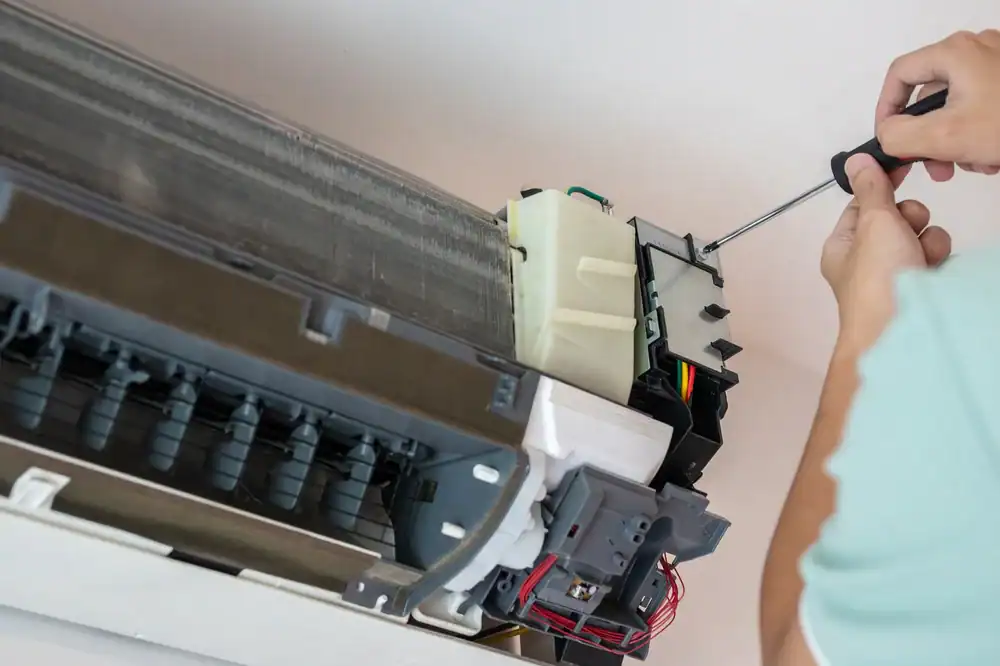
An AC tune-up starts with a full system inspection. Your technician checks refrigerant levels, tests electrical connections, examines the condenser and evaporator coils, and inspects the blower motor and fan. If anything looks worn or damaged, you’ll know about it before it fails.
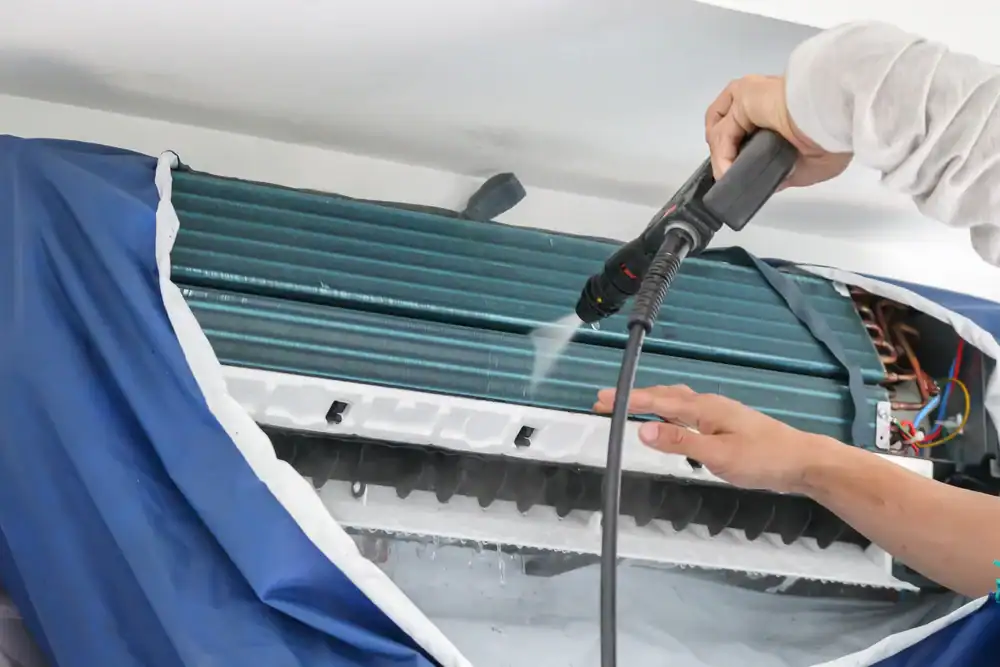
Next comes cleaning. Dirty coils make your system work harder and waste energy. Your technician cleans both the indoor and outdoor coils, changes or cleans your air filter, clears the condensate drain line, and removes any debris around the outdoor unit that could restrict airflow.
Finally, everything gets tested. Your technician runs the system through a full cycle, measures airflow and temperature output, and verifies that your thermostat is communicating properly with the equipment. You’ll know your system is running at peak efficiency before we leave—or you’ll know exactly what needs attention and what it’ll cost to handle it.

Ready to get started?
Your AC maintenance covers a complete system inspection, refrigerant level check, electrical connection testing, and thermostat calibration. Your technician cleans both coils, changes your filter, clears your drain line, and checks for any signs of wear or damage that could cause problems later.
In West Freehold, humidity is a constant challenge. August averages 68% humidity, which means your AC isn’t just cooling air—it’s pulling moisture out of it. That puts extra stress on your system and makes proper drainage critical. A clogged condensate line can cause water damage inside your home, and it’s one of the most common issues we see during tune-ups.
Salt air is the other factor. Even a few miles from the coast, salt can corrode outdoor components faster than it would inland. Your condenser coils are especially vulnerable. Regular cleaning and inspection catch corrosion early, before it eats through coils that cost hundreds to replace. Coastal homeowners who skip maintenance end up replacing parts years earlier than they should.

Once a year, ideally in spring before cooling season starts. March or April gives you time to address any issues before you actually need your AC running at full capacity.
Waiting until summer means you’re competing with everyone else who ignored maintenance and now has a broken system. Techs are booked solid, parts take longer to arrive, and you’re stuck in the heat while you wait. Spring scheduling avoids all of that.
If your system is older than 10 years or you run it heavily during summer, twice-yearly service isn’t a bad idea. Fall maintenance before heating season keeps your furnace or heat pump in shape for winter. But at minimum, get your AC checked every spring.
Annual maintenance typically runs $100-200 depending on your system. Skipping it costs more—a lot more—when something breaks. The average HVAC repair runs around $350, but it can easily hit $1,500 if a major component fails.
Maintenance also saves you money on energy bills. A well-maintained system runs 15-20% more efficiently than one that’s been neglected. Over a summer, that’s real money—enough to cover the cost of maintenance and then some.
Then there’s lifespan. Systems that get regular tune-ups last 15-20 years. Systems that don’t? Closer to 10-12 years. Replacing an AC system costs $3,000-7,000 depending on size and efficiency. Spending $150 a year to avoid replacing your system three to five years early is an easy call.
Changing your filter regularly is important—do it every 1-3 months depending on your system and household. But it’s not a substitute for professional maintenance. Your filter only addresses one small part of what keeps your AC running efficiently.
A tune-up checks refrigerant levels, which you can’t do yourself without specialized equipment and certification. Low refrigerant makes your compressor work harder and can eventually destroy it—a $1,200+ repair. Your technician also cleans coils, tests electrical connections, calibrates your thermostat, and catches worn parts before they fail.
Most breakdowns happen because of issues a homeowner can’t see or fix on their own. Dirty coils, failing capacitors, refrigerant leaks, and electrical problems don’t announce themselves until your system stops working. Professional maintenance catches them early when they’re cheap and easy to fix.
You get a clear explanation of what’s wrong, why it matters, and what it costs to fix. No work happens without your approval, and pricing is upfront—you’ll know the cost before any repairs start.
Some issues need immediate attention. A refrigerant leak or failing capacitor will cause a breakdown if ignored. Other things can wait—a belt that’s showing wear but hasn’t failed yet, or a contactor that’s getting old but still working. We’ll tell you what’s urgent and what you can plan for later.
You’re never pressured into repairs you don’t need. If something can wait until next season or if there’s a less expensive option that makes sense for an older system, you’ll hear about it. The goal is to give you enough information to make a smart decision for your situation and budget.
Maintenance prevents most breakdowns—not all of them, but most. The majority of AC failures happen because of issues that develop slowly over time: refrigerant leaks, dirty coils, worn belts, failing capacitors, clogged drain lines. All of those show up during a tune-up before they cause a complete system failure.
Can something still break even with regular maintenance? Yes. A compressor can fail without warning, or a freak electrical surge can fry your control board. But those scenarios are rare. Most of the emergency calls we get in July are from systems that haven’t been serviced in years—and the problems we’re fixing could’ve been caught and handled cheaply during a spring tune-up.
Industry data backs this up. Regular maintenance prevents up to 95% of unexpected breakdowns and keeps systems running 15-20% more efficiently. It’s not a guarantee that nothing will ever go wrong, but it dramatically reduces the odds that you’ll be dealing with a dead AC system during a heat wave.
Both. You can schedule a one-time AC tune-up whenever you need it, or you can sign up for a maintenance plan that covers annual service and gives you priority scheduling if something does go wrong.
Maintenance plan members get moved to the front of the line when they call with an issue. During peak summer season when everyone’s AC is failing, that priority service can mean same-day help instead of waiting three days in the heat. Plans also typically include discounts on repairs and waived service call fees.
If you’ve got an older system or you just want the peace of mind of knowing your HVAC is covered year-round, a maintenance plan makes sense. If you’d rather schedule service as needed, that works too. Either way, you’re getting the same thorough inspection and service from licensed technicians who know how coastal conditions affect your equipment.