Reviews
Your energy bills drop. That’s the first thing you’ll notice after a proper AC tune-up—most homeowners see savings up to 30% because their system isn’t fighting against dirty coils, clogged filters, and worn parts anymore.
The second thing? Your house stays comfortable even when New Jersey’s humidity makes it feel like you’re breathing through a wet towel. A well-maintained system handles moisture removal better, so you’re not stuck with that clammy feeling even though the thermostat says 72.
And here’s what you won’t experience: that panic when your AC dies during a heat wave and every HVAC company in Monmouth County is booked solid for a week. Regular maintenance cuts breakdown risk by 95%, according to ASHRAE. That’s not marketing talk—that’s what actually happens when someone inspects your system before problems turn into failures.
You also get years added to your equipment’s life. We’re talking 5-7 additional years of service from the same unit. That’s real money staying in your account instead of going toward a premature replacement.
AME Plumbing Heating and Cooling operates right here in Monmouth County. We’re licensed, insured, and we’ve seen what happens to AC systems that face Union Beach’s coastal humidity year after year.
You’re not getting a national chain that rotates technicians through your town. You’re getting local professionals who understand that your AC works harder here than it would twenty miles inland, and that salt air affects outdoor units differently than systems in other parts of New Jersey.
We show up with upfront pricing—no surprises after the work’s done. We offer 24/7 emergency service because we know AC problems don’t wait for business hours. And we back our work with actual guarantees, not vague promises about customer satisfaction.
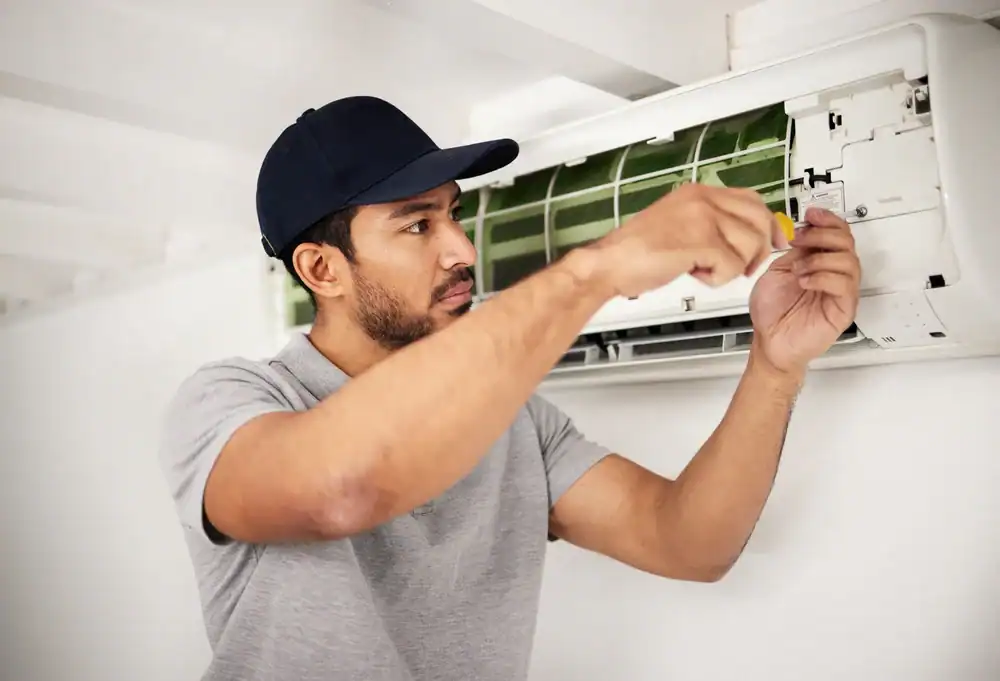
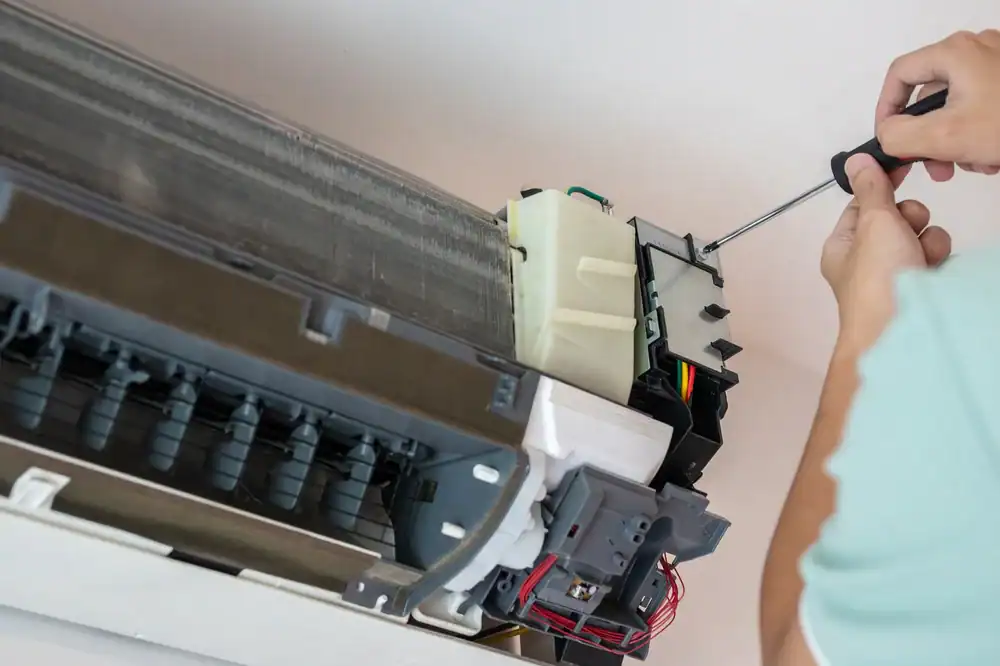
We start with your thermostat and work our way through the entire system. That means checking calibration, testing your air handler, inspecting ductwork for leaks, and measuring airflow at your vents.
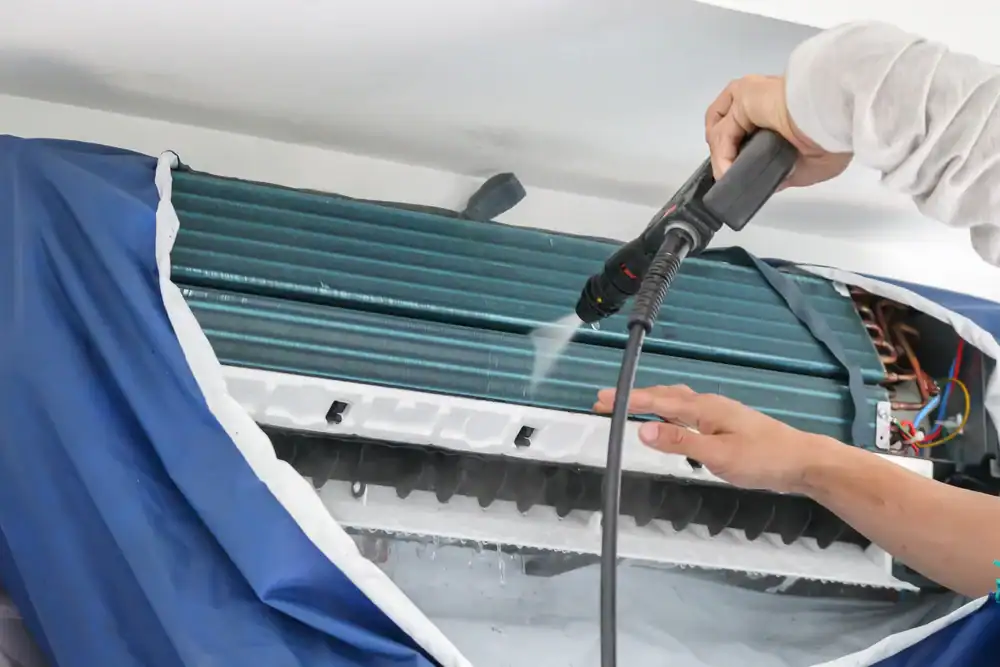
Then we move outside to your condenser unit. We’re cleaning coils, checking refrigerant levels, testing the compressor, inspecting electrical connections, and making sure your condensate drain isn’t clogged. These are the components that fail most often in Union Beach’s humid climate.
We also evaluate your air filter situation and indoor air quality. A dirty filter makes your system work 25% harder, according to the Department of Energy. We’ll show you what we find and explain what needs attention now versus what you can monitor.
Before we leave, you get a clear report on your system’s condition. If something needs repair, we explain why it matters and what happens if you wait. No pressure, just information. Then you decide what makes sense for your situation and budget.

Ready to get started?
You get a full hvac system inspection that covers both indoor and outdoor components. We’re testing electrical connections, measuring refrigerant charge, cleaning condenser coils, checking drain lines, lubricating moving parts, and calibrating your thermostat.
This matters more in Union Beach than in drier climates. The humidity here makes your AC work overtime removing moisture from the air, which means condensate drains clog faster, coils accumulate buildup quicker, and components wear out sooner if they’re not maintained.
We also look at your ductwork for leaks and your insulation for gaps. These aren’t glamorous issues, but they’re costing you money if they’re not addressed. Leaky ducts can waste 20-30% of your cooled air before it even reaches your rooms.
You’ll also get honest feedback about your system’s remaining lifespan. If you’re running a 15-year-old unit that’s on borrowed time, we’ll tell you. If your system has plenty of life left, we’ll tell you that too. The goal is to help you plan, not to sell you equipment you don’t need yet.

Once a year, ideally in spring before cooling season starts. That timing lets you catch problems before you actually need your AC running at full capacity.
Some homeowners in Union Beach do twice-yearly service—once for AC in spring, once for heating in fall. That makes sense if you have a newer system you want to protect, or an older system you’re trying to extend. It’s not required, but it does reduce breakdown risk even further.
The worst time to think about maintenance is July, when your AC is already struggling and every HVAC company has a two-week wait list. By then, minor issues have often turned into expensive repairs.
Your system loses efficiency first. A neglected AC can use 25% more energy than a maintained one, according to the Department of Energy. You’re paying higher electric bills for worse performance.
Then components start failing. Dirty coils make your compressor work harder. Clogged drains cause water damage. Low refrigerant levels freeze your evaporator coil. These aren’t dramatic failures—they’re slow degradation that eventually leads to a breakdown.
The real cost shows up when something major fails and you need emergency repairs. Those cost 50-100% more than regular service calls, and they always seem to happen during heat waves when you can’t just open windows and wait a few days.
Yes, about 95% of them, according to ASHRAE research. That’s because most AC failures aren’t random—they’re the result of wear, dirt buildup, or minor issues that got ignored until they became major problems.
When we clean your coils, check refrigerant levels, test electrical connections, and inspect moving parts, we’re catching the things that cause failures. A loose wire gets tightened before it causes a short. A refrigerant leak gets fixed before your compressor burns out. A worn belt gets replaced before it snaps.
The breakdowns that still happen are usually from manufacturing defects or freak failures that no amount of maintenance would prevent. But those are rare compared to the preventable failures that maintenance eliminates.
Annual maintenance typically costs $150-300 depending on your system. Skipping it costs you more in three ways: higher energy bills, shorter equipment life, and expensive emergency repairs.
The energy waste alone can cost $200-400 per year on a neglected system. Then you lose 5-7 years of equipment life, which means replacing a $5,000-8,000 system years earlier than necessary. And emergency repairs average $500-1,500 per call.
Research shows that proper maintenance delivers a 545% return on investment when you factor in energy savings, extended equipment life, and avoided repairs. That’s not a sales pitch—that’s what the numbers show when you track costs over a system’s lifetime.
The coastal humidity and salt air. Your AC has to remove moisture from the air before it can cool effectively, and Union Beach’s humidity levels make that a constant battle during summer.
That extra work means your system runs longer cycles, which increases wear on components. The condensate drain handles more water, so it clogs faster. The outdoor coils accumulate more buildup because humid air carries more particles.
Salt air also corrodes outdoor components faster than in inland areas. Condenser coils, electrical connections, and metal housing all deteriorate quicker near the coast. That’s why maintenance matters more here—you’re fighting environmental factors that don’t exist twenty miles west.
We offer both. One-time AC tune-ups work fine if you’re good at remembering to schedule service each year. You call us in spring, we come out, we service your system, and you’re set until next year.
Maintenance plans make sense if you want automatic scheduling and priority service. You’re not trying to remember when your last service was or whether you’re overdue. We track it, we reach out when it’s time, and you get on the schedule before the spring rush.
Plans also include perks like priority emergency service and discounts on repairs. If something does break, you’re not waiting behind everyone else who needs help during a heat wave. For homeowners who want one less thing to think about, plans handle the logistics so your AC just keeps working.