Reviews
You’re not just avoiding a breakdown. You’re extending the life of a system that cost you thousands to install.
A well-maintained AC unit in Toms River can last 15-20 years. Without regular service, you’re looking at failure in as little as five. That’s the difference between getting your money’s worth and replacing the whole system a decade early.
Here’s what actually happens when you skip maintenance: your coils get caked with dirt, your refrigerant levels drop, and your system works twice as hard to cool half as well. Your energy bills climb every summer. Small issues turn into $800 repairs. And when it finally quits on the hottest day in July, you’re paying emergency rates plus waiting days for parts.
Regular ac tune-up service fixes all that before it starts. Your system runs cleaner, cooler, and cheaper. Most homeowners with high-efficiency units save $200-$500 annually just on electricity. That pays for the maintenance and then some.
We’ve been serving Monmouth County since 2014. We’re not a national chain. We’re a family-owned company that lives and works in the same community you do.
Our techs are licensed, insured, and trained on the systems running in Toms River homes. We know what New Jersey summers do to air conditioners. We’ve seen the humidity issues, the mold problems, and the systems that quit because nobody cleaned the coils in three years.
We show up on time, we price everything upfront, and we don’t upsell you on stuff you don’t need. That’s why our HomeAdvisor rating sits at 4.8 stars and why customers keep calling us back year after year.
You schedule online or call us directly. We’ll set a time that works for you, usually within a day or two depending on the season.
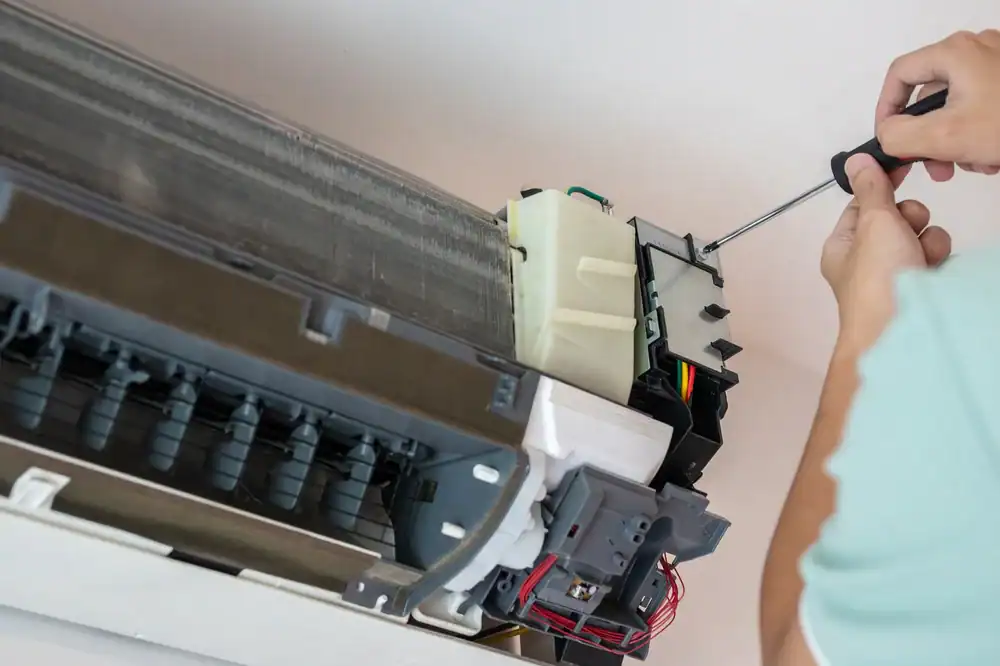
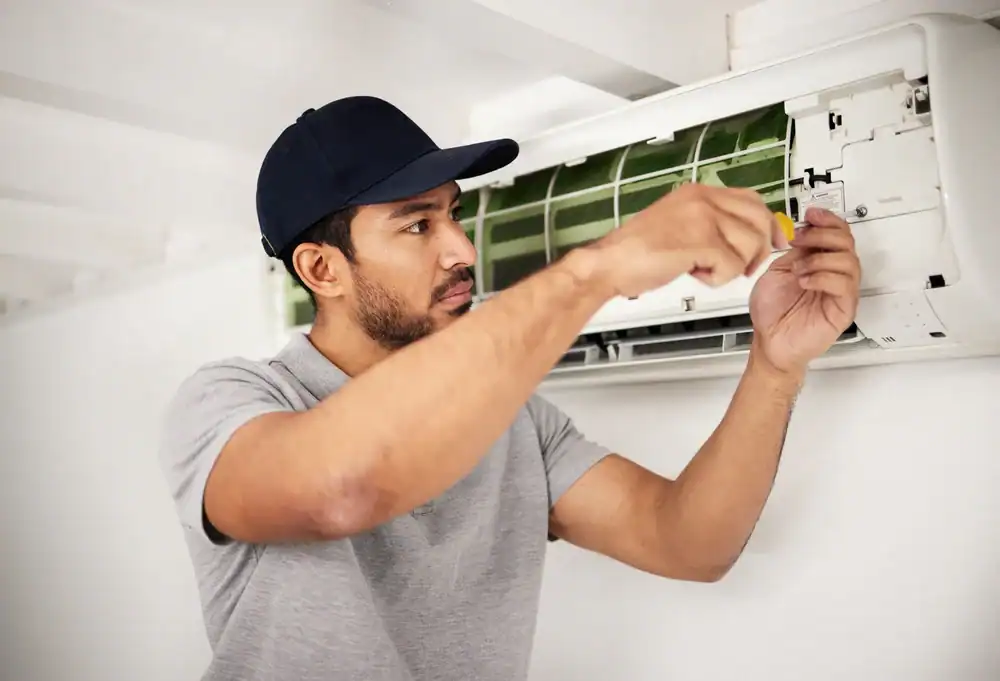
When our tech arrives, they’ll start with a full hvac system inspection. That means checking refrigerant levels, testing electrical connections, inspecting the condenser and evaporator coils, and measuring airflow. We’re looking for anything that’s worn, loose, dirty, or about to fail.
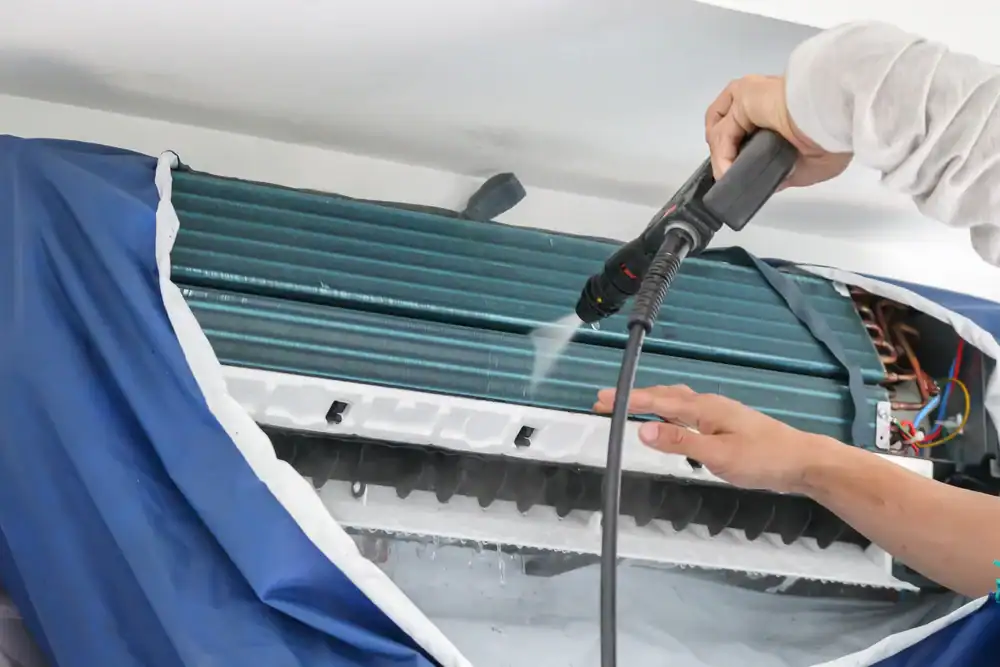
Next comes the hvac cleaning service. We clean or replace your air filter, clear the drain line, and wash down the coils if they need it. Dirty coils are one of the biggest efficiency killers, especially in humid climates like Toms River.
Then we test the system under load. We run it through a full cycle to make sure it’s cooling properly, hitting the right temperatures, and not pulling too much power. If we spot something that needs attention, we’ll walk you through it before doing any work. You’ll get a clear explanation and an upfront price. No surprises.
The whole ac inspection takes about an hour for most systems. When we’re done, you’ll know exactly what shape your AC is in and what, if anything, needs fixing.

Ready to get started?
Every air conditioner service we do covers the same core checklist. We inspect and clean the evaporator and condenser coils. We check refrigerant levels and add more if needed. We test the thermostat calibration to make sure your system isn’t overcooling or short-cycling.
We tighten electrical connections, lubricate moving parts, and inspect the blower motor and fan blades. We clear the condensate drain to prevent water damage and mold growth. And we replace or clean your air filter, which is one of the simplest ways to improve efficiency and indoor air quality.
In Toms River, humidity is a bigger problem than most people realize. When your AC can’t keep up with moisture levels, your home feels warmer than it actually is. You end up cranking the thermostat lower, which makes your system work even harder. That’s why we pay close attention to airflow and drainage during every tune-up.
We also protect your warranty. Most manufacturers require proof of annual maintenance to honor claims. Without it, you’re paying out of pocket for repairs that should be covered. We document every service and keep records so you’re never caught without proof when you need it.

Once a year, ideally in the spring before cooling season starts. That’s when you catch problems before they turn into breakdowns.
Most systems in Toms River run hard from May through September. If you wait until June to schedule service, you’re already halfway through the season. And if something’s wrong, you’re dealing with it in the heat instead of fixing it ahead of time.
Annual maintenance also keeps your manufacturer’s warranty valid. Skip a year and you might void coverage on a system that cost you $5,000 or more to install. That’s a risk that’s not worth taking.
If you have a heat pump that runs year-round, you should get it serviced twice a year: once before cooling season and once before heating season. Heat pumps work harder than standard AC units, so they need more attention.
Most companies charge between $150 and $350 for a standard tune-up. Our maintenance plans start at $12.95 a month, which covers your annual service plus additional perks like priority scheduling and discounts on repairs.
The cost depends on what’s included. A basic tune-up might just be a quick inspection and filter change. A comprehensive service includes refrigerant checks, coil cleaning, electrical testing, and a full system diagnostic.
You’re not just paying for the visit. You’re paying for the problems you avoid. A $200 tune-up can prevent a $1,500 compressor replacement or a $3,000 system failure. It also cuts your energy bills by keeping your system running efficiently.
If you’re comparing prices, make sure you’re comparing the same level of service. The cheapest option usually skips the stuff that actually matters, like cleaning coils or checking refrigerant. You end up paying twice: once for the cheap tune-up, and again when something breaks.
You can handle some basic tasks like changing the filter and keeping the outdoor unit clear of debris. But the stuff that actually prevents breakdowns requires tools, training, and refrigerant certification.
Checking refrigerant levels isn’t something you can do with a YouTube video. It requires gauges, an understanding of pressures and temperatures, and a license to handle refrigerants legally. Same goes for electrical testing, motor lubrication, and coil cleaning.
DIY maintenance also doesn’t protect your warranty. Manufacturers require professional service records. If your compressor fails and you can’t prove annual maintenance by a licensed tech, you’re paying for the replacement yourself.
The bigger issue is what you miss. A trained tech knows what a failing capacitor sounds like, what a refrigerant leak smells like, and what a motor on its last legs feels like. They catch problems before they strand you without AC in the middle of summer. That’s worth paying for.
If your energy bills are climbing, your system is running longer to cool the same space, or you’re hearing strange noises, don’t wait for your annual service. Those are all signs something’s wrong.
Weak airflow usually means a clogged filter, dirty coils, or a failing blower motor. Warm air coming from the vents could be low refrigerant, a bad compressor, or a thermostat issue. Moisture or leaks around the unit often point to a clogged drain line or a refrigerant leak.
Strange smells are another red flag. A musty odor means mold in the ductwork or drain pan. A burning smell could be an electrical problem or an overheating motor. Either way, shut the system off and call someone before it gets worse.
If your system is short-cycling—turning on and off every few minutes—that’s a sign of a bigger problem. It could be a refrigerant issue, a faulty thermostat, or an oversized unit. Short-cycling wears out components fast and drives up your electric bill.
A thorough air conditioner service takes about an hour for most residential systems. Larger homes or commercial units might take longer depending on the setup.
That hour includes the full inspection, cleaning, testing, and any minor adjustments. If we find something that needs repair, we’ll walk you through it and give you a price before moving forward. Most repairs can be done the same day if you approve the work.
We’re not rushing through a checklist just to get to the next job. We’re checking refrigerant pressures, testing electrical draws, cleaning coils, and making sure your system is actually ready for summer. That takes time to do right.
If you’re on a maintenance plan, we’ll also update your service records and schedule your next visit. That way you’re never scrambling to remember when your last tune-up was or whether your warranty is still valid.
Yes, because “still cooling” doesn’t mean it’s running efficiently or that it won’t fail next month. Most breakdowns don’t happen suddenly. They’re the result of small problems that got ignored.
Your system might be cooling your home, but it could be using 20-30% more electricity than it should. Dirty coils, low refrigerant, and worn parts all make your AC work harder. You’re paying more every month without realizing it.
Maintenance catches the stuff you can’t see. A capacitor that’s starting to fail. A refrigerant leak that’s slow but steady. A motor bearing that’s wearing out. Fix those now and you avoid a breakdown. Ignore them and you’re replacing a compressor or buying a whole new system.
The other issue is warranty protection. If your AC is less than 10 years old, it’s probably still under warranty. But that warranty requires proof of annual maintenance. Skip the tune-ups and you’re on your own when something major breaks. That’s a $2,000+ mistake you don’t want to make.