Reviews
Your AC loses 5% efficiency every year you skip maintenance. That means higher electric bills, more wear on components, and a system that’s working harder to keep you comfortable.
An annual AC tune-up reverses that decline. You’ll see it in your monthly utility costs—most homeowners save 10-20% on cooling expenses after a proper tune-up. You’ll feel it when July temperatures push past 100°F and your system keeps running without issue.
The bigger payoff shows up years down the road. Air conditioners that get regular professional maintenance last 40% longer than neglected units. We’re talking 15-20 years of reliable cooling instead of limping through 8-10 years and facing a full replacement. That’s thousands of dollars in avoided costs, just from scheduling annual service.
Most breakdowns happen on the hottest days of summer—exactly when you can’t afford to wait. Proactive maintenance catches 95% of potential failures before they leave you sweating through a heat wave. A loose electrical connection gets tightened during your spring tune-up instead of causing a compressor failure in August. A small refrigerant leak gets sealed before it becomes a complete system shutdown.
We’ve been keeping Monmouth County homes comfortable through some of the hottest summers on record. Our licensed technicians live and work in this area—we know what New Jersey’s climate does to HVAC systems.
Port Monmouth sits right in the zone where humidity makes 90-degree days feel like 100-plus. Your AC works harder here than it would in drier climates. We’ve seen what that sustained demand does to systems over time, and we know exactly what to check during an HVAC system inspection to keep yours running efficiently.
You’ll work with the same local team every time. No subcontractors, no rotating cast of technicians who don’t know your system’s history. We show up on time, explain what we’re doing, give you upfront pricing, and finish the job right the first time.
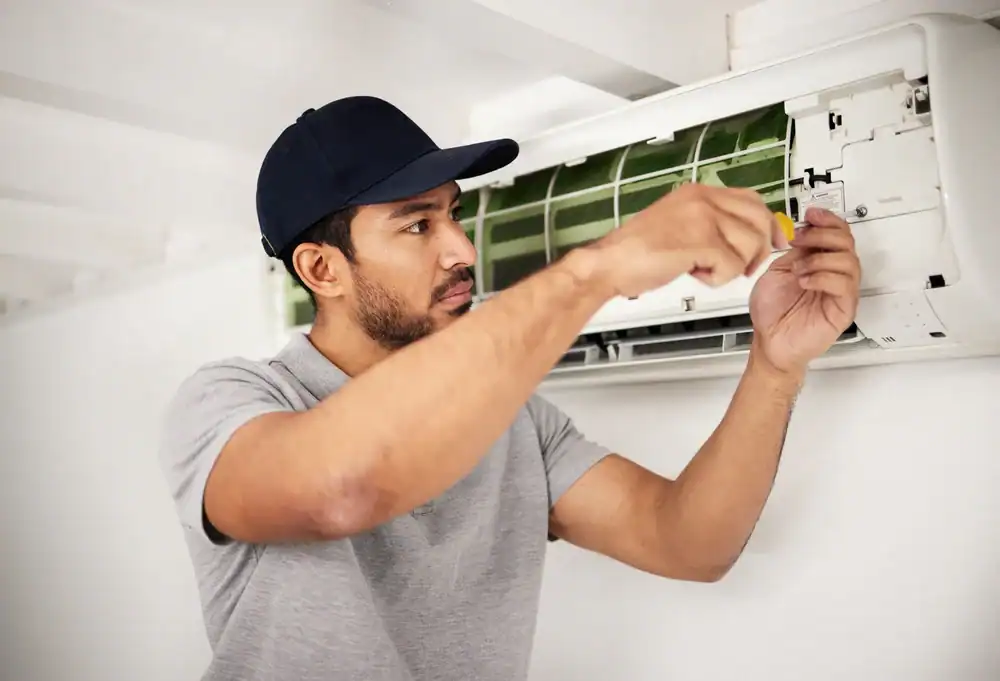
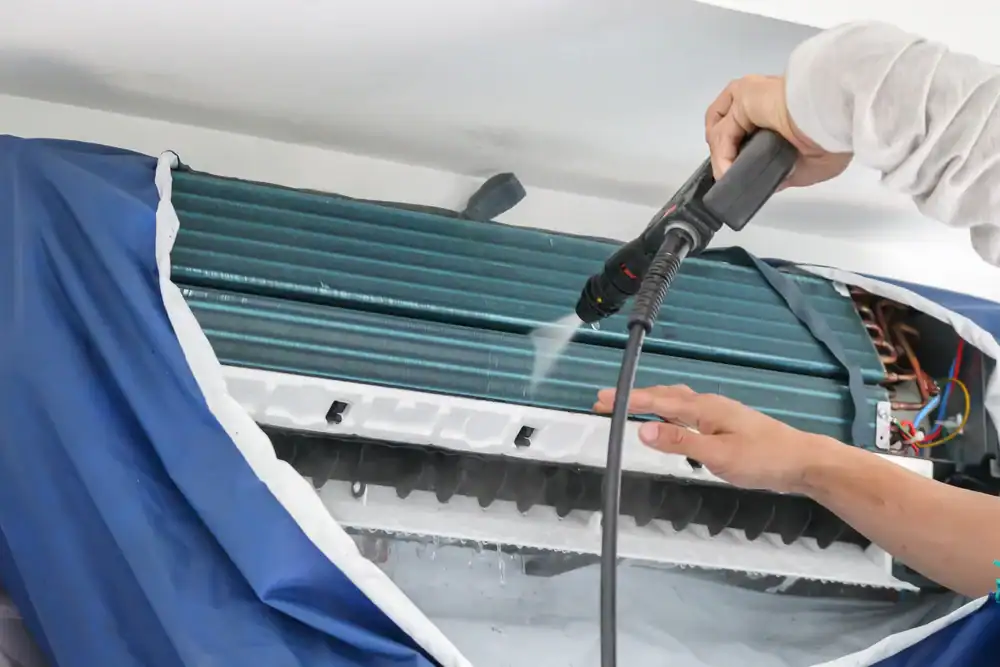
Schedule your appointment and we’ll arrive during the window we give you—no all-day waiting around. Our technician will start with your outdoor condenser unit, checking refrigerant levels, cleaning the coils, and inspecting electrical connections. Dirty coils and low refrigerant are two of the biggest efficiency killers, and both are easy to fix during routine maintenance.
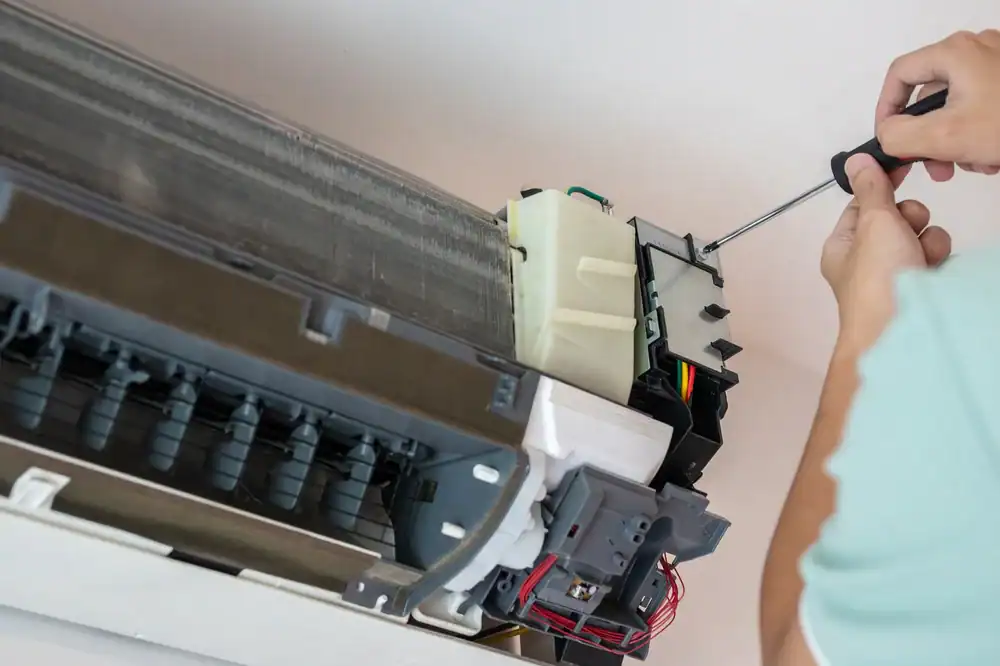
Inside, we’ll check your air handler, replace or clean your filter, inspect the blower motor and belts, and test your thermostat calibration. A blower motor that’s pulling too much current or a thermostat that’s reading two degrees off can cost you hundreds in wasted energy over a summer.
We test the system under load to make sure it’s cycling properly and hitting the temperatures it should. You’ll get a clear explanation of what we found, what we fixed, and what (if anything) needs attention soon. No surprise upsells, no scare tactics—just honest information about your system’s condition.
The whole hvac cleaning service takes about an hour for a standard residential system. You’ll have documentation of the service for your warranty records, and you’ll know your AC is ready for whatever summer throws at it.

Ready to get started?
Your AC maintenance covers everything your system needs to run efficiently through a full New Jersey summer. We’re checking refrigerant levels and pressures, cleaning condenser and evaporator coils, inspecting and tightening all electrical connections, testing capacitors and contactors, lubricating moving parts, checking drain lines for clogs, calibrating your thermostat, and measuring temperature splits to verify proper operation.
This matters more in Port Monmouth than in milder climates. When we had eight of the ten warmest Julys since 2010, and summer temperatures regularly pushing into the low 100s, your system runs longer cycles and works harder. That accelerated wear shows up in loose connections, dirty coils, and components that fail earlier than they should.
Most manufacturers require annual professional maintenance to keep your warranty valid. Skip it, and you’re on your own for repair costs that should have been covered. We document every service visit so you have proof of maintenance if you ever need to file a warranty claim.
The typical maintenance visit costs $100-300 depending on your system size and what’s included. Compare that to emergency repair calls that run $243-1,567, or a full system replacement at $5,000-10,000. Annual service is the cheapest insurance you can buy for your cooling system.

Once a year, ideally in spring before cooling season starts. April or May is perfect timing—you’re catching problems before the summer heat arrives, and HVAC companies aren’t slammed with emergency calls yet.
New Jersey’s climate is hard on air conditioners. You’re running your system heavily from June through September, often into early October. That’s four-plus months of sustained use in high heat and humidity. Annual maintenance keeps your system ready for that workload.
If you have a heat pump that runs year-round, consider service twice a year—once before cooling season and once before heating season. Heat pumps work harder than standard AC units and benefit from more frequent attention. Same goes if you have allergies or respiratory issues—more frequent filter changes and coil cleaning improve your indoor air quality noticeably.
Your system loses 5-15% efficiency every year without maintenance. After two years of neglect, you’re paying 10-30% more on your electric bills for the same cooling. That’s $30-90 extra every month during summer for most Port Monmouth homes.
Skipped maintenance also voids most manufacturer warranties. If your compressor fails in year three and you haven’t had annual professional service, you’re paying for that $1,500-2,500 repair out of pocket even though it should have been covered.
The bigger risk is a complete breakdown during a heat wave. When temperatures hit 100°F and your AC quits, you’re looking at a 2-3 day wait for service during peak season, emergency rates that run 50-100% higher than standard calls, and potential damage to your home from extreme indoor heat and humidity. One emergency repair often costs more than five years of preventive maintenance.
You can handle basic tasks like changing filters monthly and keeping debris away from your outdoor unit. Those two things alone make a noticeable difference in system performance and should be part of your routine home maintenance.
Professional maintenance goes deeper. Checking refrigerant levels requires specialized gauges and EPA certification—it’s illegal for non-certified individuals to handle refrigerants. Testing electrical components under load, measuring temperature splits, and calibrating controls all require training and equipment most homeowners don’t have.
More importantly, a trained technician spots problems you’d miss. That capacitor that’s testing weak but hasn’t failed yet? We catch it during spring maintenance and replace it for $150. You don’t notice it until it fails on the hottest day in July, and now you’re paying emergency rates plus dealing with a house that’s 85°F inside. Professional maintenance pays for itself by catching small issues before they become expensive emergencies.
April and May are ideal for Port Monmouth homeowners. You’re getting ahead of the summer rush, technicians have more availability, and you’re catching any issues with plenty of time to order parts before you actually need your AC running.
Waiting until June is risky. We’ve seen temperatures hit 103°F in late June in nearby areas, and by then HVAC companies are fielding emergency calls from systems that have already failed. If your maintenance visit uncovers a problem that needs parts, you might be waiting days or weeks during peak season.
Early spring maintenance also means your system is running at peak efficiency from the first hot day. You’re not wasting energy and money on an inefficient system for the first month of summer while you wait to schedule service. Given that most homes spend around $300 annually on air conditioning, even a few weeks of reduced efficiency adds up.
Expect to pay $100-300 for a standard annual maintenance visit, depending on your system size and what’s included in the service. A basic tune-up for a smaller residential system runs toward the lower end. Larger systems, heat pumps, or more comprehensive service packages cost more.
That investment saves you money multiple ways. The 10-20% reduction in energy consumption typically pays for the maintenance visit within the first summer. Catching small problems early—a $150 capacitor replacement instead of a $2,000 compressor failure—saves you thousands over your system’s lifetime.
We give you upfront pricing before we start work. No hidden fees, no surprise charges. If we find something during the inspection that needs attention, we’ll explain what it is, why it matters, and what it costs to fix. You decide whether to handle it now or monitor it. We also offer financing options if you need a larger repair and want to spread the cost out.
Yes—proactive maintenance prevents up to 95% of AC failures. Most breakdowns don’t happen randomly. They’re the result of gradual wear that shows warning signs during an inspection.
Electrical connections loosen over time from the vibration and thermal cycling your system goes through. A loose connection creates resistance, which creates heat, which eventually causes failure. We catch and tighten those connections during maintenance before they fail. Capacitors weaken gradually—they test fine one year, weak the next year, and fail the third year. We replace them when they test weak, not after they’ve left you without cooling.
Refrigerant leaks start small. During maintenance, we’re checking pressures and looking for early signs of leaks. A small leak caught early might cost $200-400 to repair. That same leak ignored for a year or two means your system has been running low on refrigerant, working harder, and potentially damaging the compressor—now you’re looking at a $2,000-3,000 repair or full system replacement. Regular maintenance catches problems when they’re still cheap and easy to fix.