Reviews
Your AC works harder than you think. Between Navesink’s humid summers and the salt air from the coast, your system battles conditions that accelerate wear and drive up energy costs. When humidity spikes above 60%, your unit runs longer cycles just to maintain temperature. That means higher electric bills and faster component failure.
Regular AC maintenance changes that equation. A well-maintained system uses 20-30% less energy than a neglected one, according to the U.S. Department of Energy. That’s real money back in your pocket every month, especially with New Jersey’s electricity rates climbing to 16.29¢ per kWh and projected to hit 18.9¢ by year’s end.
The numbers get better. Systems with annual tune-ups last 15-20 years instead of the 10-12 you’ll get without maintenance. That’s a $4 return for every $1 spent on preventive care. You’re not just avoiding breakdowns—you’re protecting a major home investment while keeping your family comfortable through every heatwave.
We’ve spent years working on HVAC systems throughout Monmouth County, from the coastal homes in Navesink to the inland properties in Middletown and Freehold. That experience matters because your system faces challenges most maintenance companies don’t account for—salt air corrosion, extreme humidity swings, and the strain of cooling older homes built before modern efficiency standards.
Our team holds full New Jersey licensing and insurance, and we show up with upfront pricing before any work starts. No hidden fees, no surprise charges. When you call for AC maintenance, you get licensed technicians who’ve seen what happens to systems in this climate and know exactly what to check.
We’re available 24/7 for emergencies, and we offer financing options plus discounts for military and first responders. But most of our work happens during scheduled maintenance visits—the kind that prevent those 2 AM emergency calls in the first place.
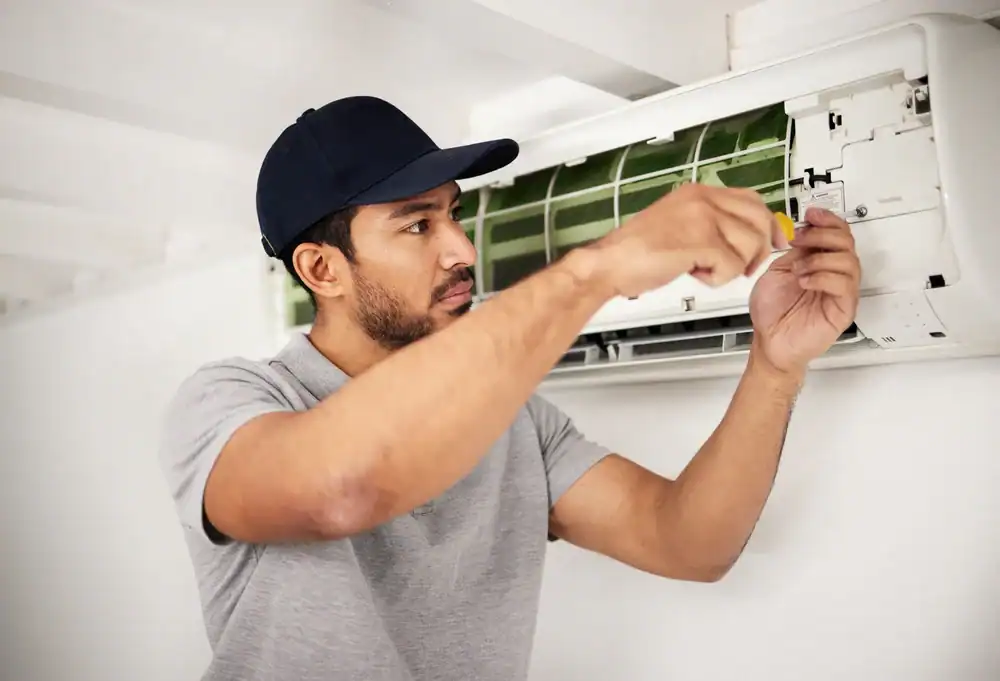
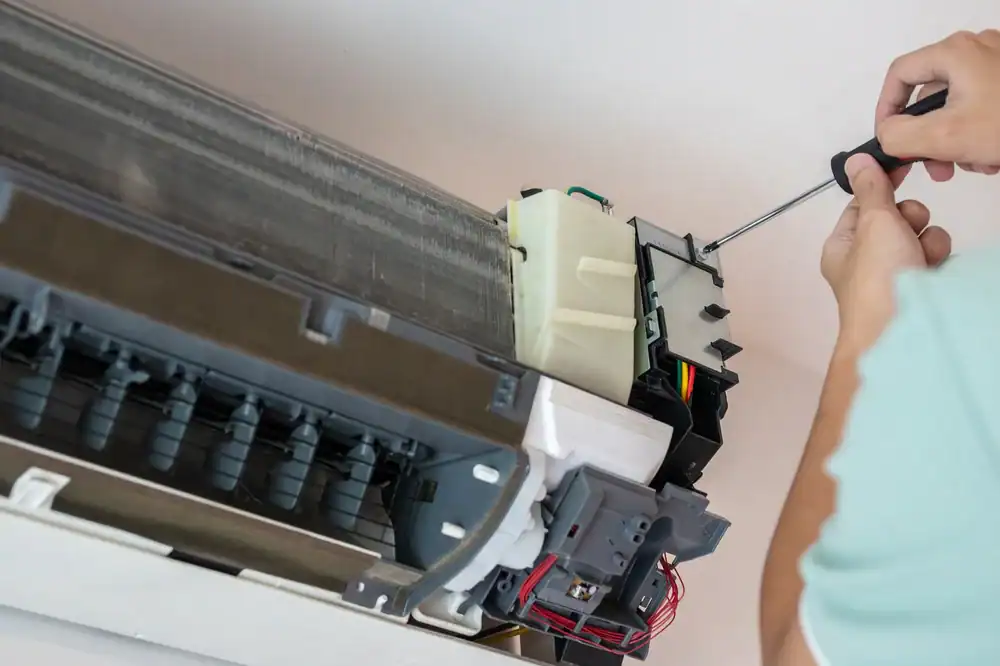
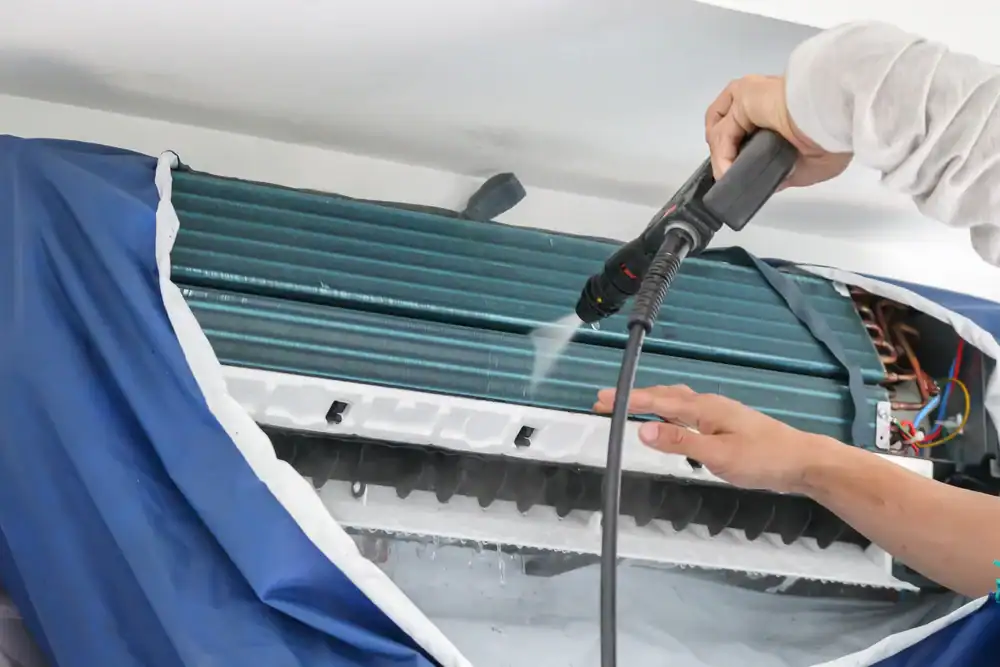
A real AC tune-up isn’t just changing a filter and calling it done. Our 21-point inspection covers every component that affects performance, efficiency, and longevity. We start with your air filter and evaporator coil—two areas where Monmouth County’s humidity causes the most problems. Dirty coils make your system work 30% harder, and most homeowners don’t realize it’s happening until their bills spike.
Next, we check refrigerant levels and test for leaks. Low refrigerant doesn’t just reduce cooling—it forces your compressor to overwork, leading to the most expensive repair you can face. We also inspect electrical connections, test your thermostat calibration, and examine your condensate drain line. That drain line clogs frequently in humid climates, and when it backs up, you’re looking at water damage and system shutdown.
We clean your outdoor condenser unit, removing debris and checking for corrosion from salt air exposure. Then we test your system’s amp draw and temperature differential to verify it’s running at manufacturer specifications. You get a full report on what we found and what your system needs, if anything. Most visits take 60-90 minutes, and you’ll know your system’s condition before we leave.

Ready to get started?
Our hvac system inspection covers the components that fail most often in New Jersey’s climate. We clean or replace your air filter, clean both coils, check all electrical connections and tighten any loose terminals, test capacitors and contactors, verify refrigerant charge, inspect ductwork for leaks, calibrate your thermostat, and lubricate all moving parts. This isn’t a quick visual check—it’s a comprehensive service designed to catch problems before they become expensive.
After reviewing hundreds of repair calls, we found that over 50% could have been prevented with regular maintenance. The most common failures? Dirty coils, low refrigerant from slow leaks, failed capacitors, and clogged drain lines. All of these show warning signs during a proper inspection.
Navesink’s location near the Navesink River means your outdoor unit faces more corrosion than systems just a few miles inland. We pay special attention to your condenser coil and electrical connections because salt air accelerates deterioration. We also check your system’s ability to handle humidity—a critical factor that most maintenance visits ignore. Your AC should remove 30-50 pints of moisture per day in summer. If it’s not, you’ll feel uncomfortable even when the temperature is right, and your system will run longer cycles that waste energy.

Most annual AC maintenance visits in Monmouth County run between $150-$250 for a standard system. That covers a complete inspection, cleaning, and minor adjustments. If we find issues that need repair—like a failing capacitor or low refrigerant—those costs are separate, but you’ll get pricing before any additional work starts.
Compare that to emergency service calls, which typically cost $300-$500 just to show up, plus parts and labor. After-hours and weekend emergencies can run 50-100% higher than scheduled service. The math is straightforward: spending $200 on annual maintenance beats paying $800 for an emergency compressor repair during a July heatwave.
We offer maintenance plans that reduce the per-visit cost and include perks like priority scheduling and discounts on repairs. These plans typically pay for themselves if you need even one repair during the year. The real value isn’t just the service cost—it’s avoiding the expensive failures that happen when systems go without maintenance.
Schedule your AC tune-up in April or early May, before the summer heat arrives. Spring maintenance gives you time to address any issues before you’re running your system daily. It also means you’re not competing with the rush of homeowners calling after their AC fails during the first heatwave.
Fall maintenance for your heating system follows the same logic—handle it in September or October before you need heat. If you maintain both your AC and furnace, you’re covering your HVAC system year-round and catching problems during the seasons when repairs are less urgent and less expensive.
Some homeowners ask about maintenance during summer or winter. You can schedule service anytime, but you risk discovering a problem when you can’t afford to have your system down for repairs. Spring and fall give you flexibility. If we find an issue that requires parts or extended repair time, you’re not sweating through the wait or shivering while it gets fixed.
Your system loses about 5% of its efficiency every year without maintenance. After three years, you’re paying 15% more to cool your home to the same temperature. After five years, that number can hit 25-30%, and you’re also dealing with reduced cooling capacity. Your AC might run constantly on hot days and still struggle to keep up.
Component failures accelerate without maintenance. Dirty coils force your compressor to work harder. Low refrigerant makes your system run longer cycles. Failed capacitors leave you without cooling until they’re replaced. According to ASHRAE, regular maintenance prevents up to 95% of these breakdowns. Skip maintenance, and you’re accepting a 95% higher chance of failure.
The bigger cost is replacement. A neglected system might need replacement in 10-12 years, while a maintained system regularly hits 15-20 years. That’s a $5,000-$8,000 expense arriving 5-8 years earlier than necessary. Annual maintenance costs $200. Early replacement costs thousands. The choice is clear, even if the consequences take time to appear.
You can handle basic tasks like changing your filter monthly and keeping debris away from your outdoor unit. Those steps matter and they’re worth doing. But a real tune-up requires specialized tools, refrigerant handling certification, and the knowledge to spot problems before they cause failures.
Refrigerant work requires EPA certification because improper handling damages the environment and is illegal. Testing electrical components safely requires specific meters and training. Checking refrigerant charge accurately means measuring superheat and subcooling—calculations that require temperature and pressure readings at multiple points. Most homeowners don’t have the tools or training to do this correctly.
Professional maintenance also gives you documentation. If your system fails and it’s still under warranty, manufacturers often require proof of annual professional maintenance. DIY maintenance doesn’t satisfy that requirement. You’ll also miss problems that aren’t obvious without experience. A technician who’s seen hundreds of systems knows what a failing capacitor sounds like, what a refrigerant leak smells like, and what corrosion patterns indicate on electrical connections. That pattern recognition catches problems you’d miss until they cause a breakdown.
Navesink sits right on the water, which means humidity levels regularly spike above 70% in summer. Your AC removes moisture while it cools, but high humidity makes that job much harder. When outdoor humidity is extreme, your system runs longer cycles to pull moisture out of your indoor air. Longer cycles mean more energy consumption and more wear on components.
High humidity also affects your comfort. Even if your thermostat reads 72°F, you’ll feel warmer when humidity is high because moisture in the air prevents your sweat from evaporating efficiently. Many homeowners respond by lowering their thermostat, which makes their AC run even more and drives up costs. The better solution is ensuring your system is properly sized and maintained to handle humidity effectively.
Humidity creates maintenance issues too. Your evaporator coil collects condensation, and in humid climates, that moisture becomes a breeding ground for mold and bacteria if the coil isn’t cleaned regularly. Your condensate drain line also works overtime, and clogs happen more frequently. During maintenance, we verify your system is removing the right amount of moisture—typically 30-50 pints per day in summer. If it’s not, we can identify why and fix the issue before it affects your comfort or your energy bills.
An inspection is diagnostic—a technician examines your system, tests components, and tells you what’s wrong or what might fail soon. A tune-up includes that inspection but also involves cleaning, adjusting, and maintaining components to restore performance. Most companies use the terms interchangeably, but it’s worth confirming what’s included before you schedule.
A complete tune-up should include cleaning both coils, checking and adjusting refrigerant levels if needed, testing all electrical components, calibrating your thermostat, lubricating moving parts, and clearing your condensate drain line. An inspection alone might identify that your coils are dirty but not actually clean them. You’d get a recommendation to schedule cleaning as a separate service.
When you call for AC maintenance, ask specifically what’s included. Our 21-point service covers both inspection and tune-up work because we’ve found that’s what actually prevents breakdowns. You’re not just getting a report on your system’s condition—you’re getting the cleaning and adjustments that keep it running efficiently. That’s the difference between knowing your coils are dirty and actually having clean coils when we leave.