Reviews
You’re not calling for emergency repairs at 9 PM on the hottest day of July. Your energy bills aren’t climbing every month because your system is working twice as hard to do half the job. And you’re not replacing your entire unit years earlier than you should because small problems turned into expensive ones.
That’s what regular AC maintenance does. It catches the refrigerant leak before your coils freeze. It cleans the condenser before your compressor burns out. It identifies the failing capacitor before your system won’t turn on at all.
In Marlboro, where we see 15+ days above 90 degrees every summer, your air conditioner isn’t optional. It’s running hard from June through September. An annual tune-up isn’t about perfection—it’s about making sure your system can handle what you’re asking it to do. Most breakdowns happen on the season’s first really hot day, right when everyone else is calling too. Maintenance helps you avoid being one of those calls.
AME Plumbing Heating and Cooling has been serving Monmouth County homeowners for years. We’re not a franchise or a call center routing your job to whoever’s available. We’re a local team that lives and works in the same area you do.
Every technician is licensed and insured in New Jersey. We stock common parts on our trucks so most repairs happen the same day. And we offer upfront pricing before any work starts—no surprises, no hidden fees.
Marlboro homes are built well, but they’re also expensive to heat and cool. Your HVAC system is one of the biggest investments in your house. We treat it that way. If something needs fixing, we’ll tell you. If it doesn’t, we’ll tell you that too.
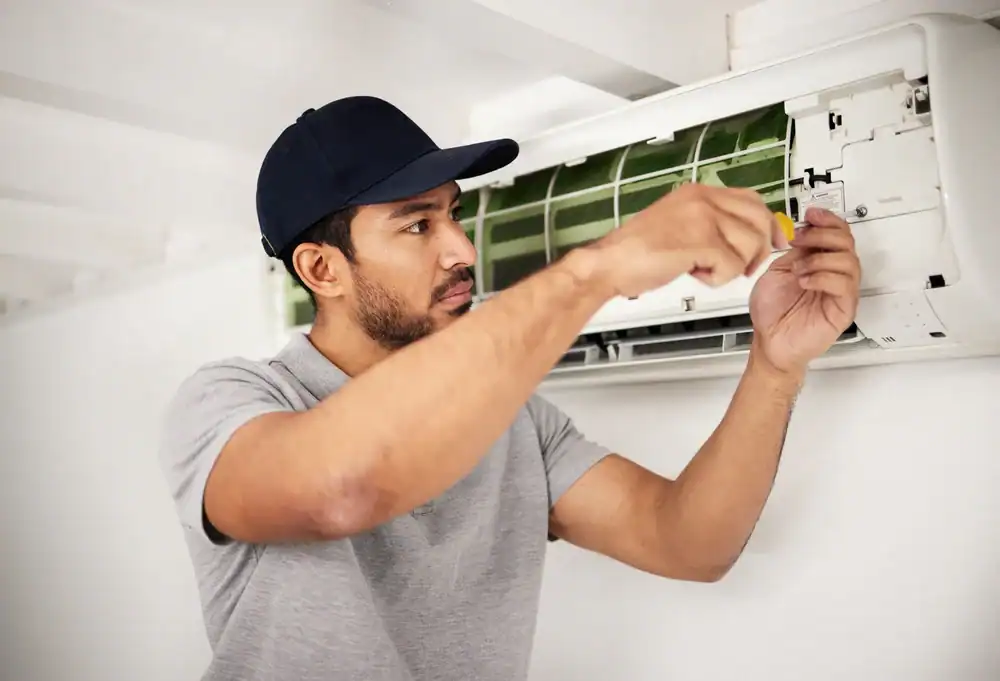
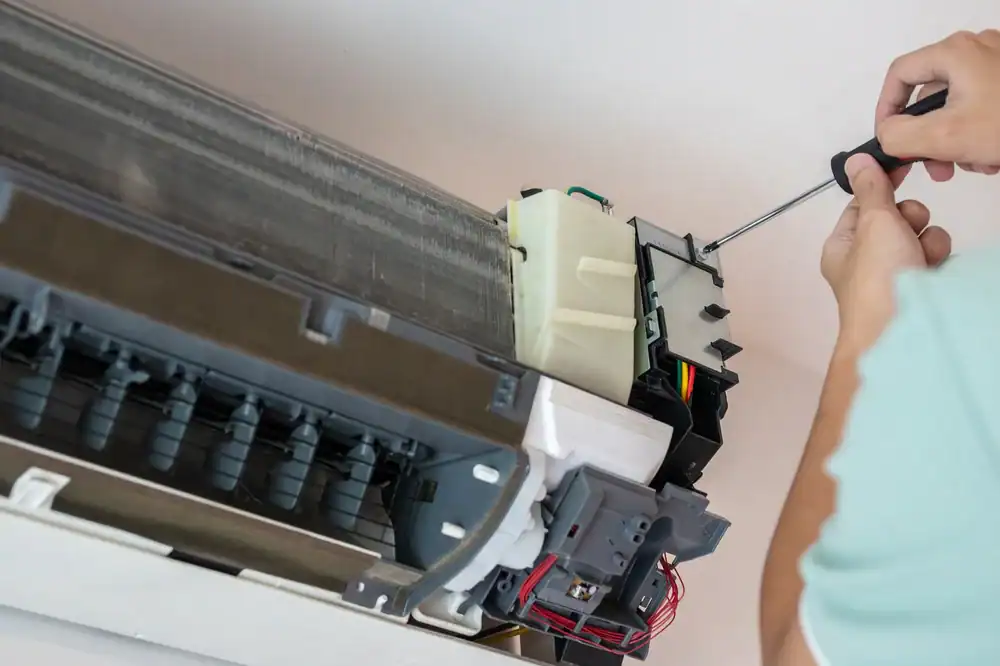
We start with your thermostat. Is it reading accurately? Is it communicating with your system? Then we move to your indoor unit—checking the evaporator coil, cleaning or replacing your air filter, inspecting the condensate drain for clogs.
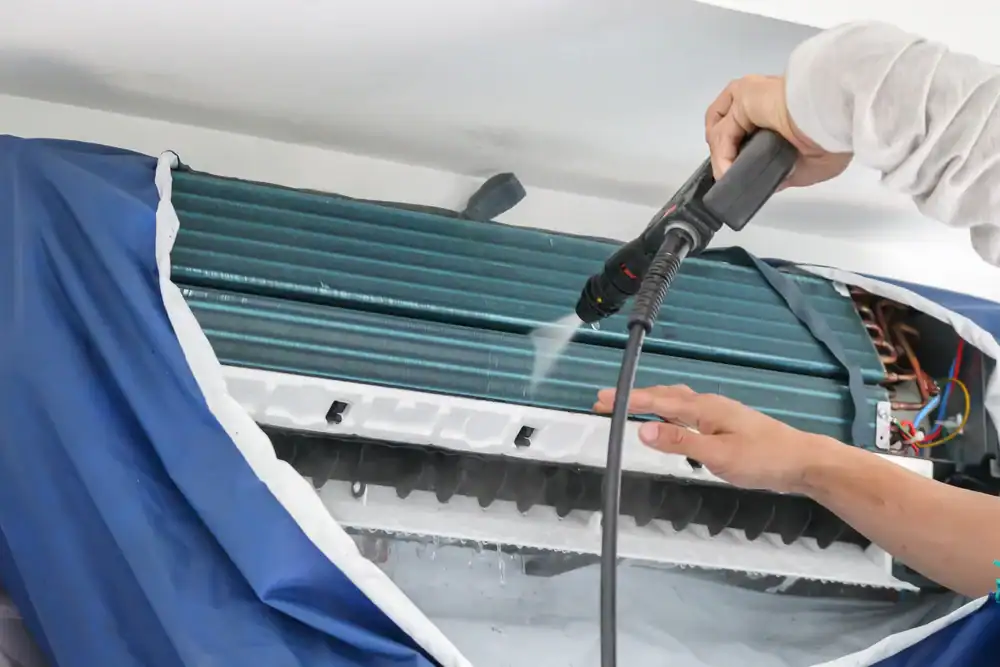
Outside, we clean your condenser coils. Dirt and debris reduce efficiency fast, and most homeowners don’t realize how much buildup happens in a single season. We check refrigerant levels, test electrical connections, inspect your compressor and fan motor. If your system is low on refrigerant, that’s a leak—we’ll find it.
We also measure airflow and temperature drop across your system. If those numbers are off, something’s wrong even if the AC feels like it’s working. Finally, we test the system under load to make sure everything runs smoothly when it’s actually cooling your home.
The whole process takes about an hour. You’ll get a clear summary of what we found, what’s working, and what (if anything) needs attention. No upselling, no scare tactics—just the truth about your system.

Ready to get started?
Every maintenance visit includes a full system inspection. That means checking electrical connections, cleaning condenser and evaporator coils, testing capacitors and contactors, inspecting ductwork for leaks, and verifying refrigerant charge. We also calibrate your thermostat and test your system’s startup and shutdown cycles.
In Marlboro, we see specific issues tied to the local climate. High humidity means condensate drains clog more often. Coastal air carries salt and moisture that corrode outdoor units faster. Homes with mature trees deal with more debris in their condenser units. We know what to look for because we’ve been doing this in Monmouth County for years.
You’ll also get a written report. If we find something that needs repair, we’ll explain what it is, why it matters, and what it costs to fix. You decide what happens next. Some repairs are urgent—like a refrigerant leak or a failing compressor. Others can wait. We’ll tell you the difference.
Regular maintenance also keeps your manufacturer’s warranty valid. Most warranties require proof of annual service. Without it, you could be on the hook for a repair that should’ve been covered.

Once a year, ideally in spring before cooling season starts. That’s when we can catch problems before the heat arrives and before our schedule fills up with emergency calls.
If your system is older than 10 years, or if you run it heavily from May through October, twice a year isn’t overkill. Older systems need more attention, and the wear adds up faster when you’re using your AC six months out of the year.
Some homeowners skip maintenance because their system “seems fine.” That’s usually when problems are developing. A refrigerant leak doesn’t announce itself until your house won’t cool. A failing capacitor works until it doesn’t. Maintenance finds these issues while they’re still small and cheap to fix.
Your system works harder, costs more to run, and fails sooner. Dirty coils reduce efficiency by up to 30%. Low refrigerant makes your compressor run longer to reach the same temperature. Clogged filters restrict airflow and freeze your evaporator coil.
Most emergency repairs we see in July and August could’ve been prevented with a spring tune-up. A $150 maintenance visit catches the problems that turn into $800 compressor replacements or $4,000 system failures.
And if your AC is still under warranty, skipping maintenance can void your coverage. Manufacturers require proof of annual service. Without it, you’re paying out of pocket for repairs that should’ve been covered. It’s not just about comfort—it’s about protecting what you’ve already paid for.
You can handle some basics—changing your filter every 1-3 months, keeping debris away from your outdoor unit, making sure your vents aren’t blocked. Those things help, and you should do them.
But a real tune-up requires tools and training most homeowners don’t have. Checking refrigerant levels means accessing a sealed system. Testing electrical components requires a multimeter and knowledge of what the readings mean. Cleaning coils properly without damaging the fins takes the right equipment.
DIY maintenance also misses the problems you can’t see. A small refrigerant leak, a failing capacitor, a motor drawing too much current—these don’t show obvious symptoms until they cause a breakdown. A trained HVAC technician knows what to look for and how to test for it. That’s the difference between “it seems fine” and “it actually is fine.”
Most companies charge between $100 and $200 for a standard maintenance visit. That includes inspection, cleaning, and minor adjustments. If we find something that needs repair, that’s a separate cost, and we’ll give you a price before doing any work.
Some companies offer service contracts or maintenance plans that cover annual tune-ups plus discounts on repairs. If you’re planning to stay in your home and keep your system for a while, those plans often pay for themselves.
What matters more than the cost is what’s included. A $79 “tune-up special” that only changes your filter and checks your thermostat isn’t real maintenance. You want coil cleaning, refrigerant testing, electrical inspection, and a technician who knows what they’re looking at. Cheap maintenance that misses problems isn’t a deal—it’s a waste of money.
Spring for your AC, fall for your furnace. You want maintenance done before you actually need the system, not after it’s already running every day.
In Marlboro, that means scheduling AC maintenance in April or May. By June, we’re already getting emergency calls, and our schedule fills up fast. If you wait until the first 90-degree day to think about maintenance, you’re too late—and if something’s wrong, you’re waiting longer for a repair.
Early scheduling also means better availability. You get your choice of appointment times instead of taking whatever’s left. And if we do find a problem during maintenance, there’s time to order parts and schedule a repair before you’re sweating through a heat wave. Waiting until summer means competing with everyone else who also waited too long.
Yes. We offer 24/7 emergency service because AC breakdowns don’t wait for business hours. If your system fails on a Saturday night in July, you shouldn’t have to wait until Monday to get help.
Emergency calls get prioritized, and we typically arrive within a few hours. We stock common parts on our trucks, so many repairs can be completed the same day. If we need to order a part, we’ll do everything we can to get your system running temporarily until the repair is finished.
That said, emergency repairs cost more than scheduled ones—and they’re almost always more stressful. That’s why maintenance matters. Catching problems early means fixing them on your schedule, not ours. It means planning a repair instead of scrambling for one. And it means your family stays comfortable instead of sweating through an unexpected breakdown.