

Reviews
You’re paying around $1,500 a year to heat and cool your home in New Jersey. That number climbs fast when your AC is running inefficiently.
A well-maintained system uses 15-30% less energy than one that’s been ignored. That’s real money back in your pocket every month. More importantly, you’re not dealing with a dead AC on the hottest day in July when every HVAC company in Monmouth County is booked solid.
Regular air conditioner service catches the small stuff before it becomes expensive. A $20 capacitor replacement during a tune-up beats a $1,200 compressor failure in August. Your system also lasts years longer when it’s not fighting through dirty coils and worn parts every summer.
We’ve been serving Little Silver and Monmouth County since 2014. We’re a family-owned company, which means you’re getting the same techs, the same quality, and the same accountability every time.
Our team is licensed and insured. We show up on time, give you upfront pricing before any work starts, and we’re available 24/7 when emergencies happen. No hidden fees, no surprises, no runaround.
Little Silver’s coastal air is tough on AC systems. Salt accelerates corrosion on outdoor units, and humidity makes your system work overtime. We’ve seen what happens to systems here when maintenance gets skipped, and we know exactly what yours needs to hold up.
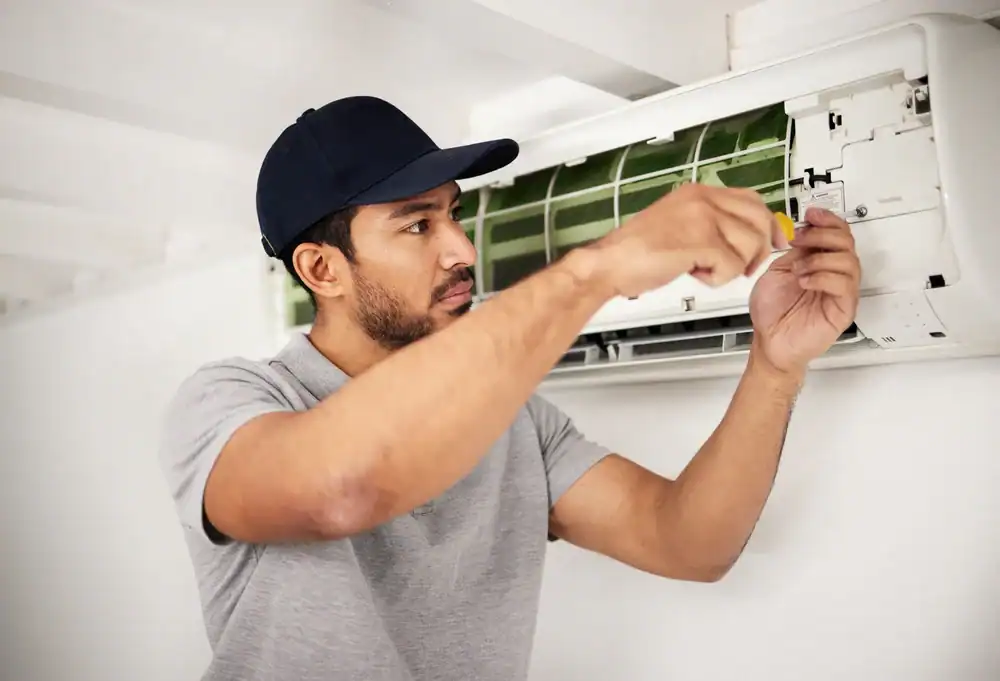
We start with your thermostat and work our way through the entire system. You’ll know if it’s reading accurately, if your airflow is where it should be, and if anything needs attention before it fails.
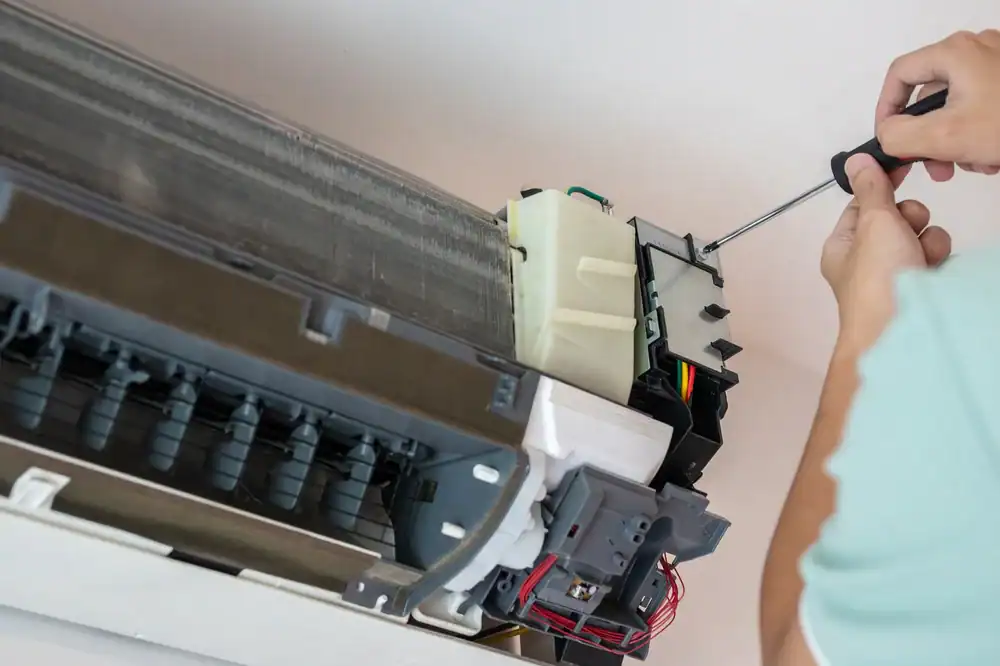
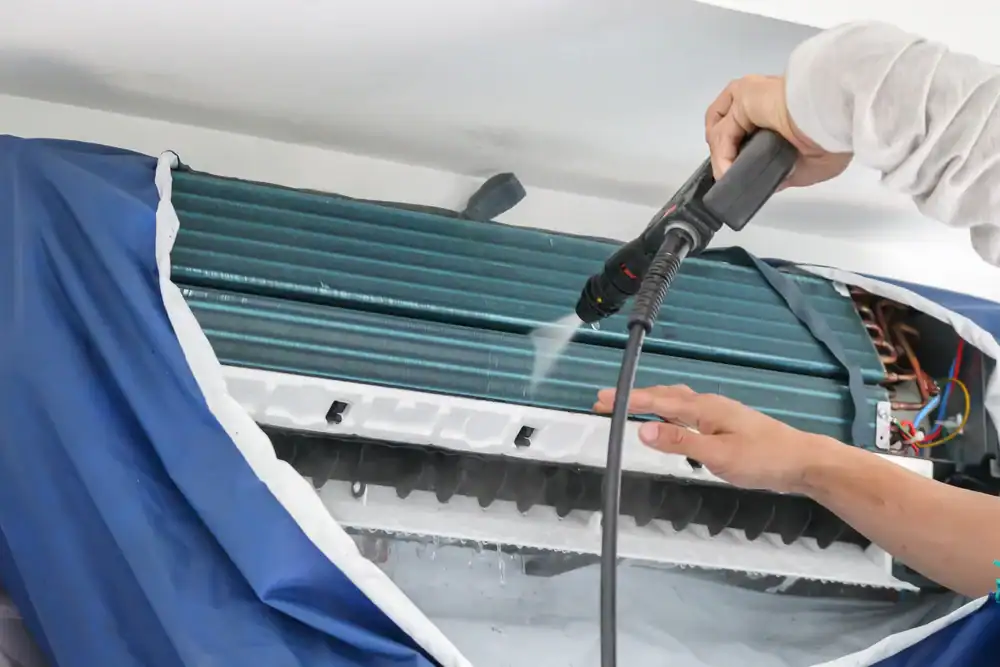
Next, we check refrigerant levels, test electrical connections, clean your condenser coils, and inspect all moving parts. If your system is low on refrigerant, that’s a sign of a leak—not something you want to ignore. We’ll find it and fix it.
The outdoor unit gets cleaned and checked for any damage from weather or debris. We lubricate motors, tighten connections, and test the system under load to make sure it’s cooling properly. The whole process takes about an hour, and you walk away knowing exactly where your system stands.
Before we leave, we’ll tell you if anything needs repair now or soon. No pressure, just facts. You decide what makes sense for your budget and your timeline.

Ready to get started?
Our 21-step tune-up covers everything your AC needs to run efficiently. We’re checking refrigerant levels, cleaning coils, testing capacitors, inspecting ductwork, replacing filters, and calibrating your thermostat.
In Little Silver, coastal humidity and salt air mean your outdoor unit takes more abuse than systems further inland. We clean and inspect condenser coils carefully because corrosion here happens faster. A unit that might last 15 years in central Jersey can fail in 7 if it’s not maintained properly near the coast.
We also look at your ductwork for leaks. Leaky ducts waste up to 30% of your cooled air before it even reaches your rooms. That’s money you’re spending to cool your attic and crawl spaces instead of your living space. If we spot issues, we’ll let you know what it’ll cost to fix and what you’ll save by doing it.
You’ll get a full report on your system’s condition. If something’s wearing out, you’ll have time to plan for it instead of scrambling during a heatwave when prices are higher and availability is low.

Once a year, ideally in the spring before cooling season starts. That gives you time to handle any repairs before you actually need your AC running.
New Jersey summers are hard on air conditioners. High humidity makes your system work harder to remove moisture from the air, and temperatures pushing into the triple digits mean your unit is running constantly on the hottest days. An annual tune-up keeps everything running smoothly when you need it most.
If you have a heat pump that runs year-round, you should have it serviced twice a year—once before cooling season and once before heating season. Skipping maintenance doesn’t just risk breakdowns. It voids most manufacturer warranties, which require proof of annual professional service.
Most tune-ups run between $100 and $200 depending on your system type and what’s included. That’s a small price compared to emergency repair calls, which start around $300 just to show up, or a full system replacement that can hit $5,000 to $10,000.
Regular maintenance pays for itself in energy savings alone. A well-maintained system uses 15-30% less electricity than one that’s been neglected. On a $150 monthly cooling bill, that’s $20 to $45 back in your pocket every month during summer.
We give you upfront pricing before any work starts. If we find something that needs repair during the inspection, we’ll explain what it is, what it costs, and what happens if you wait. You’re never locked into anything you didn’t agree to first.
You can handle basic tasks like changing filters and keeping debris away from your outdoor unit. Beyond that, you need a licensed tech with the right tools and training.
Checking refrigerant requires EPA certification and specialized equipment. Electrical testing needs to be done safely, especially on 240-volt systems. Cleaning coils incorrectly can damage fins and reduce efficiency. Most importantly, a trained eye catches problems you won’t see—like a capacitor that’s about to fail or a refrigerant leak that’s slowly killing your compressor.
DIY maintenance also doesn’t satisfy warranty requirements. If your system fails and you can’t prove it was professionally serviced, you’re paying for repairs out of pocket even if you’re still under warranty. One skipped service appointment can cost you thousands in coverage you already paid for.
Your system works harder, costs more to run, and breaks down sooner. Dirty coils make your AC run longer to reach the same temperature. Low refrigerant forces your compressor to overwork. Worn parts fail suddenly instead of gradually.
Over 50% of AC repairs could’ve been prevented with regular maintenance. That’s not a sales pitch—that’s data from the industry. A $150 tune-up catches a failing capacitor before it takes out your compressor. Skipping it turns a $30 part replacement into a $1,500 repair.
Your energy bills also creep up. A neglected system can use 30% more electricity than a maintained one. On top of that, most manufacturers void your warranty if you can’t show proof of annual professional service. You’re gambling with an expensive piece of equipment in a climate that puts serious strain on HVAC systems.
Coastal location changes everything. Salt air corrodes outdoor units faster than you’d see even 20 miles inland. Condenser coils need more frequent cleaning because salt acts like sandpaper on the metal. Left unchecked, corrosion can cut your system’s lifespan in half.
Humidity is also higher near the coast. Your AC has to work harder to remove moisture from the air, which means more runtime and more wear on components. Systems here run longer hours than units in drier parts of the state, even at the same temperature settings.
We’ve worked in Little Silver long enough to know what fails first in this environment. We pay extra attention to coil condition, check for early signs of corrosion, and make sure drainage systems are clear. Humidity means more condensation, and if that water doesn’t drain properly, you’re looking at water damage or mold issues inside your home.
Spring, before you need your AC running daily. March through May is ideal because you have time to handle any repairs before the heat hits and every HVAC company is slammed with emergency calls.
Waiting until June or July means you’re competing with broken systems for appointment slots. If your tune-up reveals a problem, you might be waiting days or even a week for parts and service while you’re sweating through 90-degree days. Prices also tend to be higher during peak season when demand is maxed out.
Early scheduling also gives you leverage. If your system needs a major repair or replacement, you can get multiple quotes, compare options, and make a decision without pressure. Do it in July when your AC is dead and you’ll take whatever’s available just to get cool air again.