Reviews
Here’s what happens when you skip maintenance: your AC works harder, uses more energy, and wears out faster. Small issues like a clogged filter or low refrigerant turn into bigger problems. Then one day in July, it stops cooling altogether.
Regular AC tune-ups prevent that. A clean system runs efficiently, which means lower energy bills—typically 5-10% less than a neglected unit. Components stay lubricated and calibrated, so they last longer. Most maintained systems run 15-20 years instead of the 10-12 you’d get otherwise.
You also avoid the nightmare of emergency repairs. A $200-$400 annual service beats a $1,500-$3,000 compressor replacement any day. And if your unit is still under warranty, most manufacturers require proof of annual maintenance to honor coverage. Without it, you’re paying out of pocket even if the part should be free.
We’ve been serving Interlaken and Monmouth County since 2014. We’re a family-owned business, which means we answer our phones, show up on time, and don’t disappear after the job’s done.
Our technicians are licensed and insured, and they’ve seen every type of AC system in every type of home around here. Coastal humidity, older homes with undersized ductwork, newer builds with zoned systems—we handle it all. We price everything upfront, no surprises, and we’re available 24/7 if something goes wrong.
We’re not the cheapest option in Monmouth County, and we’re fine with that. You’re paying for technicians who know what they’re doing, equipment that lasts, and service that actually solves the problem the first time.
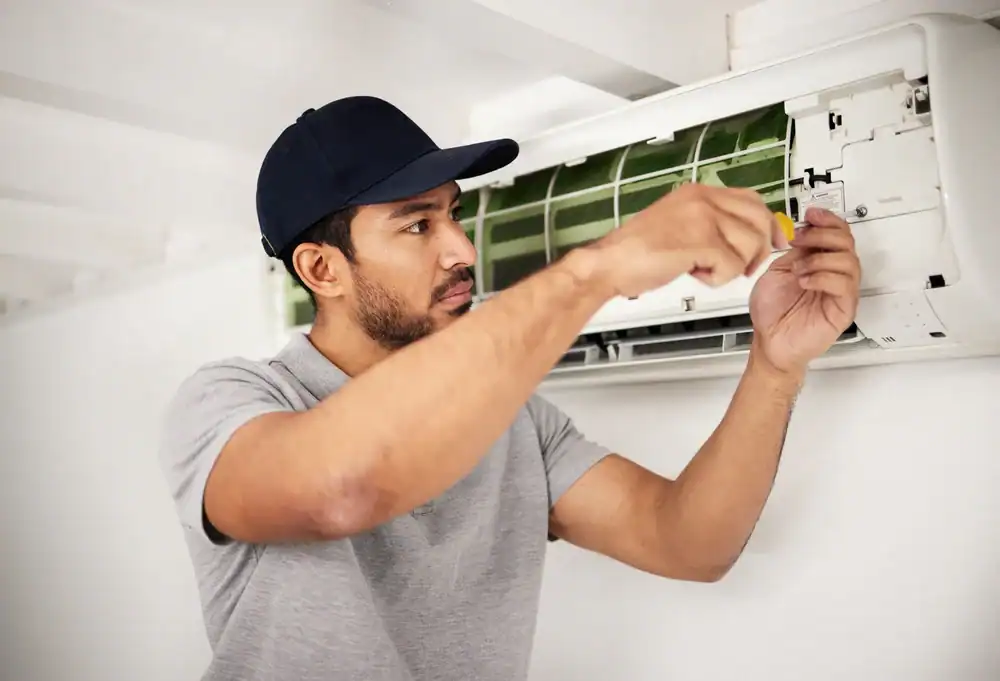
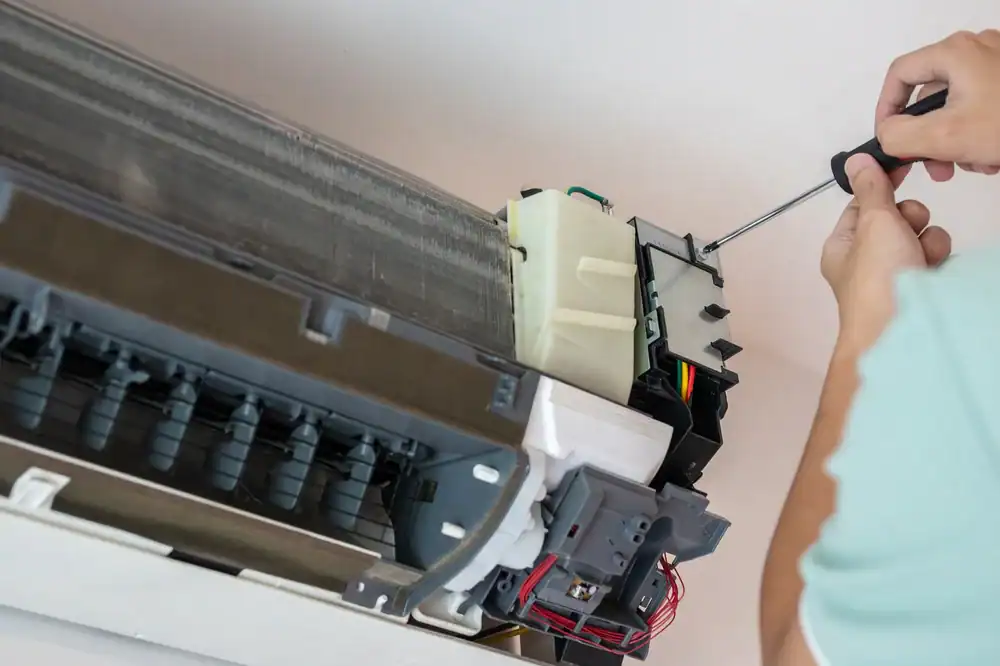
We start with a full hvac system inspection. That means checking refrigerant levels, testing electrical connections, inspecting the condenser and evaporator coils, and looking at the blower motor and fan. If something’s worn or starting to fail, we’ll tell you before it breaks.
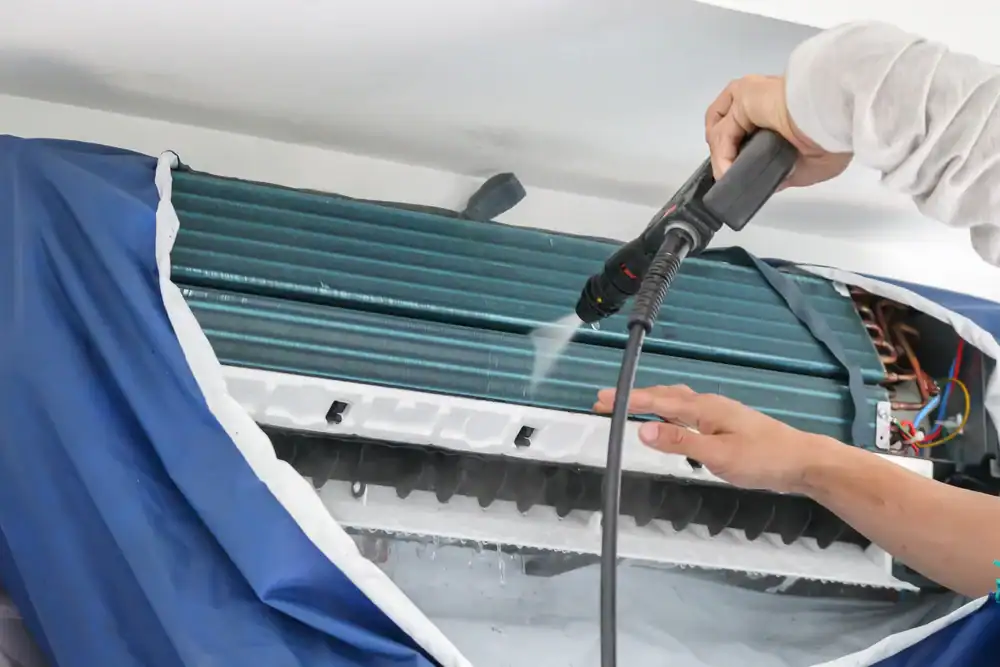
Next comes cleaning. We clean or replace your air filter, clear the condensate drain line, and remove debris from the outdoor unit. Dirty coils make your system work harder and use more energy, so this step alone can drop your power bill.
Then we calibrate your thermostat, tighten electrical connections, and lubricate moving parts. Everything gets tested to make sure it’s running at peak efficiency. If we find an issue, we’ll explain what it is, what it costs to fix, and what happens if you wait. No pressure, just information.
The whole process takes about an hour. You’ll get a written report of what we found and what we did, plus recommendations for anything that needs attention down the road.

Ready to get started?
Every air conditioner service includes a complete inspection of your system—refrigerant levels, electrical components, coils, blower motor, and thermostat calibration. We’re looking for anything that’s worn, loose, or starting to fail.
You also get a full hvac cleaning service. That means replacing or cleaning filters, clearing drain lines, and removing dirt and debris from both the indoor and outdoor units. In Interlaken, coastal humidity and seasonal pollen mean filters clog faster than in drier areas. We see it all the time—systems that are working twice as hard because nobody’s changed the filter in six months.
We’ll also test your system’s efficiency. If your AC is using more power than it should, we’ll figure out why. Sometimes it’s a simple fix like recalibrating the thermostat. Other times it’s a sign that a component is failing and needs replacement before it takes out the whole system.
Most Interlaken homeowners schedule their ac inspection in the spring, before the summer heat hits. That way, if we find something that needs repair, you’re not waiting in a hot house while we order parts.

Once a year, ideally in the spring before you start using it heavily. That gives you time to address any issues before the summer heat arrives.
Some homeowners ask if twice a year is better. For most residential systems, once is enough. If you run your AC constantly, have pets that shed, or live in a particularly dusty area, twice a year makes sense. But for the average Interlaken home, annual maintenance keeps your system in good shape.
Skipping years is where people get into trouble. A system that goes two or three years without service is more likely to break down, use more energy, and need expensive repairs. The $200-$400 you save by skipping maintenance usually gets eaten up by higher power bills and emergency service calls.
Your system works harder, costs more to run, and breaks down sooner. Dirty coils and clogged filters reduce efficiency, which means higher energy bills. Worn components put stress on other parts, which leads to breakdowns.
Most unmaintained systems fail during peak summer heat—because that’s when they’re working hardest. A compressor that’s been struggling for months finally gives out on a 95-degree day. Now you’re looking at a $1,500-$3,000 repair, plus the cost of a hotel or portable AC unit while you wait for parts.
There’s also the warranty issue. Most manufacturers require annual maintenance to keep your warranty valid. If your AC is still under warranty and you can’t prove it’s been serviced, you’re paying for repairs that should be covered. We’ve seen homeowners lose thousands in warranty coverage because they didn’t keep up with basic maintenance.
You can handle some basic tasks—changing filters, clearing debris from around the outdoor unit, and making sure vents aren’t blocked. Those things help, and you should do them.
But a real tune-up requires tools and training most homeowners don’t have. Checking refrigerant levels, testing electrical connections, and calibrating thermostats aren’t DIY jobs. If refrigerant is low, there’s a leak somewhere, and finding it requires specialized equipment. If electrical connections are loose, you risk a fire or a fried compressor.
There’s also the diagnostic piece. A trained technician can hear or see problems before they cause a breakdown. That worn bearing or struggling capacitor might not seem like a big deal now, but it’ll take out your whole system in a month. Catching it early saves you money. Missing it costs you more later.
Most homeowners in Interlaken pay between $100 and $250 for a professional AC tune-up. The price depends on the size of your system, its age, and what’s included in the service.
Some companies offer maintenance plans that bundle annual service with discounts on repairs and priority scheduling. Those typically run $85-$170 per year. If you’re planning to stay in your home and want to protect your investment, a plan makes sense.
Here’s the math that matters: an annual tune-up costs $200-$400. An emergency repair averages $1,500-$3,000. Proper maintenance also saves 5-10% on your energy bills, which adds up over a summer. For the average New Jersey homeowner spending around $1,500 per year on heating and cooling, that’s $75-$150 in savings annually. The service pays for itself.
Weak airflow, warm air coming from vents, strange noises, and higher-than-usual energy bills are the big ones. If your system is running constantly but not cooling the house, something’s wrong.
Musty or burning smells are red flags. Musty usually means mold in the ductwork or drain pan. Burning smells can indicate electrical problems or an overheating motor. Either way, shut it down and call someone.
Moisture or leaks around the indoor unit mean your condensate drain is clogged or your refrigerant is leaking. A clogged drain is a quick fix. A refrigerant leak is more serious and needs immediate attention. Ice forming on the coils is another sign of low refrigerant or restricted airflow—both problems that get worse if you ignore them.
Spring, before you need to run your AC all day. March or April is ideal in Interlaken. You beat the rush, and if we find something that needs repair, you’re not sweating through a heat wave while we fix it.
Waiting until June or July means you’re competing with everyone else whose AC just broke. Service calls take longer, parts might be backordered, and you’re stuck in a hot house. Scheduling early also gives you better appointment times and more flexibility.
If you’re on a maintenance plan, we’ll reach out in the spring to schedule your annual service. If not, call as soon as the weather starts warming up. Don’t wait until the first 90-degree day to realize your AC isn’t working right.