

Reviews
Your AC running all summer isn’t the same as your AC running well all summer. An unmaintained system can burn up to 25% more energy just to hit the same temperature — and in Freehold, where inland heat builds without any shore breeze to soften it, that inefficiency shows up on your utility bill every single month from June through September.
For homeowners in Freehold Borough and Freehold Township, the housing stock adds another layer to this. A significant portion of homes here were built between 1970 and 1999. If you’re in one of those homes and haven’t had a licensed technician look at your system in a while, there’s a real chance it’s working harder than it needs to — and quietly losing efficiency every season. West Freehold specifically has been flagged for severe heat risk, with projections showing a dramatic increase in extreme heat days over the next few decades. That’s not abstract. That’s your system under pressure.
When your AC is properly maintained, it runs cleaner, costs less to operate, and lasts longer. Most systems are built to run 15 to 20 years with consistent care. Skip that care, and you’re looking at a much shorter window — and a replacement bill that makes an annual tune-up look like the easiest decision you’ve ever made.
We’re based in Manasquan — a few miles down the road from Freehold, not a call center three states away. We’ve been serving Monmouth County homeowners and businesses since 2013, which means we know this area: the housing stock, the seasonal patterns, the difference between a Freehold Borough home built in 1978 and a Township subdivision that went up in 1995.
Every technician on our team is fully licensed under New Jersey’s Master HVACR Contractor requirements, insured, and EPA 608 certified for refrigerant handling. When you call us, you’re not rolling the dice on who shows up. You’re getting someone who meets every legal standard the state requires — and who works in the same county you live in.
If you’re a first responder, healthcare worker at CentraState, or active military, we offer 10% off as a straightforward thank-you — not a promotional footnote. And if cost is a concern, we offer 0% financing so a proper tune-up or repair doesn’t have to wait.
Before anything starts, you get a clear price. Our upfront pricing policy means you know what you’re paying before any work begins — no estimates that balloon into something else once the technician is already in your home. That’s not a small thing in a market where homeowners have been burned by bait-and-switch tune-up specials before.
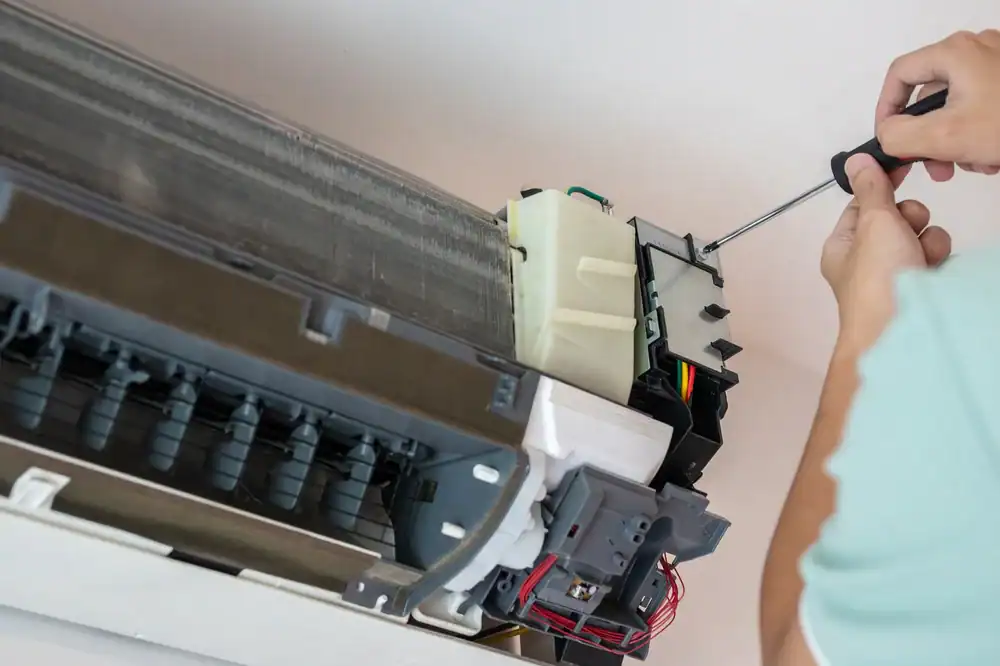
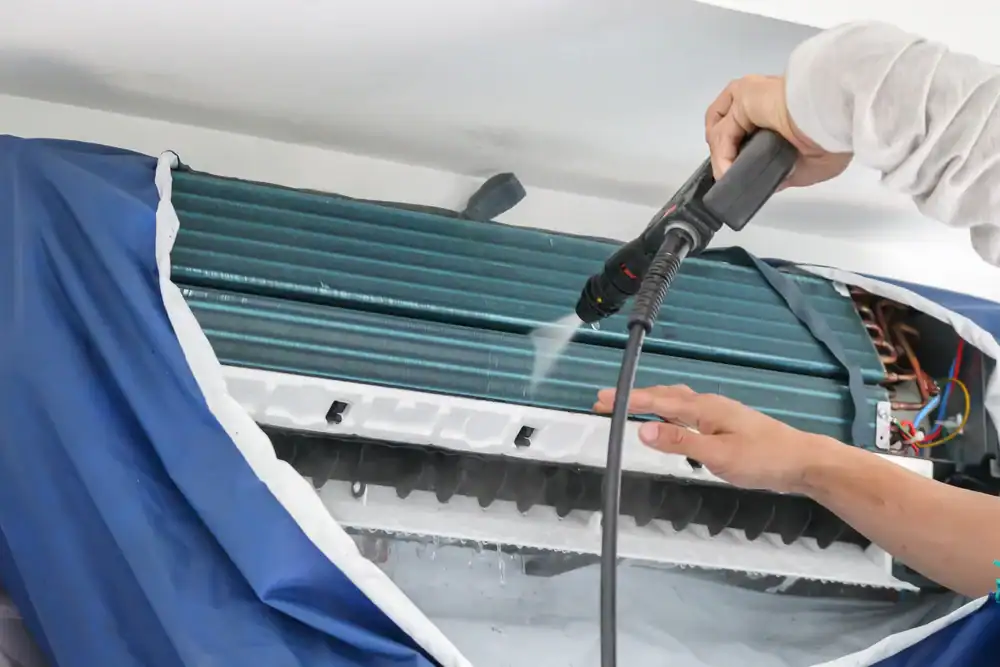
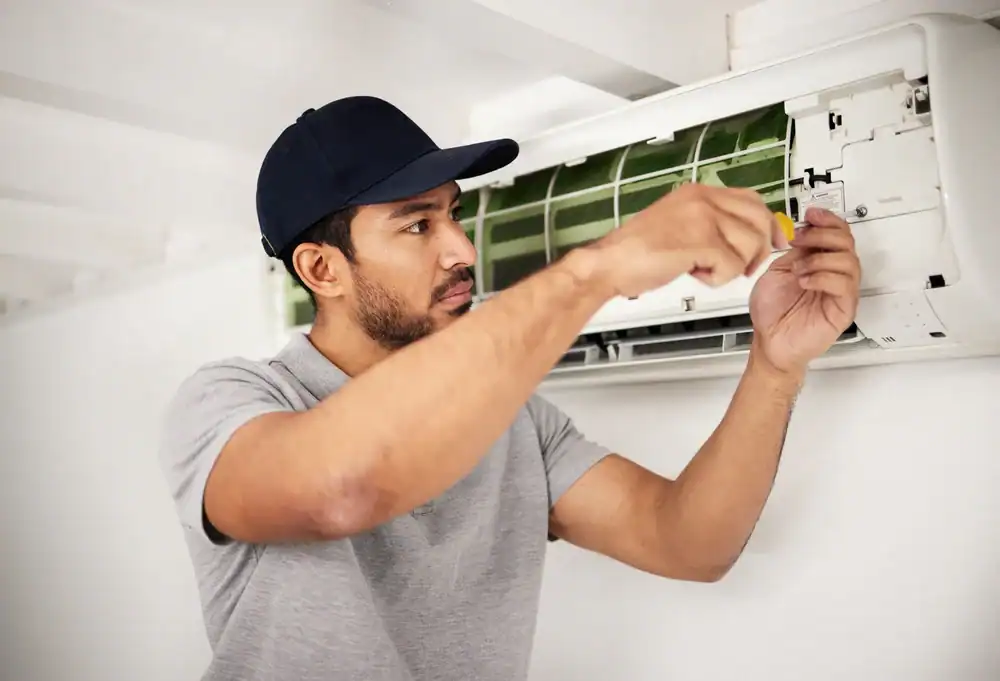
Once the visit starts, our technician runs through a full system inspection: checking refrigerant levels, cleaning the evaporator and condenser coils, inspecting electrical components and connections, testing the capacitor and contactor, checking airflow, and making sure the thermostat is calibrated correctly. For older homes in Freehold Borough — many of which are carrying systems that have seen a lot of summers — this inspection often catches issues that haven’t shown up yet but will. A failing capacitor, a slightly low refrigerant charge, a dirty coil that’s been cutting efficiency for two seasons. Finding those things in April costs a fraction of what they cost in July.
In New Jersey, any work that goes beyond routine maintenance — like a system replacement or significant component swap — requires a permit from the local building department. We handle that process. Routine maintenance visits don’t require a permit, but every visit is documented so you have a complete service record. That documentation matters if you ever need to make a warranty claim, because most manufacturers require proof of annual maintenance to honor coverage.

Ready to get started?
A real AC maintenance visit isn’t a 20-minute checkup where someone glances at your unit and hands you a bill. Our technicians go through the full system — inside and out. That means inspecting and cleaning the evaporator coil, checking and cleaning the condenser coil, testing electrical connections and components, verifying refrigerant charge, checking the blower motor and belt, inspecting the drain line for blockages, and testing overall system performance under load.
For Freehold Township homes near the Route 9 corridor or in subdivisions like the Stonehurst area in West Freehold, systems are often dealing with higher ambient temperatures from surrounding pavement and reduced tree cover — which puts additional strain on the condenser unit. That’s something our technicians account for during the inspection. For older Borough homes, the focus often shifts to aging components and refrigerant integrity, since systems in those properties are more likely to be operating near the end of their designed service life.
If your system needs a repair, refrigerant recharge, or component replacement beyond routine maintenance, you’ll get a clear explanation of what was found and what it costs to fix it — before anything is done. No pressure. No upsell tactics. Just an honest picture of where your system stands so you can make a decision that makes sense for your home and your budget.

Once a year is the standard, and spring is the right time to do it. Scheduling your tune-up in March or April — before Freehold’s summer heat arrives — means your system gets inspected, cleaned, and optimized before it’s under any real load. By May, HVAC companies across Monmouth County start booking out weeks in advance. If you wait until June and something comes up during the inspection that needs a part or a repair, you’re now dealing with a delay during the hottest stretch of the year.
If your home is in Freehold Borough and your system is on the older side — which is common given the area’s housing stock — an annual inspection also gives you a realistic picture of how much life is left in the unit. That’s useful information to have before a system fails unexpectedly in August, not after.
The most immediate effect is efficiency loss. A system that isn’t maintained loses roughly 5% of its operational efficiency per year, even when it appears to be working fine. In Freehold, where summer cooling runs hard from June through September without the coastal temperature relief that shore towns get, that inefficiency compounds into real money on your energy bills.
Beyond cost, skipping maintenance accelerates wear on components. Dirty coils make the compressor work harder. A low refrigerant charge strains the system. Small electrical issues that would have been caught in an inspection become bigger failures. Most HVAC manufacturer warranties also require documented annual maintenance — if you skip a year and your system fails, the manufacturer may deny the claim and leave you paying out of pocket for a repair that should have been covered.
Yes, and the gap is significant. A properly maintained AC system typically lasts 15 to 20 years. One that’s been neglected often fails in 8 to 10. In New Jersey’s climate — with humid, sustained summers and cold winters that put the system through real seasonal stress — that difference matters even more than it would in a milder region.
Freehold specifically sits inland, which means no coastal breeze to moderate summer temperatures. Systems here run longer and harder during peak cooling season than systems in shore communities. That thermal demand makes consistent maintenance more important, not less. Keeping coils clean, refrigerant levels correct, and electrical components in good shape is what allows a system to handle that kind of sustained load season after season without breaking down prematurely.
Absolutely, and this is one of the most useful things a new homeowner can do. When you purchase an older home in Freehold Borough or Freehold Township, you’re inheriting the previous owner’s maintenance history — or lack of one. A significant portion of homes in this area were built between 1970 and 1999, and many of those systems have had inconsistent or undocumented service over the years.
A maintenance visit gives you a clear, honest picture of what you’re working with: the age and condition of the system, whether refrigerant levels are correct, whether any components are showing wear, and roughly how much life is left in the unit. That information is worth having before your first summer in the house, not after your first breakdown. It also establishes a service record going forward, which protects you if you ever need to make a warranty claim on the system or any repairs done to it.
Maintenance is preventive — it’s a scheduled visit to inspect, clean, and tune your system before anything goes wrong. Our technician checks refrigerant levels, cleans coils, tests electrical components, verifies airflow, and looks for anything that’s starting to wear. The goal is to catch small issues before they become expensive ones. Routine maintenance visits in New Jersey do not require a permit.
Repair is reactive — it happens after something has already failed or is actively causing a problem. Repairs can range from replacing a capacitor or contactor to addressing a refrigerant leak or a failed compressor. Depending on the scope of the work, some repairs may require a permit from the Freehold Borough or Freehold Township building department. We handle the permitting process when it applies, and you’ll always know what a repair costs before any work is done.
We offer 10% off for military personnel and first responders. In Freehold Township, where CentraState Medical Center is one of the largest employers in the area, that includes a significant number of healthcare workers and emergency medical staff. Monmouth County government — headquartered right in Freehold Borough — also employs a large number of public servants and law enforcement personnel. If you or someone in your household serves in any of those roles, the discount applies to your service.
For homeowners who need more than a tune-up — whether that’s a repair, a refrigerant recharge, or a full system replacement — we also offer 0% financing with online prequalification. The goal is to make sure cost doesn’t push you into delaying service that your system actually needs, especially heading into a Freehold summer where a failing AC isn’t just uncomfortable — it’s a real problem.