Reviews
Your AC works harder in Farmingdale than in most places. New Jersey’s humidity sits between 70-80% during summer, and your system doesn’t just cool air—it pulls moisture out of it. That’s double duty, and it wears components down faster than you’d think.
An AC tune-up catches the small stuff before it becomes expensive. Dirty coils make your compressor work overtime. Low refrigerant means your system runs longer to hit the same temperature. A clogged drain line leads to water damage or a full shutdown on the hottest day of the year.
Maintenance isn’t about keeping your AC limping along. It’s about making sure it runs efficiently, lasts longer, and doesn’t quit when you actually need it. Most systems last 10-15 years, but with consistent care, you’re looking at 20-25. That’s not marketing talk—that’s what happens when parts aren’t constantly stressed and overworked.
You’ll also see it on your energy bill. A well-maintained system uses up to 10% less energy. Older units that haven’t been serviced can waste 20-30% more than they should. That adds up fast during a Jersey summer.
We’ve been serving Monmouth County for over a decade. We’re not the biggest name in the area, but we’re the ones who show up on time, explain what’s actually wrong, and don’t upsell you on things you don’t need.
Our techs are licensed, insured, and trained to work on all major AC brands. We handle residential and commercial properties throughout Farmingdale and the surrounding towns. You get upfront pricing before any work starts, and we’re available 24/7 if something goes wrong after hours.
We know what New Jersey summers do to HVAC systems. The humidity, the salt air if you’re near the coast, the sudden heat spikes—it all takes a toll. That’s why our maintenance visits are thorough, not rushed. We’re checking the things that actually matter, not just changing a filter and calling it done.
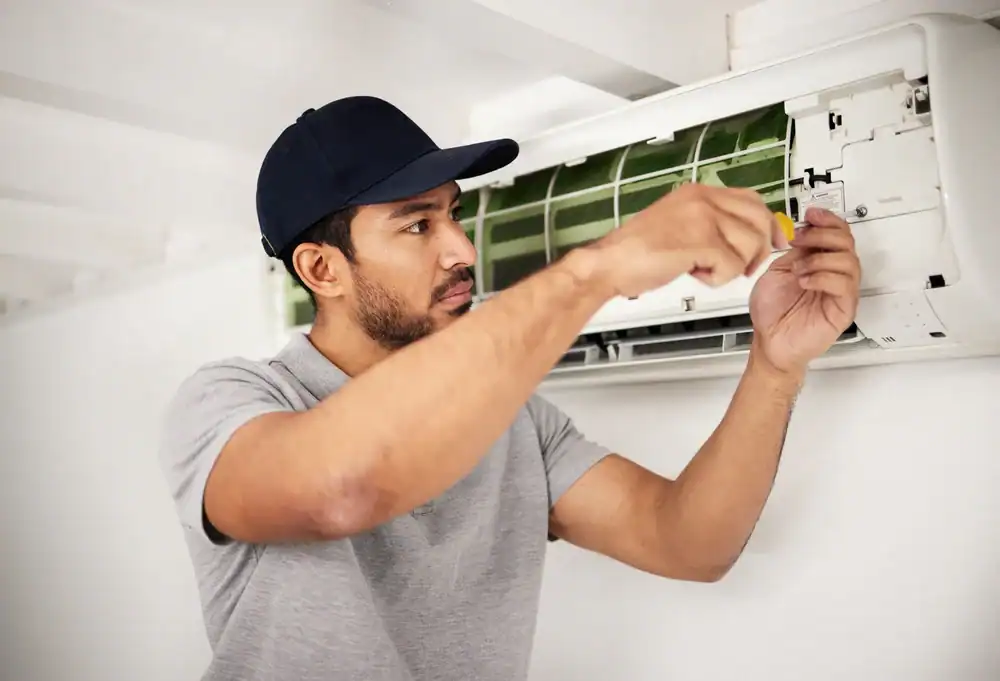
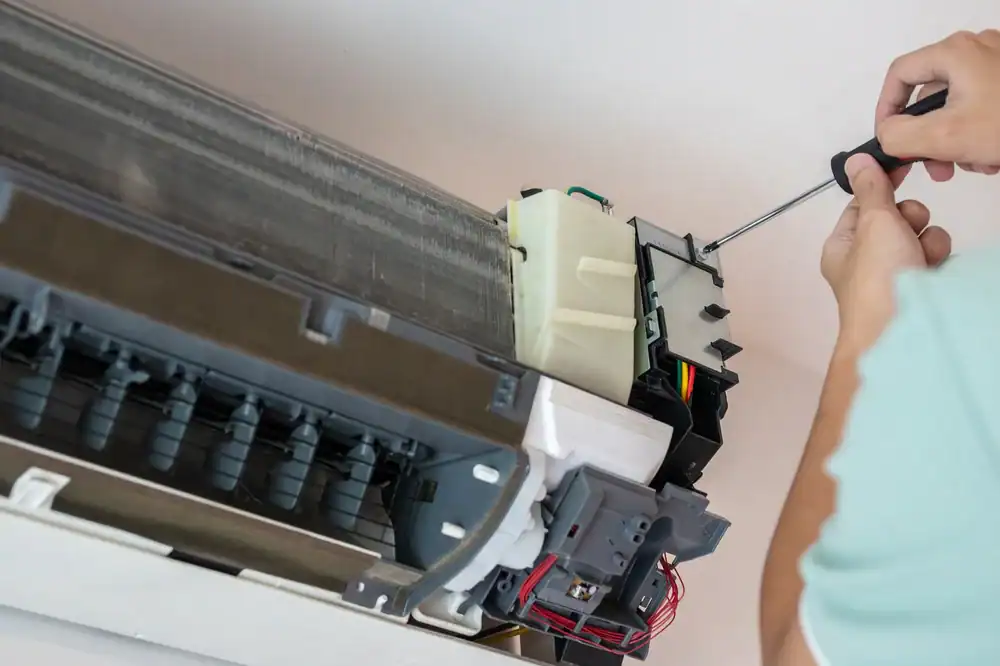
We start with a full system inspection. That means checking refrigerant levels, testing electrical connections, inspecting the condenser and evaporator coils, and making sure your thermostat is calibrated correctly. We’re looking for anything that’s worn, loose, or about to become a problem.
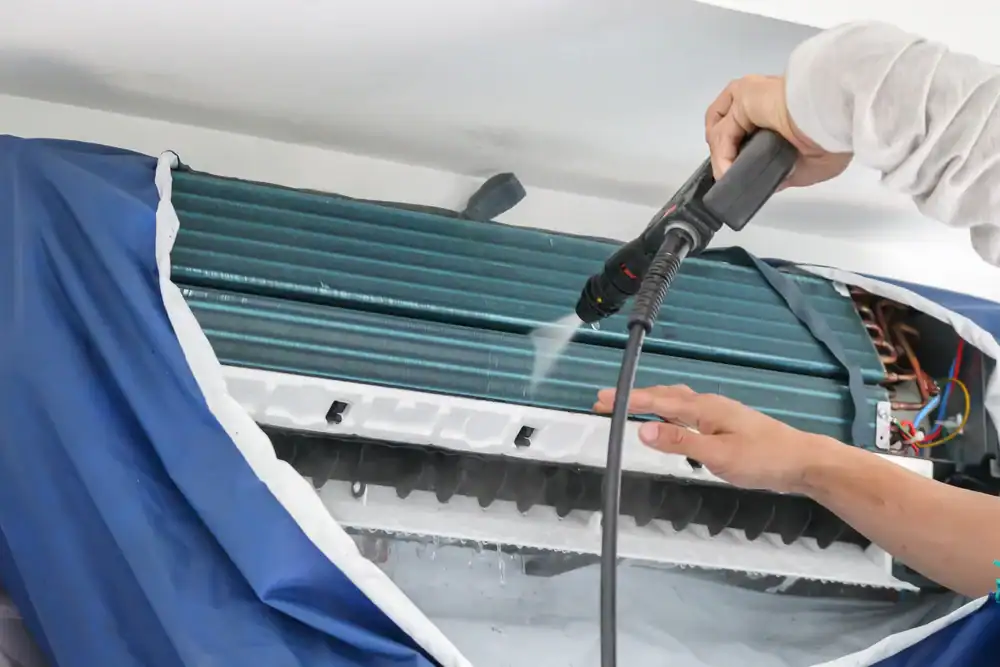
Next, we clean the components that affect performance. Dirty coils reduce efficiency and force your compressor to work harder. We also clear the condensate drain line—clogs here are one of the most common reasons systems shut down mid-summer. If your air filter needs replacing, we handle that too.
After the cleaning, we test the system under load. We want to see how it’s performing when it’s actually running, not just when it’s sitting idle. We measure airflow, check for unusual sounds, and confirm that everything is operating within normal parameters.
Before we leave, we’ll walk you through what we found. If something needs attention now, we’ll tell you. If something’s worth keeping an eye on, we’ll let you know that too. You’ll get a clear picture of where your system stands and what, if anything, you should plan for down the road.

Ready to get started?
Every air conditioner service we perform covers the full system—not just the outdoor unit. We inspect and clean both the condenser coils outside and the evaporator coils inside. We check refrigerant levels and look for leaks. We test the blower motor, capacitors, and contactors. We verify that your thermostat is communicating properly with the system.
In Farmingdale, humidity control is just as important as temperature control. If your AC isn’t removing moisture effectively, your home feels sticky even when the thermostat says 72. We make sure the system is dehumidifying properly, which also prevents mold growth and keeps your indoor air quality where it should be.
If you’re near the coast or in an area with salt air exposure, we pay extra attention to corrosion. Salt accelerates wear on condenser coils, cabinet panels, and electrical connections. Catching that early can add years to your system’s life. It’s one of those things that doesn’t show up until it’s too late—unless someone’s actually looking for it.
We also verify that your system is meeting manufacturer requirements for warranty coverage. Many warranties require proof of annual maintenance. Skipping it doesn’t just risk a breakdown—it can void your coverage entirely.

Once a year, ideally in spring before the cooling season starts. That gives you time to address any issues before you’re relying on the system daily.
If you run your AC heavily or have an older unit, twice a year isn’t overkill. Some homeowners schedule a spring tune-up and a mid-summer check, especially if they’ve had problems in the past. It depends on how hard your system works and how much peace of mind you want.
Skipping maintenance doesn’t mean your AC will fail immediately, but it does mean small problems turn into bigger ones. A refrigerant leak that could’ve been patched in May becomes a full compressor replacement in July. That’s the difference between a $150 repair and a $2,000 one.
Your system works harder, costs more to run, and wears out faster. Efficiency drops because dirty coils and low refrigerant force the compressor to run longer. That shows up on your energy bill within a season or two.
You’re also more likely to have a breakdown during a heat wave. Over half of all AC repairs could be prevented with regular maintenance. Most failures happen because something small was ignored—a loose connection, a clogged drain line, a capacitor that was on its way out.
And if your system is still under warranty, skipping maintenance can void it. Manufacturers often require proof of annual service. If your compressor fails and you can’t show that the system was maintained, you might be paying out of pocket for a repair that should’ve been covered.
You can handle some basics—changing the air filter, keeping the outdoor unit clear of debris, making sure vents aren’t blocked. Those things help, and you should do them.
But a real tune-up requires tools, training, and access to refrigerant, which is regulated. Checking refrigerant levels, testing electrical components, cleaning coils properly, and calibrating controls aren’t DIY tasks. Doing them wrong can damage the system or create safety hazards.
A professional HVAC inspection also catches things you wouldn’t notice. A capacitor that’s starting to fail, a drain line that’s partially clogged, a contactor that’s pitted—these don’t announce themselves until they cause a shutdown. By then, you’re paying for an emergency repair instead of a routine fix.
Most companies charge between $80 and $150 for a standard maintenance visit. The price varies based on what’s included, the age of your system, and whether you’re on a service plan.
Some companies offer annual agreements that include one or two visits per year, priority scheduling, and discounts on repairs. Those usually run $150-$300 annually depending on what’s covered. If you’re planning to stay in your home and want to protect your investment, a service plan often pays for itself.
Emergency repairs, on the other hand, cost significantly more. A compressor replacement can run $1,500-$2,500. A refrigerant leak repair might be $200-$500. Maintenance is cheap compared to what you’ll pay when something fails at the worst possible time. It’s not about spending money—it’s about spending less money over the life of the system.
Maintenance is preventive. It’s done when everything is working, and the goal is to keep it that way. You’re cleaning components, checking for wear, and making small adjustments before anything breaks.
A repair happens after something fails. Your AC isn’t cooling, it’s making a strange noise, or it’s not turning on at all. At that point, you’re diagnosing a problem and replacing a part. Repairs are reactive, and they’re almost always more expensive than maintenance.
The frustrating part is that most repairs could’ve been avoided. A capacitor that fails in July was probably showing signs of wear in May. A refrigerant leak that causes a shutdown in August could’ve been spotted and sealed during a spring tune-up. Maintenance doesn’t eliminate every possible failure, but it catches most of them before they become emergencies.
Yes. The average AC lasts 10-15 years, but well-maintained systems routinely hit 20-25 years. The difference comes down to how hard the components have to work.
When coils are clean, refrigerant is at the right level, and airflow is unrestricted, your compressor doesn’t have to strain. It runs at normal capacity, cycles on and off as designed, and doesn’t overheat. That’s how it was engineered to operate.
When those things aren’t maintained, the compressor works overtime to compensate. It runs longer, heats up more, and wears out faster. The same goes for blower motors, capacitors, and contactors. Every part lasts longer when the system isn’t constantly stressed. Maintenance doesn’t just prevent breakdowns—it protects your investment and delays the cost of replacement by years.