Reviews
Your AC works harder here than it would twenty miles inland. The salt air, the humidity that hangs around even after the sun goes down, the fact that your system sits idle for months and then gets hammered all summer—it adds up.
A well-maintained system uses 15 to 20 percent less energy than one that’s been ignored. That’s real money off your electric bill every month, and in New Jersey where rates hover around 20 to 25 cents per kilowatt-hour, it matters. You’re also looking at a system that lasts 30 to 50 percent longer when it gets regular attention.
But the bigger win is avoiding the panic. No one wants to deal with a dead AC on a 90-degree Saturday when every HVAC company in Monmouth County is booked solid. An annual AC tune-up catches the worn belts, the dirty coils, the refrigerant levels that are just slightly off—all the stuff that turns into full system failure if you wait.
You get consistent cooling, cleaner air, and the confidence that your system will actually work when you need it to.
AME Plumbing Heating and Cooling is locally owned and based right here in Monmouth County. Our team is licensed, insured, and trained to handle the specific challenges that come with maintaining HVAC systems in coastal New Jersey.
We know what salt air does to condenser coils. We know why your system might cool the house but leave it feeling damp. We know that homes in Colts Neck—many built in the 70s and 80s with median values pushing past $870,000—need more than a quick filter swap and a thumbs-up.
You’ll get upfront pricing before any work starts, no surprise fees, and access to our team 24/7 if something goes wrong. We also offer financing options and discounts for military personnel and first responders because we think that matters.
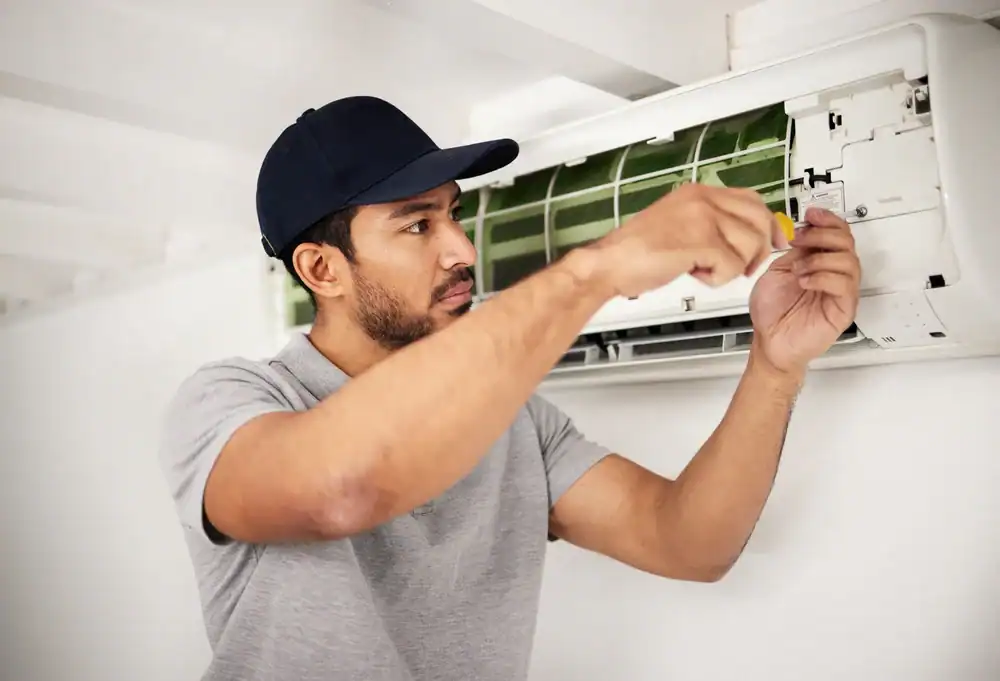
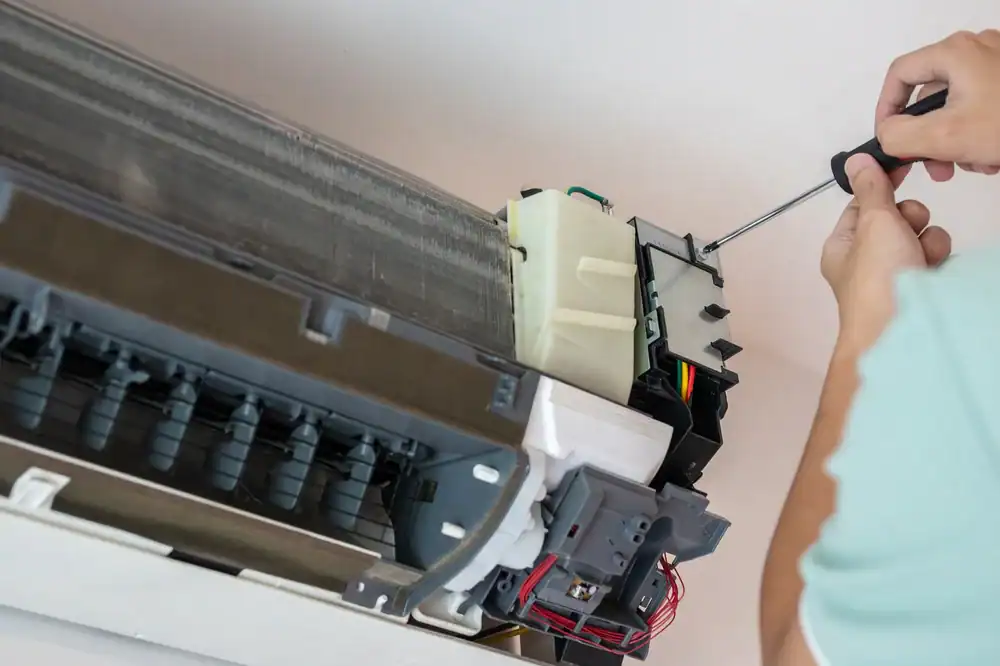
We start with a full system inspection—not just the indoor unit, but the outdoor condenser, the refrigerant lines, the electrical connections, all of it. We’re checking for corrosion, wear, anything that looks like it’s heading toward failure.
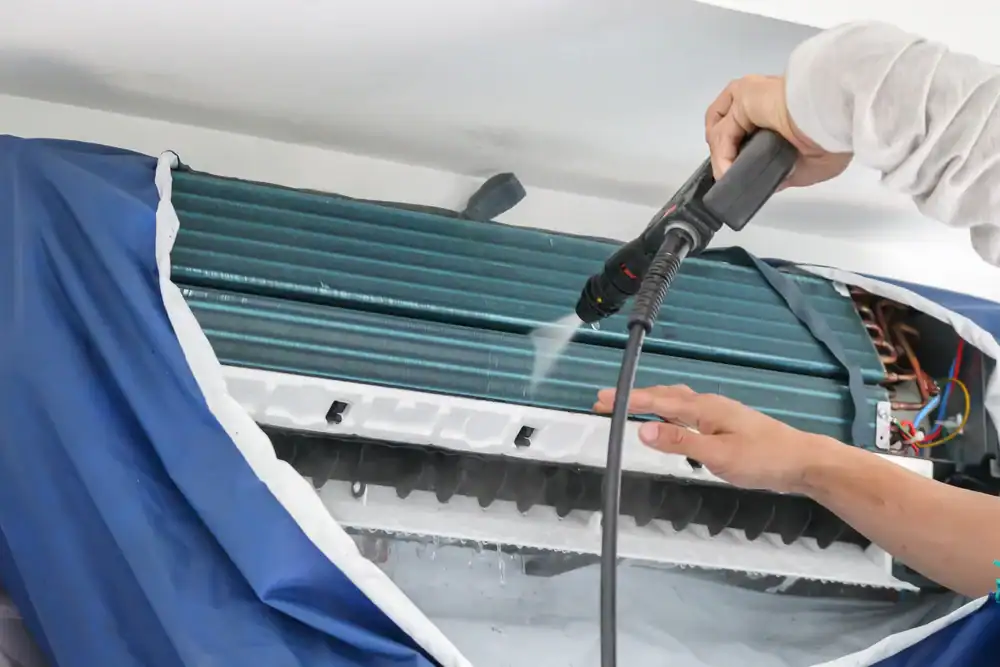
Next, we clean the condenser coils and evaporator coils. Dirty coils make your system work harder and cool less effectively. We also check and replace your air filter if needed, inspect the blower motor and fan, and test the thermostat to make sure it’s reading accurately.
Then we measure refrigerant levels. If they’re low, that’s a sign of a leak, and we’ll find it and fix it. We also test the capacitors and contactors—small parts that fail often and cause big problems.
Before we leave, we run the system through a full cycle to make sure everything is operating the way it should. You’ll know exactly what we found, what we fixed, and what (if anything) you should keep an eye on. The whole process usually takes about an hour, and you’re left with a system that’s ready to handle whatever summer throws at it.

Ready to get started?
Our AC maintenance includes a thorough hvac system inspection, coil cleaning (both evaporator and condenser), refrigerant level check and adjustment, electrical connection tightening, thermostat calibration, blower motor inspection, and a full system performance test. We also check your drain line to make sure it’s clear—clogged drains are one of the most common causes of water damage from AC units.
For homes near the coast, we pay extra attention to corrosion. Monmouth County properties within a few miles of the ocean need more frequent inspections—every four months instead of the standard six. We’ll let you know if your system is showing signs of salt damage and what you can do about it before it becomes a bigger issue.
You’ll also get a written report of what we found and what we did. If we spot something that needs attention soon, we’ll tell you. If your system is in great shape, we’ll tell you that too. No upselling, no scare tactics—just honest feedback from people who do this every day.
And if you’re dealing with an older system, we’ll give you a realistic sense of how much life it has left. With the R-410A refrigerant phaseout happening in 2025, now’s a smart time to know where you stand.

Once a year is the standard recommendation, ideally in the spring before you start running your system hard. That gives you time to fix anything that comes up without sweating through a heat wave while you wait for parts.
If your home is close to the ocean, you might want to bump that up to every four months. Salt air accelerates corrosion on outdoor units, and catching it early makes a huge difference in how long your system lasts. We’ve seen condenser coils completely eaten through in coastal homes that only got annual service.
The other factor is age. If your system is over ten years old, it’s working harder to do the same job, and more frequent check-ins help you avoid sudden failures. You’re also more likely to catch small issues before they domino into expensive repairs.
You’re typically looking at $100 to $250 for a standard AC tune-up in New Jersey, depending on what’s included and the age of your system. We give you upfront pricing before we start, so there’s no guessing.
That cost covers a full inspection, coil cleaning, refrigerant check, filter replacement, and a performance test. If we find something that needs repair, we’ll walk you through the options and the cost before doing any additional work. Emergency repairs, by comparison, average around $350 and usually happen at the worst possible time.
Some companies offer maintenance plans that bundle annual service with discounts on repairs and priority scheduling. Those typically run $85 to $170 per year in New Jersey. If you’re someone who wants to set it and forget it, a plan can make sense—you’re locked in at a set price, and you don’t have to remember to call every spring.
Yes, and the savings are measurable. A well-maintained system uses 15 to 20 percent less energy than one that’s been neglected. For a typical Colts Neck home running AC all summer, that can add up to a few hundred dollars over the season.
The biggest energy drains are dirty coils, low refrigerant, and poor airflow. When your coils are caked with dust and grime, your system has to run longer to cool the same space. When refrigerant is low, the compressor works overtime. When airflow is restricted by a clogged filter or dirty blower, the whole system struggles.
New Jersey’s electricity rates are higher than the national average—around 20 to 25 cents per kilowatt-hour—so inefficiency costs you more here than it would in other states. Regular maintenance keeps your system running at peak efficiency, which means it cycles less, uses less power, and costs you less every month.
You’re rolling the dice. Some systems will keep running without major issues. Others will fail at the worst possible time, and you’ll be looking at a repair bill that’s three to five times what maintenance would have cost.
The most common problems we see in neglected systems are refrigerant leaks, compressor failure, frozen evaporator coils, and electrical issues. All of those are expensive to fix, and most of them are preventable with regular service. Compressor replacement alone can run $1,500 to $2,500, and at that point, you’re often better off replacing the whole system.
You’re also losing efficiency every year you skip maintenance. Dirty coils, worn belts, and low refrigerant all make your system work harder and use more energy. Over two or three years, the extra cost on your electric bill can easily exceed what you would have spent on annual tune-ups. And if your system does fail, you’re stuck waiting for repairs during peak season when every HVAC company is slammed.
We do our best to accommodate same-day service when you call, especially during the spring and early summer when our schedule isn’t as packed. Once we hit peak heat in July and August, availability gets tighter, but we’ll always work to get you on the calendar as quickly as possible.
If you’re dealing with an emergency—your system is down and it’s 90 degrees—we offer 24/7 emergency service. You can reach us anytime at 732-217-7551, and we’ll get someone out to you as fast as we can. Emergency calls get priority over routine maintenance.
The smarter move is to schedule your AC tune-up in the spring, before you actually need your system. That way, you’re not competing with everyone else who waited until their AC stopped working to call for help. You’ll get more scheduling flexibility, and you’ll have peace of mind knowing your system is ready before the heat hits.
An AC inspection is a visual check and basic performance test. A technician will look at your system, check for obvious issues, test the airflow, and let you know if anything looks wrong. It’s useful, but it’s surface-level.
A full AC tune-up goes deeper. We’re cleaning coils, checking refrigerant levels, tightening electrical connections, lubricating moving parts, testing capacitors, calibrating your thermostat, and running the system through a complete cycle to make sure everything is working the way it should. It’s preventive maintenance, not just a quick look.
Think of an inspection like checking your tire pressure. A tune-up is changing the oil, rotating the tires, checking the brakes, and topping off all the fluids. Both are useful, but one actually keeps your system running smoothly for the long haul. If you’re only doing one thing a year for your AC, make it a full tune-up.