

Reviews
A system that hasn’t been serviced going into a Belmar summer isn’t just inefficient — it’s a breakdown waiting to happen. When your AC is properly maintained before the season starts, it runs cleaner, cools faster, and doesn’t leave you scrambling for an emergency appointment in the middle of July when every HVAC company in Monmouth County is already booked out two weeks.
Belmar’s coastal environment puts real stress on outdoor equipment. Salt air from the Atlantic and the Shark River Inlet corrodes aluminum condenser fins, eats through electrical contacts, and degrades refrigerant lines faster than you’d see in an inland town. Metal components sitting outside in a salt-air environment year after year without being cleaned or inspected will deteriorate. Catching that corrosion early is the difference between a $150 tune-up and a $1,200 coil replacement.
The humidity window in Belmar runs from roughly early June through late September. During that stretch, your system isn’t just cooling — it’s actively pulling moisture out of the air, which puts extra load on the evaporator coil, the blower motor, and the condensate drain. A clean, tuned system handles that load. One that’s been neglected doesn’t — and it usually makes that clear on the hottest weekend of the year.
We’re based in Manasquan — a few minutes south of Belmar on Route 35. That location isn’t just a detail. It means the technician coming to your Belmar home knows this stretch of the shore, understands what coastal exposure does to HVAC equipment, and isn’t driving in from two counties away with no context for what your system deals with every summer.
Our team is fully licensed under New Jersey HVACR codes, EPA 608 certified for refrigerant handling, and carries all required Home Improvement Contractor registration through the NJDCA. Every visit comes with upfront pricing — you know the number before anyone touches your system. No surprise charges, no pressure to approve add-ons on the spot.
If you’re a year-round homeowner in Belmar, a landlord with rental units near the boardwalk, or a second-home owner who wants the AC ready before Memorial Day weekend, the process is the same: honest assessment, clear pricing, and work done right.

When a technician arrives, the first thing we do is assess the outdoor unit — checking the condenser coils for salt-air corrosion, inspecting refrigerant lines for wear, and looking at the cabinet and electrical contacts for any coastal deterioration that’s gotten ahead of itself. In Belmar, this step matters more than it does in most places. Systems within a few blocks of the ocean or the Shark River can show a full season’s worth of corrosion in a single year if conditions are right.
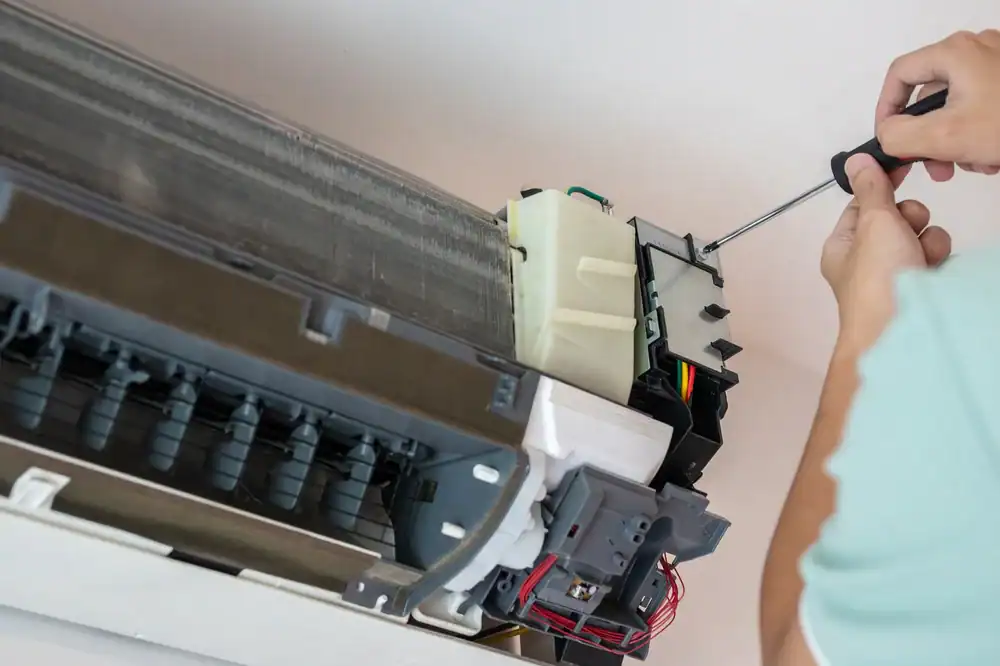
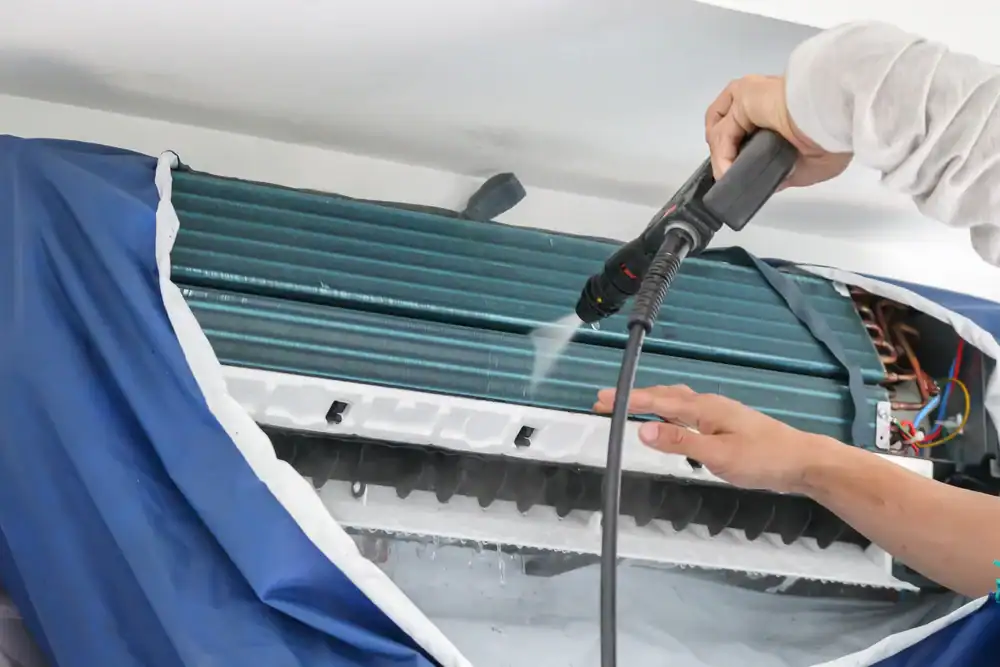
From there, the indoor side gets the same attention. The evaporator coil gets inspected and cleaned, the blower motor is tested, and the condensate drain line is cleared — that last one clogs more frequently in high-humidity environments, and Belmar’s summers are exactly that. Refrigerant levels are checked and documented. Capacitors and contactors are tested, because those are the components most likely to fail as a system ages — and if your home was rebuilt or renovated after Sandy, your system is probably in the 8–13 year range where those parts start to show their age.
You get a written summary of everything we found. If something needs attention beyond the standard tune-up, you’ll hear about it clearly, with a price, before any additional work happens. That’s the whole process — no mystery, no pressure.

Ready to get started?
AC maintenance in a coastal borough like Belmar isn’t a box-checking exercise. The checklist that makes sense for a home in Freehold or Morganville isn’t the same one that makes sense for a property on Ocean Avenue or a rental unit two blocks from the marina. Salt air, tidal humidity, and the kind of extended daily runtime that comes with a packed summer rental season all factor into what needs to be looked at and how often.
Every maintenance visit we provide covers the full system — condenser coil cleaning, evaporator coil inspection, blower motor testing, capacitor and contactor checks, refrigerant level verification, condensate drain clearing, and a complete electrical safety check. For homeowners in Belmar’s flood zone areas, where FEMA elevation requirements may affect outdoor equipment placement, our team is familiar with New Jersey’s HVACR compliance standards and can flag anything that needs attention from a code standpoint.
If you own rental property in Belmar, pre-season maintenance isn’t optional — it’s the most straightforward way to protect a summer rental income that can run $10,000 or more per season. One breakdown in August costs more in emergency rates, tenant disruption, and lost goodwill than several years of routine tune-ups. We also offer 10% off for military personnel and first responders, and financing is available if a repair or upgrade comes out of the inspection.

Once a year is the standard recommendation, and in Belmar, the timing matters as much as the frequency. The best window is late winter through early spring — March or April — before the summer rental season kicks off and before every HVAC company in Monmouth County is booked solid. If you wait until June, you’re competing with every other homeowner and landlord who had the same idea, and emergency availability during a heat wave is not a position you want to be in.
For rental property owners in Belmar, annual pre-season maintenance is essentially non-negotiable. A system that fails during peak rental occupancy in July or August creates a cascade of problems — emergency service rates, tenant complaints, potential refund requests, and a hit to your rental platform reputation. One tune-up in April prevents all of that. For year-round homeowners, the same logic applies: a properly maintained system runs more efficiently through Belmar’s long humidity season and is far less likely to fail when you need it most.
Yes, and it happens faster than most people expect. Salt air is corrosive to the aluminum fins on your condenser coil, the copper refrigerant lines running to and from the outdoor unit, and the electrical contacts inside the disconnect box. In a town like Belmar, where you’ve got Atlantic Ocean exposure on one side and the Shark River Inlet on the other, outdoor components can show meaningful corrosion within a single season — especially on properties close to the water.
What this means practically is that the standard maintenance interval that works for an inland home isn’t quite enough for a Belmar property. Condenser coils need to be cleaned and inspected with salt-air corrosion specifically in mind, not just a general dust-and-debris cleaning. Catching early-stage corrosion on fins or refrigerant line fittings during a routine tune-up is a straightforward fix. Catching it after it’s progressed to a coil failure or a refrigerant leak is a much more expensive conversation. Annual maintenance by a technician who understands coastal conditions is the most direct way to stay ahead of it.
A thorough AC tune-up covers both the indoor and outdoor sides of the system. On the outside, that means cleaning the condenser coil, inspecting refrigerant lines, checking electrical contacts and the disconnect box, and testing the capacitor and contactor — the two components most likely to cause a no-cooling failure as a system ages. On the inside, it means inspecting and cleaning the evaporator coil, testing the blower motor, verifying refrigerant charge, and clearing the condensate drain line, which clogs more frequently in high-humidity environments like Belmar’s summer season.
After the inspection, you should receive a written summary of what was found — not a verbal rundown that’s hard to remember, but a documented record. That documentation matters for two reasons. First, it tells you exactly where your system stands so you can make informed decisions about any repairs. Second, most major HVAC manufacturers require documented annual maintenance to keep the system warranty valid. If your home was rebuilt or renovated after Sandy and your system is still under manufacturer warranty, skipping that documentation could cost you coverage on the next repair.
Especially if it was. Systems installed during Belmar’s post-Sandy rebuild wave — roughly 2013 through 2018 — are now in the 8 to 13 year range. That’s the phase of a system’s life when capacitors start to weaken, refrigerant levels begin to drift, and efficiency starts dropping in ways you’ll notice on your energy bills before you notice them on a hot day. It’s also the window when manufacturer warranties are still potentially active, which means documented annual maintenance isn’t just good practice — it may be required to keep that coverage in place.
The other factor specific to post-Sandy homes in Belmar is the flood zone context. Properties rebuilt after the storm were often required to meet updated FEMA elevation standards, which can affect where outdoor HVAC equipment was placed and how it was installed. If there’s any question about whether your current setup meets current code — particularly if you’re considering a system replacement down the road — that’s worth a conversation with a licensed NJ HVACR contractor who knows Belmar’s flood zone requirements, not a generic technician who’s unfamiliar with the local regulatory landscape.
A standard AC tune-up typically runs in the $75 to $200 range depending on system size and what’s found during the inspection. For a year-round homeowner, the math is straightforward: that investment keeps your system running efficiently, reduces the chance of a breakdown, and extends the life of equipment that costs $5,000 to $12,000 to replace. Poorly maintained systems can consume up to 25% more energy than serviced ones — that difference shows up on your utility bills every month.
For Belmar landlords, the ROI is even more direct. Summer rentals in Belmar generate anywhere from $10,000 to well over $20,000 per season depending on the property. A single emergency AC repair call in August — during peak demand, when availability is tight and emergency rates apply — can easily run $400 to $800 or more, on top of whatever parts are needed. Pre-season maintenance for $150 to $200 eliminates most of that risk. It’s one of the few home services decisions where the cost of not doing it is clearly higher than the cost of doing it.
We offer 10% off for active military, veterans, and first responders. Belmar has a strong community of people in public service — from local emergency responders to veterans throughout Monmouth County — and this discount reflects a straightforward acknowledgment of that. If you or someone in your household serves or has served, mention it when you call and it gets applied to your invoice.
Beyond the discount, we also offer 0% financing for customers who need it. That’s most relevant when a tune-up uncovers a repair or upgrade that wasn’t in the budget — a failing capacitor, a refrigerant issue, or a component that’s worn enough to address now rather than risk a breakdown mid-summer. Financing means you don’t have to defer a necessary fix because of timing. The option is there, there’s no obligation to use it, and prequalifying takes a few minutes online. If you have questions about pricing before scheduling, our upfront pricing policy means you’ll have a clear number before any work begins — no surprises after the fact.