
Reviews
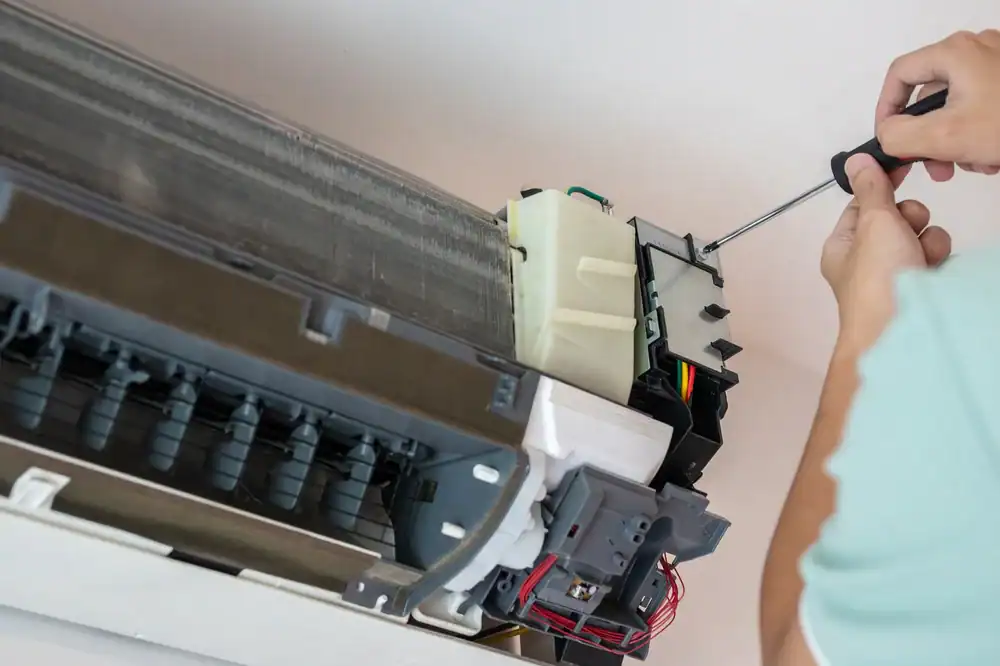
You’re not scheduling an AC tune-up just to check a box. You’re doing it because a well-maintained system uses 15% less energy than one that’s been ignored. That’s real money back in your pocket every month.
Here’s what actually happens when you stay on top of maintenance. Your system doesn’t work as hard to cool your home. Parts don’t wear out as fast. Small issues get caught before they turn into expensive emergency calls on a 90-degree Saturday.
Most AC units last 10 to 15 years. With consistent hvac system inspection and care, you’re looking at 15 to 20 years. That’s not marketing talk—that’s what happens when refrigerant levels stay balanced, coils stay clean, and airflow stays unrestricted. You delay a $6,000 replacement by half a decade just by paying attention twice a year.
And when something does go wrong, you’re not starting from scratch with a stranger. You’ve already got a team that knows your system, your home, and your history.
AME Plumbing Heating and Cooling is a family-owned company based right here in Monmouth County. We’re licensed, insured, and available 24/7 when things go sideways. No answering service. No runaround.
We know Asbury Park homes—the older Victorians near the beach that need creative ductwork solutions, the newer builds in residential neighborhoods with modern multi-zone systems, and everything in between. Coastal humidity is tough on HVAC equipment, and we’ve seen what happens when systems aren’t maintained properly in this climate.
You’ll get upfront pricing before any work starts. No hidden fees. No pressure. If you’re military or a first responder, you’ll get 10% off. We also offer financing if a repair or replacement is more than you budgeted for right now.
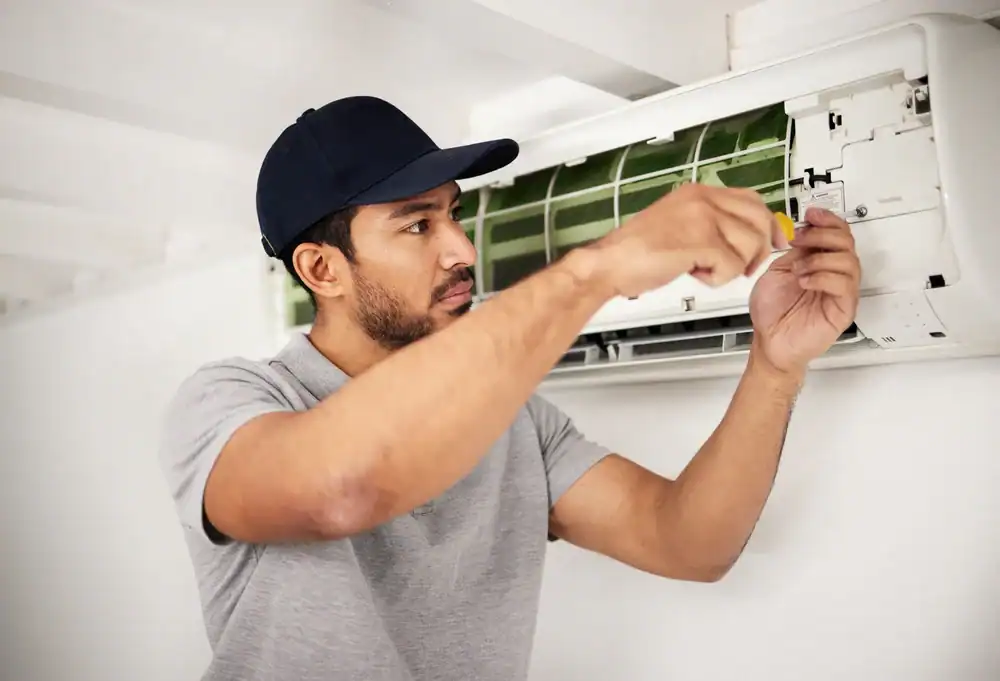
When our technician arrives, they’ll start with your thermostat. They’ll check calibration, wiring, and whether it’s communicating properly with your system. Then they’ll move to your indoor unit—cleaning or replacing the air filter, inspecting the evaporator coil, and checking the condensate drain line for clogs. That drain line is one of the most common failure points in humid climates like ours.
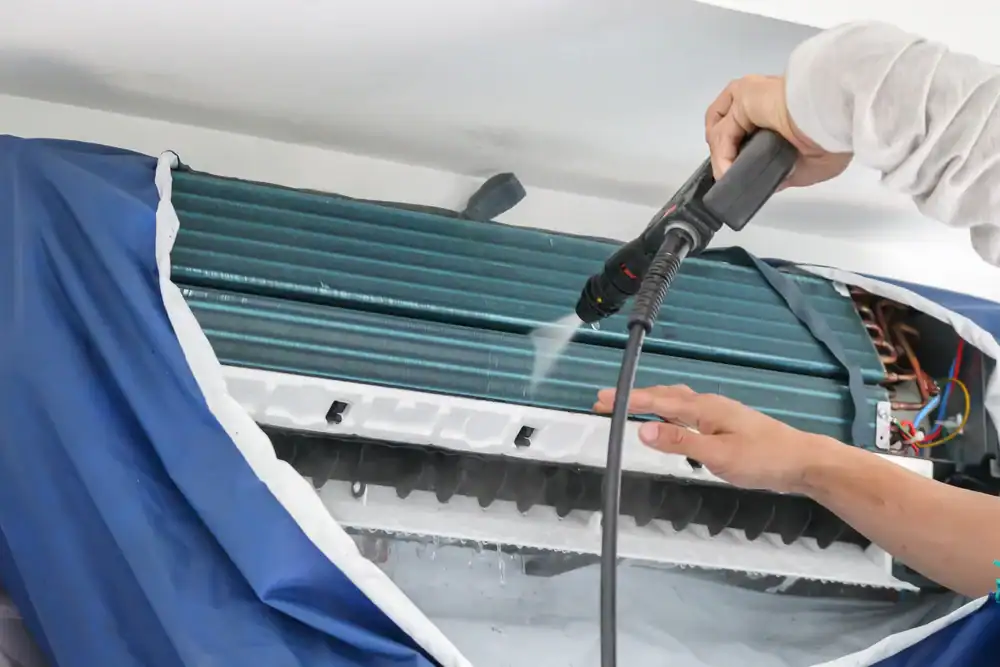
Outside, they’ll inspect your condenser unit. They’ll clear debris, check refrigerant levels, test the compressor and fan motor, and clean the condenser coils if needed. Dirty coils make your system work harder and drive up your electric bill. They’ll also check electrical connections, measure voltage, and test the capacitors that help your system start up.
Before they leave, they’ll test your system under load to make sure it’s cooling properly and efficiently. If they find anything that needs attention—whether it’s urgent or just something to keep an eye on—they’ll walk you through it and give you options. You’ll know exactly what’s going on with your system before they pack up.

Ready to get started?
Every air conditioner service appointment covers the full system—not just a quick visual check. You’re getting a complete hvac cleaning service that addresses the parts that actually affect performance and longevity.
That includes filter replacement or cleaning, coil cleaning on both the indoor and outdoor units, drain line inspection and clearing, refrigerant level check and adjustment if needed, electrical component testing, and airflow measurement. We also lubricate moving parts, tighten electrical connections, and test your thermostat accuracy.
In Asbury Park, salt air and coastal humidity create specific challenges. Condenser coils corrode faster near the ocean. Drain lines clog more often when humidity is high. We’ve seen these patterns for years, and our maintenance routine accounts for them. If your home is within a few blocks of the beach, your outdoor unit is working in harsher conditions than systems a mile inland—and it needs more frequent attention.
You’ll also get a written report of what we found and what we did. If your system is still under warranty, you’ll have documentation that you’ve kept up with required maintenance. Most manufacturers will void coverage if you can’t prove regular service, and that can cost you thousands if a major component fails.

Twice a year is the standard recommendation—once in spring before cooling season and once in fall before heating season. If you only heat or cool, you can get away with annual service, but most homes in Asbury Park use their HVAC system year-round.
Spring maintenance catches problems before summer heat arrives. You don’t want to find out your compressor is failing on the first 85-degree day in June when every HVAC company is slammed with emergency calls. March and April are ideal because we have more availability and you have time to address any issues while the weather is still comfortable.
If your system is older than 10 years, if you have pets, or if anyone in your home has allergies or asthma, you might benefit from more frequent filter changes between professional visits. A clogged filter restricts airflow and makes your system work harder than it should.
Your system will work, but not as well or as long as it should. Efficiency drops first—you’ll notice higher electric bills before you notice performance issues. A system that’s even slightly low on refrigerant or has dirty coils can use 15% to 20% more energy to produce the same cooling.
Then parts start wearing out faster. Your compressor has to run longer to reach the temperature you set. Your blower motor works harder to push air through a dirty filter or coil. Small issues that would’ve been caught during routine maintenance turn into bigger, more expensive problems.
Eventually, something fails. And it usually fails at the worst possible time—during a heat wave when you need your AC most and when HVAC companies are backed up with emergency calls. You might wait days for service in peak season. A $150 maintenance visit could’ve prevented a $1,200 repair or a $6,000 replacement. Most manufacturer warranties also require proof of regular maintenance, so skipping service can void your coverage right when you need it.
You can handle some basic tasks yourself—changing your filter every one to three months, keeping debris away from your outdoor unit, and making sure your vents aren’t blocked. Those things actually make a difference and they’re easy to do.
But a real ac inspection requires specialized tools and training. Checking refrigerant levels, testing electrical components, measuring airflow, and cleaning coils properly aren’t DIY jobs. Refrigerant handling requires EPA certification. Electrical work can be dangerous if you don’t know what you’re doing. And if you damage something while trying to service it yourself, you’re looking at a bigger repair bill than if you’d just called a professional in the first place.
The other issue is that you don’t know what you don’t know. An experienced technician can hear or see early warning signs that you’d miss—a capacitor that’s starting to fail, a bearing that’s wearing out, a drain line that’s partially clogged. Catching those things early is the whole point of maintenance. It’s not just about cleaning—it’s about preventing problems before they start.
A one-time tune-up typically runs $100 to $200 depending on the company and what’s included. Some companies offer maintenance plans that cover both your spring AC service and fall heating service for a flat annual fee, usually $150 to $300 per year. Those plans often include perks like priority scheduling, discounts on repairs, and no overtime charges for emergency calls.
The cost is small compared to what you’re protecting. A new AC system costs $4,000 to $8,000 depending on size and efficiency. A compressor replacement alone can run $1,500 to $2,500. Even a simple repair like replacing a capacitor or contactor costs $150 to $400 when you factor in the service call and labor.
Regular maintenance extends your system’s life by years and keeps it running efficiently, which lowers your monthly electric bills. If maintenance saves you even $10 a month on energy costs, it pays for itself in a year. And if it prevents one major repair, it’s paid for itself several times over. You’re not spending money on maintenance—you’re avoiding much bigger expenses down the road.
March and April are ideal for AC maintenance in Asbury Park. The weather is mild, so if we find a problem, you’re not suffering while it gets fixed. We also have better availability in spring compared to summer when we’re flooded with emergency calls.
Scheduling early also gives you time to budget for any repairs that come up. If we find that your compressor is struggling or your coils are corroding, you can plan for that expense instead of scrambling to cover an emergency repair in July when your AC quits during a heat wave.
Some people wait until their system stops working to call for service. That’s the most expensive approach. You’re paying emergency rates, you might wait days for an appointment during peak season, and the problem has usually gotten worse by the time we arrive. A $200 repair in April can turn into a $1,000 repair in July if you ignore it. Preventive maintenance isn’t exciting, but it’s a lot cheaper and less stressful than reactive repairs.
Yes, because most problems develop slowly and quietly. Your system doesn’t suddenly go from perfect to broken—it gradually loses efficiency, works harder, and wears out faster. By the time you notice something’s wrong, the damage is already done.
Refrigerant doesn’t leak all at once. It seeps out slowly over months or years. Your AC still cools, but it runs longer to do it and your electric bill creeps up. You might not connect the dots until we check the levels and find you’re 30% low. That’s been costing you money for months and putting extra strain on your compressor.
Same with dirty coils, clogged drain lines, and worn electrical components. They don’t announce themselves until they cause a bigger problem. A drain line that’s 80% clogged still drains—until it doesn’t, and then you’ve got water damage in your ceiling or a flooded air handler. A capacitor that’s weakening still works—until it fails completely and your system won’t start. Maintenance catches these things while they’re still small, cheap, and easy to fix. Waiting until something breaks is always more expensive.