Reviews
Your air conditioner doesn’t quit on a mild Tuesday in May. It waits until the hottest day in July when your family’s home and the kids are cranky. That’s when a $150 tune-up becomes a $1,500 emergency repair—plus a miserable night trying to sleep in the heat.
Regular AC maintenance changes that equation completely. A well-maintained system uses 5-10% less energy, which matters when you’re running it hard through New Jersey’s humid summers. Clean coils, lubricated parts, and proper refrigerant levels mean your unit isn’t straining to cool your home.
Over half of the repair calls we see could’ve been avoided with annual service. That’s not a sales pitch—it’s what happens when small issues get caught early. A worn belt gets replaced during a spring tune-up instead of snapping in August. Low refrigerant gets topped off before your compressor works itself to death trying to compensate.
Your system also lasts longer when it’s not fighting itself. Equipment that gets professional attention can run several extra years beyond what a neglected system manages. And if your unit is still under warranty, most manufacturers require proof of annual maintenance to honor coverage. Skip it, and you’re paying out of pocket for repairs that should’ve been free.
We’ve spent years learning what breaks, what lasts, and what Allentown’s climate does to HVAC systems. We’re fully licensed and insured to work throughout New Jersey, which means we’re held to professional standards by the state—and our insurance protects both our team and your property.
We’re available 24/7 because AC emergencies don’t wait for business hours. But the whole point of maintenance is that you shouldn’t need us at 2 a.m. on a Saturday. Our pricing is transparent, our technicians show up when we say they will, and we use quality materials because we’d rather fix something once than see you again in six months.
Allentown sits in a part of Monmouth County where humidity and heat team up every summer to test your cooling system. We know how that combination affects equipment, and we know what fails first when systems aren’t maintained properly.
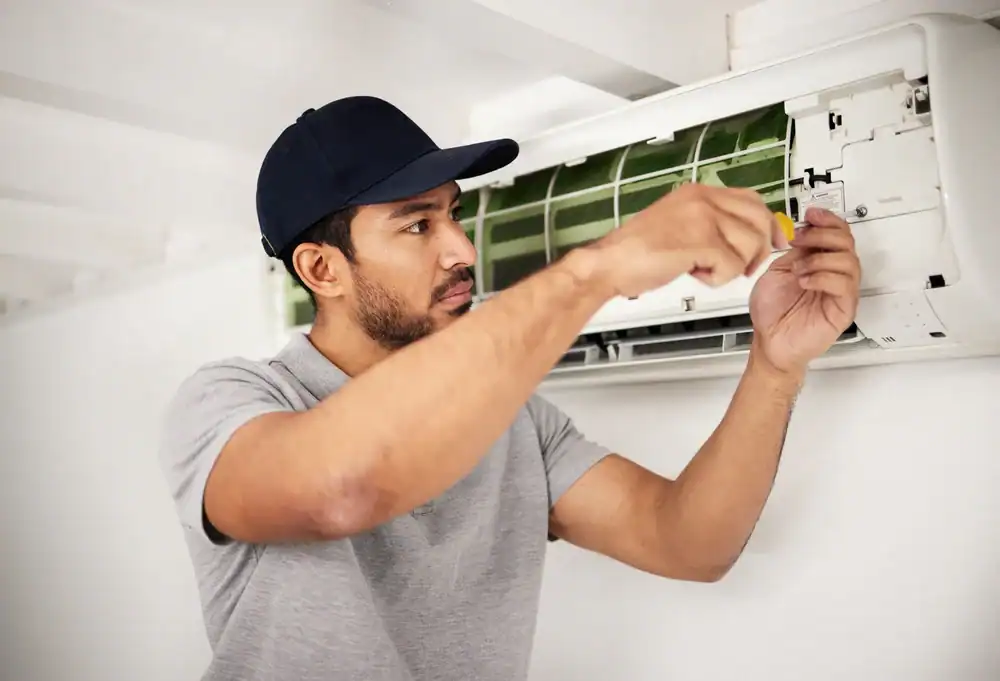
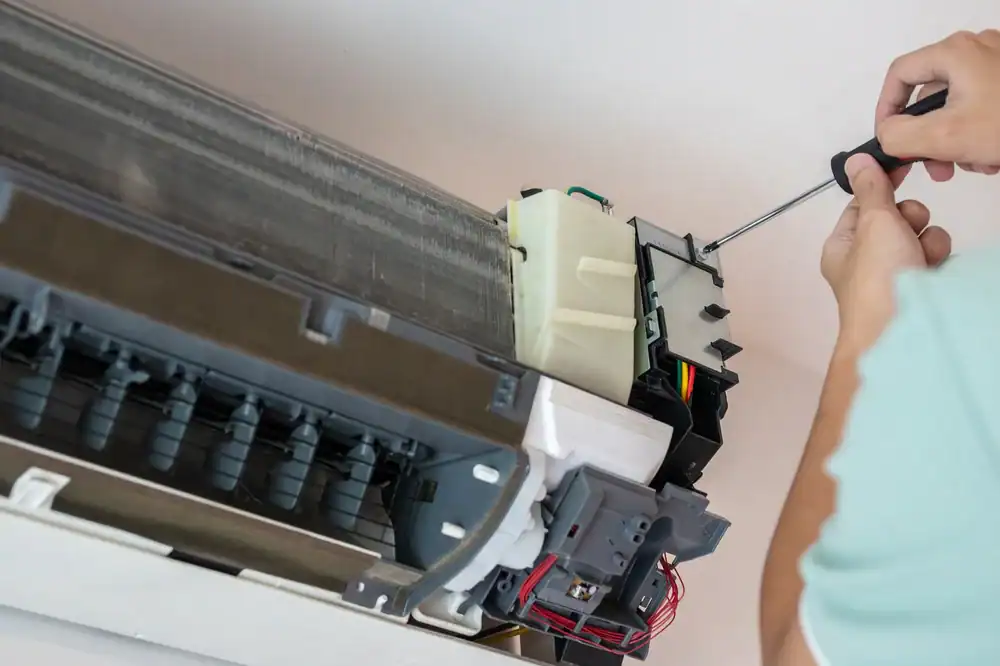
We start with a full system inspection—not a quick glance, but a real look at what’s happening with your equipment. That means checking refrigerant levels, testing electrical connections, inspecting your condensate drain, and looking at the condition of your coils and filters.
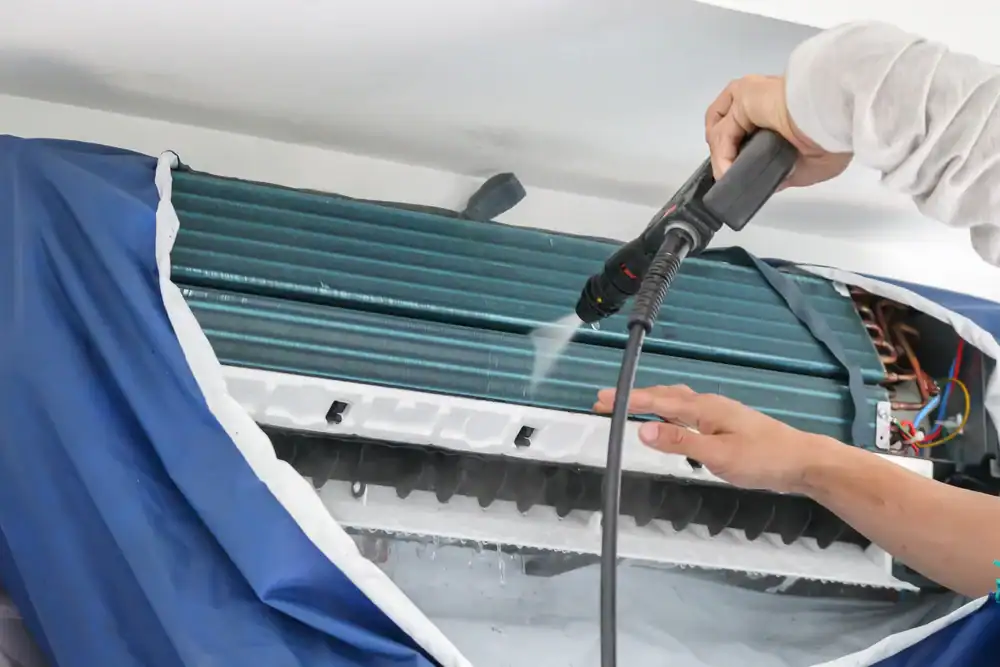
Your air filter gets checked and replaced if needed. Dirty filters are one of the biggest efficiency killers, especially during high-pollen months near the Jersey Shore. We clean your condenser coils because even a thin layer of dirt makes your system work harder than it should.
We lubricate moving parts, tighten electrical connections, and test your thermostat calibration. If your system is low on refrigerant, that’s a sign of a leak—we’ll find it and fix it rather than just topping it off and sending you on your way. We also check your ductwork for leaks that waste cooled air before it reaches your rooms.
Before we leave, we test the system under load to make sure everything runs smoothly. You get a clear explanation of what we found, what we fixed, and whether anything needs attention soon. No upselling, no scare tactics—just honest information so you can make smart decisions about your equipment.

Ready to get started?
Our AC maintenance covers the details that keep your system reliable. You get a 21-step inspection that looks at every component that affects performance and efficiency. We’re checking things most homeowners never think about—capacitor health, amp draw on your compressor, airflow across your evaporator coil.
In Allentown and the broader Monmouth County area, cooling costs are climbing as summers get hotter. Systems over 12-15 years old with lower SEER ratings struggle to keep up, and when they do, they’re burning through electricity to do it. Regular maintenance won’t turn an old system into a new one, but it will keep it running as efficiently as possible for its age.
Spring is the right time for this service—ideally March or April before you fire up your AC for the first time. HVAC companies get slammed once the heat hits, so booking early means you get convenient scheduling instead of waiting two weeks in June when it’s already 85 degrees.
We also look at your indoor air quality during service. Clean systems mean fewer allergens and contaminants circulating through your home. If your ducts need attention, we’ll let you know, but we’re not going to push services you don’t need.

AC tune-ups in New Jersey typically run between $75 and $150 depending on your system and what’s included. Annual HVAC maintenance plans range from $85 to $170 and often cover both your heating and cooling equipment.
Here’s the math that matters: a maintained system saves 5-10% on energy costs, which adds up fast during a New Jersey summer. More importantly, the average AC repair in this state costs around $400, with some repairs hitting $3,450. Over half of those repair calls could’ve been prevented with regular maintenance.
Your system also lasts longer when it’s serviced annually. Equipment that gets professional attention often runs several years beyond neglected systems. If you’re looking at $5,000-$7,000 for a replacement system, a few extra years of life is worth a lot more than the $100 you spend on annual service.
Schedule your air conditioner service in spring—March or April is ideal. That gives you time to address any issues before you actually need your AC, and you’re booking before we get buried in service calls.
Waiting until May or June means you’re competing with everyone else who just realized their AC isn’t working right. You’ll wait longer for an appointment, and if your system needs parts, you might be uncomfortable for days while they’re ordered and installed.
Early scheduling also means your system is ready for those surprise heat waves that hit before Memorial Day. You’re not scrambling to get service when it’s already 80 degrees and your house won’t cool down. Most manufacturers recommend annual maintenance, and many warranties require it, so consistent spring service protects both your comfort and your coverage.
Skipping maintenance doesn’t cause immediate disaster, but it stacks the odds against you. Dirty coils make your system work harder and use more energy. Low refrigerant levels force your compressor to strain. Worn parts that could’ve been replaced during a tune-up fail at the worst possible time.
You’re also likely voiding your manufacturer’s warranty. Most AC warranties require proof of annual professional maintenance. If your compressor fails and you can’t show service records, you’re paying for a repair that should’ve been covered—potentially thousands of dollars out of pocket.
Systems that don’t get regular attention simply don’t last as long. Parts wear faster, efficiency drops, and you end up replacing equipment years earlier than necessary. The $100-$150 you save by skipping service costs you hundreds or thousands later in higher energy bills, emergency repairs, and premature replacement.
You can handle some basics—changing your filter regularly, keeping debris away from your outdoor unit, making sure your vents aren’t blocked. Those things matter and they help your system run better.
But real AC maintenance requires specialized tools, training, and licensing. Checking refrigerant levels means working with pressurized systems and EPA-regulated materials. Testing electrical components safely requires knowledge and equipment most homeowners don’t have. Cleaning coils properly without damaging fins takes the right tools and technique.
Professional service also catches problems you wouldn’t notice. We can hear when a bearing is starting to fail, spot a capacitor that’s weakening, or notice that your amp draw is higher than it should be. Those early warnings prevent breakdowns. DIY maintenance might keep your system limping along, but it won’t give you the reliability, efficiency, or warranty protection that professional service provides.
Once a year is the standard recommendation, and spring is the right time to do it. New Jersey’s climate is tough on HVAC equipment—hot, humid summers mean your AC runs hard for months, and the combination of heat and moisture accelerates wear on components.
If you have a heat pump that handles both heating and cooling, you might benefit from service twice a year—once in spring before cooling season and once in fall before heating season. But for a standard central AC system, annual maintenance before summer is what keeps you covered.
Some homeowners ask if they can stretch it to every other year, especially if their system seems fine. The problem is that “seems fine” doesn’t mean much with AC equipment. Refrigerant can be low, coils can be dirty, and electrical connections can be loose—all while your system still blows cold air. By the time you notice a problem, you’re usually looking at a repair instead of simple maintenance.
A thorough inspection covers every component that affects your system’s performance and reliability. That means checking and testing your thermostat, inspecting electrical connections and tightening any that are loose, measuring voltage and amperage on motors and compressors, and testing your capacitors and contactors.
We check your refrigerant charge and look for leaks if levels are low. We inspect your condensate drain to make sure it’s clear and draining properly—clogs can cause water damage and shut your system down. Your evaporator and condenser coils get inspected and cleaned if needed, and we check your blower components and lubricate moving parts.
We also look at your ductwork for obvious leaks or damage, inspect your air filter and replace it if necessary, and test your system’s overall performance under load. You should get a clear report of what we found, what we did, and whether anything needs attention in the near future. A complete inspection takes time—if someone’s in and out in 20 minutes, they’re not looking at everything that matters.