On demand tankless water heaters heat water instantly as it flows through the unit, eliminating storage tanks and providing continuous hot water for your Monmouth County, NJ home.
Share:
Summary:
You turn on the shower expecting hot water. Instead, you get that all-too-familiar cold blast because someone already used what the tank had to offer. Now you’re either braving a cold shower or waiting 30-45 minutes for the tank to reheat.
On demand tankless water heaters eliminate this problem entirely. They heat water the moment you need it, as much as you need it, for as long as you need it. No storage tank means no running out. This guide explains exactly how these systems work, what makes them different, and whether they’re the right fit for your Monmouth County, NJ home.
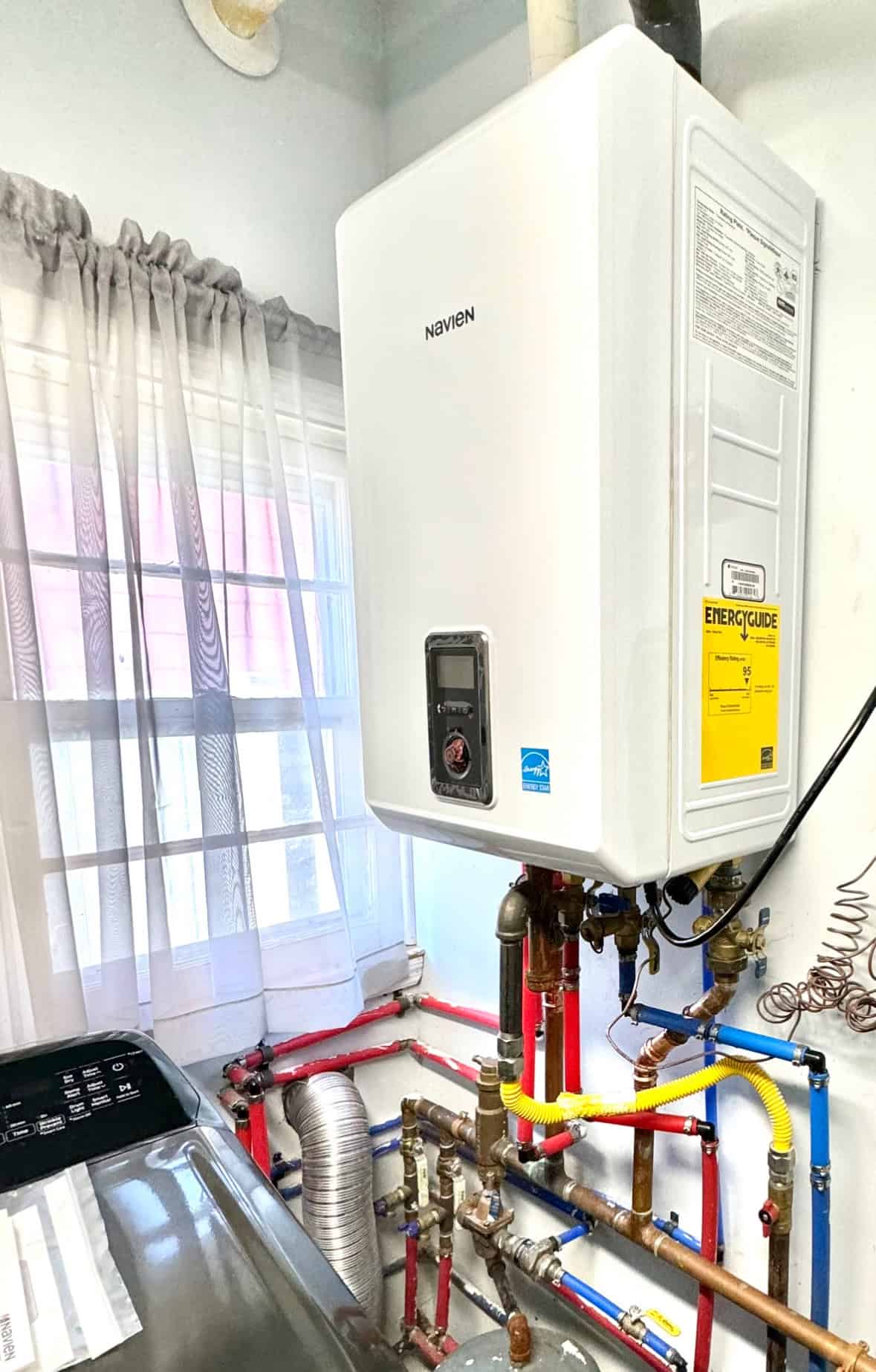
When you turn on a hot water faucet with an on demand tankless water heater installed, cold water travels through a pipe into the unit. A flow sensor detects the movement and signals the system to fire up. Within seconds, either a gas burner or electric heating element activates and heats the water as it passes through a heat exchanger.
The water doesn’t wait in a tank. It gets heated right then, flowing directly to your faucet at whatever temperature you’ve set. Turn off the tap, and the system shuts down. No energy wasted keeping 40-50 gallons hot while you’re at work or asleep.
This is why they call it “on demand.” You get hot water when you ask for it, not based on what happened to be sitting in a tank.
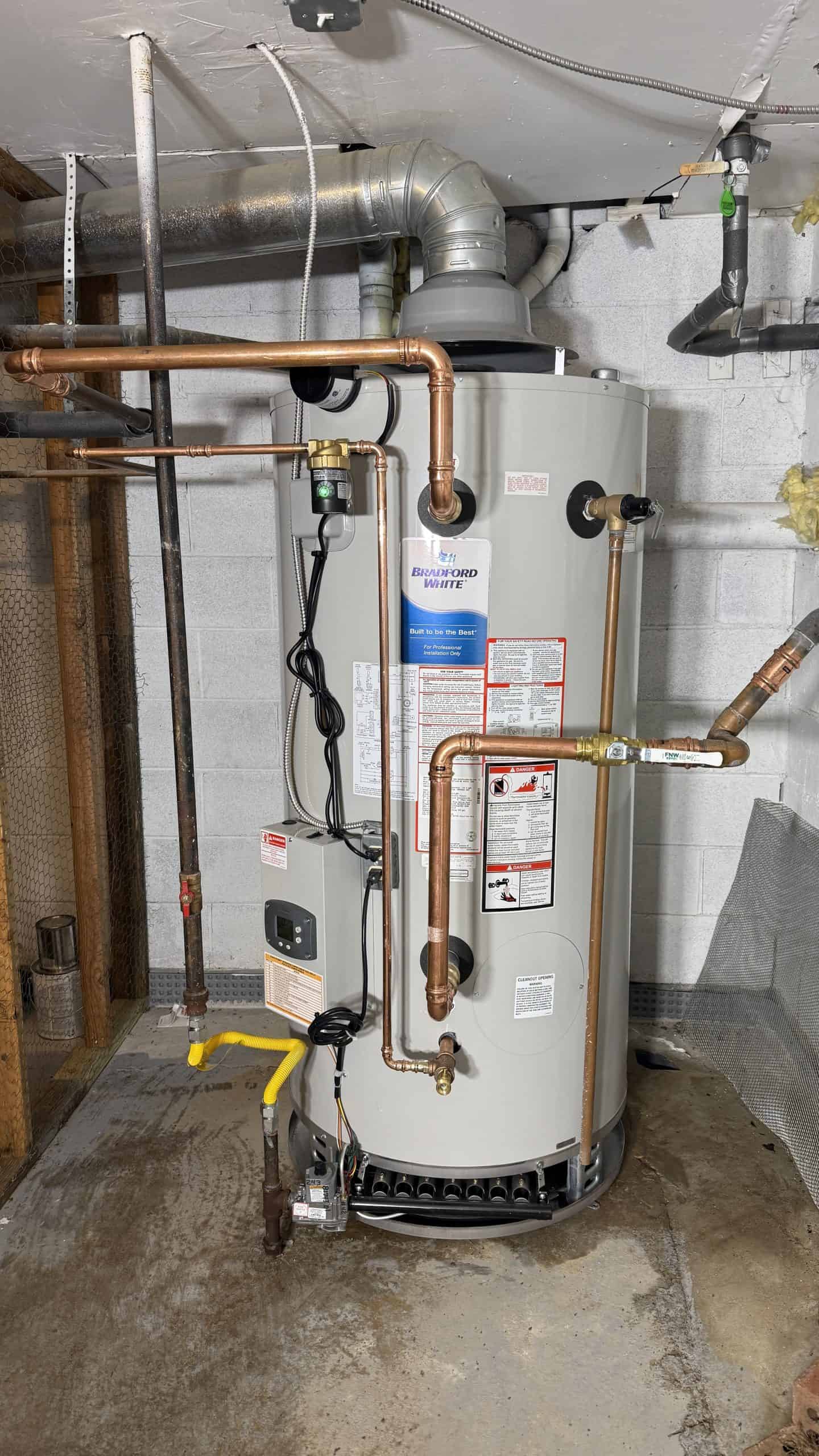
The heat exchanger is where the magic happens in an endless hot water heater. Think of it as an incredibly efficient radiator that transfers heat from a burner or element to water flowing through it. Gas models use powerful burners producing 150,000-200,000 BTUs. Electric models use high-powered heating coils drawing 120-150 amps.
Cold water enters and travels through copper or stainless steel coils designed for maximum heat transfer. These materials conduct heat exceptionally well. The burner or element heats the coils, and water absorbs that heat as it flows past. Temperature sensors monitor everything constantly, adjusting heat output to maintain your setpoint regardless of how fast water flows through.
Flow rate determines what you can actually do with your tankless heater. Most residential units provide 2-5 gallons per minute, with gas models generally offering higher flow rates than electric. A couple might do fine with 3 GPM. A family of five running multiple showers and appliances at once needs 7-8 GPM or possibly multiple units.
Here’s where Monmouth County, NJ conditions matter. Hard water builds up minerals on those heat exchanger coils over time. Left unchecked, this buildup acts like insulation between the heating element and your water, forcing the system to work harder and eventually reducing performance. Annual descaling by a professional removes these deposits and keeps your instant hot water system running efficiently.
Traditional tank heaters waste energy through what’s called standby heat loss. They constantly cycle on and off maintaining temperature in 40-50 gallons of stored water, even when nobody’s home. That accounts for 10-15% of their total energy consumption. An on demand tankless water heater eliminates that waste completely because it only heats water you’re actually using.
The efficiency difference shows up in your utility bill. Homes using 41 gallons or less of hot water daily see energy savings of 24-34% compared to tank heaters. Even homes using 86 gallons daily still save 8-14%. Over the 20+ year lifespan of a tankless unit, those savings add up significantly.
An instant hot water system relies on several components working together seamlessly. The flow sensor triggers everything when it detects water movement of typically 0.4-0.6 gallons per minute. Below that threshold, the unit won’t activate. This prevents constant cycling for tiny amounts of water like when you rinse your hands.
The control panel serves as the system’s brain. Modern units feature digital displays where you can set precise temperatures, often down to the degree. Advanced models include Wi-Fi connectivity for adjusting settings from your phone and receiving alerts about maintenance needs or developing issues before they become problems.
Gas models use a burner assembly that includes the main burner, ignition system, and flame sensor. When the flow sensor signals demand, the ignition lights the burner, and the flame sensor confirms proper ignition before allowing full gas flow. These safety mechanisms prevent gas buildup and ensure reliable operation every time.
Electric tankless heaters use heating elements similar to tank models but far more powerful. A whole-house electric unit might draw 120-150 amps, which explains why many homes need electrical service upgrades during installation. The elements heat almost instantly when activated and cool quickly when water stops flowing, contributing to the energy efficiency.
Venting varies between condensing and non-condensing models. Non-condensing units exhaust hot gases and require special high-temperature venting. Condensing models capture more heat from those exhaust gases, achieving 90-98% efficiency and allowing them to use standard PVC venting. The condensing process extracts so much heat that exhaust temperatures drop low enough for plastic pipes to handle.
Water connections include cold inlet and hot outlet, plus isolation valves that simplify maintenance. These valves let our technicians service the unit without shutting off water to your entire house. Most installations also include a drain valve for annual flushing.
In Monmouth County, NJ, coastal humidity and salt air affect these components differently than inland areas. Proper venting becomes even more critical because environmental factors corrode pipes faster. Professional installation accounts for these local conditions, ensuring your system performs reliably for its full 20+ year lifespan.
Choosing the right tankless hot water system starts with understanding two main categories: whole-house units and point-of-use models. Whole-house systems handle all your home’s hot water from a single location. Point-of-use units serve individual fixtures like a bathroom sink or shower.
Sizing a whole-house system requires calculating peak demand. Add up flow rates for fixtures you might use simultaneously. A shower uses about 2.5 GPM, dishwasher 1.5 GPM, washing machine 2 GPM. Two showers plus the dishwasher running at once means you need at least 6.5 GPM capacity.
Temperature rise matters just as much as flow rate. This is the difference between incoming groundwater temperature and your desired output. Monmouth County, NJ groundwater averages 50-55°F. To get 120°F hot water, the unit needs to raise temperature 65-70 degrees. Higher temperature rises require more powerful units or accept lower flow rates.
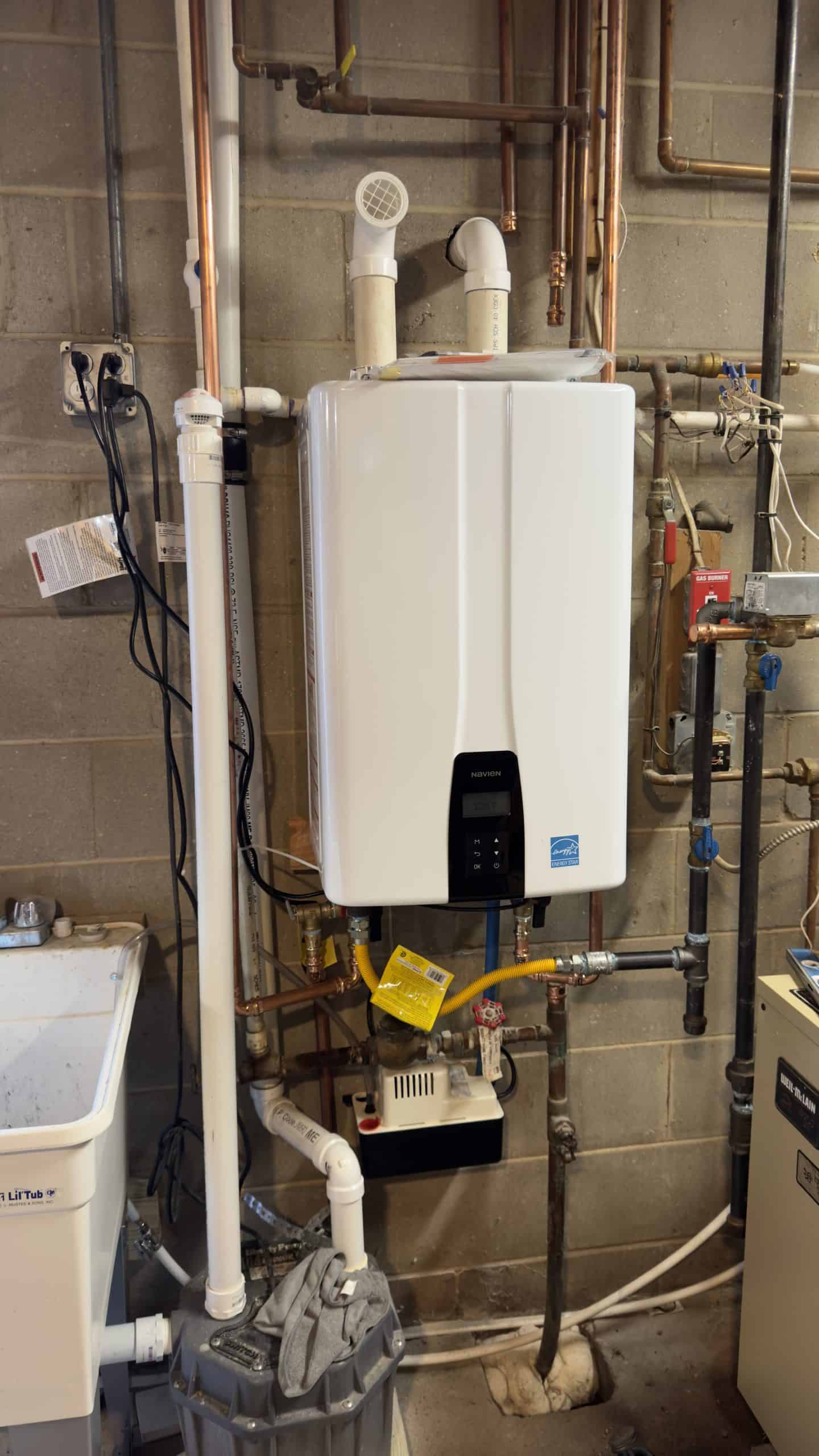
Gas tankless water heaters typically deliver higher flow rates and faster temperature rise than electric models. A mid-range gas unit might provide 6-8 GPM with a 70-degree temperature rise. A similarly priced electric model offers 3-4 GPM. For larger households or high simultaneous demand, gas usually wins.
Installation costs tell a different story. Gas models require proper venting to exhaust combustion gases safely. New venting installation adds $500-$1,200 to your project if your home doesn’t already have a tankless unit. Gas line sizing also comes into play. These units need much higher gas flow than traditional tank heaters, so existing gas lines often need upgrading.
Electric models skip venting requirements entirely but demand substantial electrical capacity. A whole-house electric tankless heater needs a 150-amp circuit. Many homes require electrical panel upgrades to accommodate this load, costing $1,000-$2,000. That offsets some of the savings from simpler installation.
Operating costs typically favor gas. Natural gas costs less per BTU than electricity in most areas, making gas units cheaper to run despite being less efficient at converting fuel to heat. In Monmouth County, NJ, where natural gas is readily available, most homeowners find gas models more economical for whole-house applications.
Electric tankless heaters excel in point-of-use applications. A small electric unit under a bathroom sink provides instant hot water to that fixture without the long pipe run from a distant water heater. These units cost $160-$300 and install easily, perfect for remote fixtures or additions where running new gas lines isn’t practical.
Condensing versus non-condensing technology adds another layer for gas models. Condensing units capture more heat from exhaust gases, achieving 90-98% efficiency compared to 80-85% for non-condensing. The extra efficiency costs more upfront but saves money over 20+ years. Condensing models also qualify for better rebates and tax credits, sometimes up to 30% of installation costs.
Monmouth County, NJ conditions affect sizing in ways national guides don’t address. Groundwater temperatures here run colder than southern states, meaning your tankless heater needs more power to achieve the same output temperature. Winter groundwater might drop to 45°F, requiring a 75-degree temperature rise for 120°F hot water.
Hard water prevalent throughout the area influences sizing decisions too. Mineral buildup reduces efficiency over time. Some homeowners choose slightly larger units to maintain adequate performance between annual maintenance visits. A unit that’s borderline adequate when new might struggle after a year of mineral accumulation if you skip professional descaling.
Coastal homes face additional challenges. Salt air accelerates corrosion on external components and connections. Humidity affects electronic controls. These factors don’t directly change sizing calculations, but they make professional installation and regular maintenance more important for long-term reliability.
Peak demand calculations should reflect realistic usage patterns, not worst-case scenarios. Don’t add up every fixture in your house. Think about what actually runs simultaneously. Most families don’t use every bathroom, run the dishwasher, and do laundry all at once. A realistic assessment might show you need 5-6 GPM rather than the 10+ GPM you’d calculate by adding every possible fixture.
Multiple units offer an alternative to one large heater. Installing two smaller tankless units costs more initially but provides redundancy. One fails, you still have hot water from the other. This approach works well for larger homes or those with fixtures far from the main unit.
Point-of-use heaters supplement whole-house systems effectively. A small electric unit at a remote bathroom provides instant hot water without waiting for water to travel through long pipe runs. This eliminates what’s called the “cold water sandwich” effect, where you get a burst of cold water between uses as residual hot water in pipes cools down.
Professional sizing ensures you get adequate capacity without overpaying for more than you need. We evaluate your specific situation, including household size, usage patterns, fixture types, and local environmental factors unique to Monmouth County, NJ, to recommend the right system.
On demand tankless water heaters solve real problems for Monmouth County, NJ homeowners. They eliminate running out of hot water mid-shower. They reduce energy bills by 24-34%. They last 20+ years compared to 10-15 for traditional tanks. They free up 10-16 square feet of floor space.
The technology works through straightforward principles. Water flows through a heat exchanger when you turn on a tap, gets heated instantly by a gas burner or electric element, and delivers consistent temperature without storage tank limitations. Understanding how these systems work helps you decide whether they fit your needs and budget.
Your home’s specific situation determines whether tankless makes sense. Larger households with high simultaneous demand benefit most from endless hot water. Homes with space constraints appreciate wall-mounted design. Anyone frustrated with rising energy costs values the efficiency. When you’re ready to explore whether an instant hot water system is right for your Monmouth County, NJ home, we bring the local expertise and upfront pricing you need to make this decision confidently.
Article details:
Share:
Continue learning: